
As the Greater Toronto Area endures a punishing real estate market marked by astronomically high interest rates and a severe lack of expansive inventory, homeowners are desperately searching for viable methods to expand their living space without triggering the colossal financial burden of a massive structural home addition or uprooting their families to a larger property. Converting an attached or detached garage—a large, structurally sound void currently housing seasonal junk and perhaps a vehicle—into highly functional, premium living space is rapidly emerging as the most strategic architectural maneuver of the decade. Whether you are engineering a soundproofed home office, a high-yield laneway rental suite, or an elegant in-law apartment, the potential is vast. However, the legal and structural complexities involved are intense. In this profound 2026 guide, Red Stone Contracting unravels the uncompromising municipal bylaws, the extreme thermal challenges, and the precise economic costs of executing a flawless garage conversion in Toronto.
The 2026 Economics of a Toronto Garage Conversion
Transforming a garage is not merely a matter of throwing some cheap drywall over concrete block walls. You are taking an uninsulated, hyper-ventilated shell designed for automobiles and mathematically engineering it into a comfortable, climate-controlled, Ontario Building Code-compliant human habitat. The initial capital requirement is substantial.
| Type of Garage Conversion | Estimated 2026 Financial Commitment | Expected Timeline to Complete |
|---|---|---|
| Basic Habitable Space (Gym, simple office, basic insulation & flooring) | $35,000 – $60,000 | 5–8 weeks |
| Premium Attached Suite (Bedroom, full bathroom, complex HVAC tied-in) | $65,000 – $95,000 | 8–12 weeks |
| Full Independent Living Unit (In-law suite, kitchenette, heavy plumbing) | $95,000 – $145,000 | 12–16 weeks |
| Massive Laneway Suite (Detached structure, two-story, complete rental unit) | $220,000 – $380,000+ | 20–30+ weeks |
While a $90,000 investment for an attached suite seems massive, compare it instantly against pouring a new foundation for a 400-square-foot addition, which routinely eclipses $180,000 in the current market. The garage conversion utilizes the existing foundation and roof, bypassing the two most wildly expensive phases of general construction.
The Terrifying Bureaucracy: Permits and Bylaws
The City of Toronto does not care if you own your property; they care profoundly about how it impacts urban density and infrastructure. Converting a garage is a highly regulated, legally complex undertaking.
1. The Mandatory Building Permit
A persistent, dangerous myth is that because the walls already exist, you do not need permission to change the interior. This is completely false. Any act that alters the primary “use” of a space—from “parking/storage” to “habitable living area”—triggers an immediate, non-negotiable requirement for a comprehensive building permit. You must submit stamped architectural plans detailing the massive upgrades to the thermal envelope, structural framing changes for the new windows, and complex new electrical schematics. Bypassing this will result in aggressive “Stop Work” orders from municipal inspectors.
2. The Brutal Parking Replacement Bylaw
This is the single biggest bureaucratic hurdle that destroys amateur conversion plans. Toronto zoning bylaws rigidly mandate a minimum number of dedicated off-street parking spaces for a dwelling. By obliterating your garage, you are directly destroying that legal parking space. You must legally prove to the city that you can replace that parking spot elsewhere on your property—typically via an existing long driveway or by intensely applying for a legal front-yard parking pad. If your lot is too small to accommodate a replacement space, you must apply for a highly stressful “Minor Variance” at the Committee of Adjustment, essentially begging the city for an exemption to their parking rules.
3. Laneway and Garden Suite Regulations
If your end goal is creating a high-yield accessory dwelling unit (ADU) capable of generating $2,500/month in rental income, Toronto’s relatively new progressive laneway/garden suite bylaws are heavily in your favor. However, a legal rental unit demands aggressive compliance regarding severe fire separations (using specialized Type-X fire-rated drywall), totally independent egress doors, dedicated mechanical ventilation, and strict mandates regarding the minimum 2.1-meter ceiling heights. Legal secondary suites demand ruthless adherence to safety codes.
The Extreme Architectural and Structural Challenges
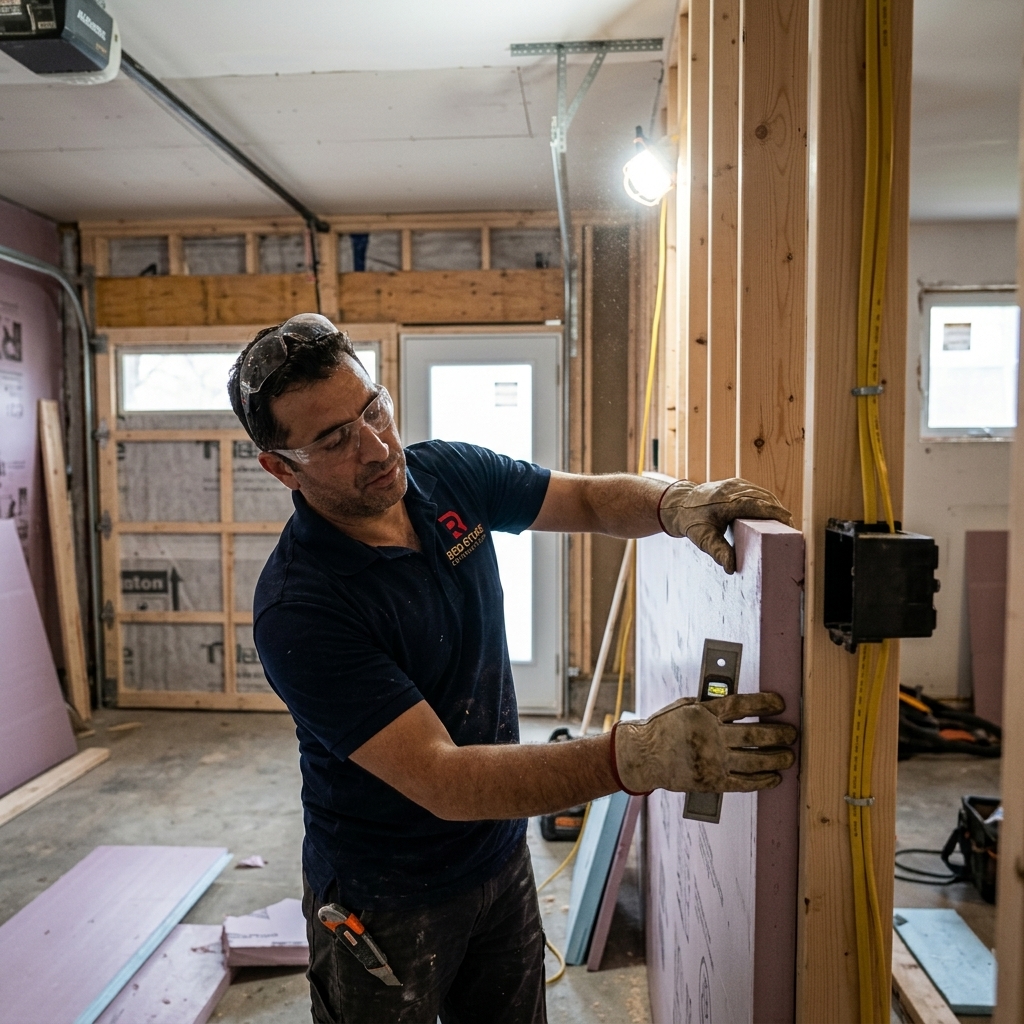
Garages are incredibly hostile environments for humans. Re-engineering them demands overcoming four massive physical obstacles.
Combating The Freezing Concrete Slab
A raw garage sits on an uninsulated concrete slab resting directly on freezing Ontario earth. If you simply install luxury vinyl plank over it, the floor will feel like an ice rink in January, and the ambient humidity will cause massive condensation and mold beneath the planks. The floor must be aggressively insulated. We typically install a highly engineered subfloor system featuring rigid EPS foam insulation topped with heavy OSB to create a crucial thermal break between the living space and the freezing concrete. Furthermore, the massive slope of the original concrete (designed specifically to drain melting snow toward the door) must be meticulously corrected utilizing incredibly expensive self-leveling compounds.
Erasing the Massive Door Opening
The gigantic 16-foot hole left by the removed garage door is the most vulnerable point in the new structure. It must be framed with incredibly heavy 2×6 lumber, aggressively packed with R-24 mineral wool insulation, and seamlessly clad on the exterior to match the historical brickwork or siding of the existing home. A botched framing job here creates a horrifying architectural scar that screams “this room used to be a garage” from the street.
Solving the Ceiling Height Crisis
The Ontario Building Code strictly mandates that a habitable living space possess an absolute minimum ceiling height of 6 feet 11 inches (2.1 meters) over 75% of the floor area. Many older Toronto garages have low, oppressive 8-foot structural joists. When you lose massive vertical inches at the bottom to insulate the cold floor, and simultaneously lose inches at the top installing thick R-31 insulation and drywall on the ceiling, you suddenly risk failing the height mandate by a fraction of an inch, rendering the entire conversion completely illegal for occupancy.
The HVAC Dilemma
Tapping into your existing 15-year-old basement furnace to heat the new garage space is almost always a catastrophic error. The old furnace lacks the blower velocity to push hot air all the way into the uninsulated extremes of the house. The ultimate solution for 2026 is installing a dedicated, hyper-efficient Ductless Mini-Split Heat Pump directly in the conversion. It operates entirely independently, providing freezing AC in July and aggressive heat down to -25°C in February, without requiring massive holes for ductwork.
The Immense Value of the Laneway Rental
Why undergo this extreme complexity? The return on investment (ROI) is staggering. In highly desirable, transit-connected Toronto neighborhoods (like The Danforth, Junction, or High Park), a stunning, fully detached laneway suite conversion can command rents exceeding $2,800 to $3,500 per month. Even factoring in a massive $250,000 renovation loan, the passive rental income mathematically covers the entire debt-service cost within 5 years, subsequently turning into a massive, pure cash-flow generator for the homeowner while simultaneously dramatically exploding the underlying appraised value of the estate.
Execute with True Experts
A garage conversion is not a weekend DIY project with a buddy; it is a heavy, structurally aggressive architectural transformation requiring complex municipal negotiations and intense thermal engineering. Red Stone Contracting possesses the elite architectural designers, structural engineers, and master carpenters incredibly versed in Toronto’s demanding bylaws. Contact our team to orchestrate an exhaustive feasibility study and architectural analysis, and let us transform your freezing, useless storage cavity into the most luxurious room in your home. We proudly service Toronto, Mississauga, Burlington, and the elite corridors of the GTA.