
When your family outgrows your home but you love your neighbourhood, a home addition in Toronto can give you the extra space you need without the cost and disruption of moving. Whether you are considering a rear extension, a second-storey addition, or a bump-out, understanding the costs, timeline, permits, and process is essential before you commit to a project of this scale.
At Red Stone Contracting, we specialise in custom home additions across Toronto and the GTA. This comprehensive guide covers everything Toronto homeowners need to know about planning, budgeting, and building a home addition in Toronto in 2026.
How Much Does a Home Addition Cost in Toronto in 2026?
The cost of a home addition in Toronto varies widely depending on the type of addition, its size, the level of finish, and the structural complexity involved. Below is a realistic cost breakdown based on current Toronto market conditions.
| Addition Type | Size Range | Cost per Sq Ft | Total Estimated Cost | Timeline |
|---|---|---|---|---|
| Rear Ground-Floor Extension | 150 – 400 sq ft | $300 – $500 | $45,000 – $200,000 | 3 – 5 months |
| Second-Storey Addition | 400 – 1,200 sq ft | $350 – $550 | $140,000 – $660,000 | 4 – 8 months |
| Bump-Out (Small Extension) | 50 – 150 sq ft | $400 – $600 | $20,000 – $90,000 | 2 – 3 months |
| Sunroom / Three-Season Room | 100 – 300 sq ft | $200 – $400 | $20,000 – $120,000 | 2 – 4 months |
| In-Law Suite Addition | 400 – 800 sq ft | $350 – $500 | $140,000 – $400,000 | 4 – 7 months |
| Garage Conversion to Living Space | 200 – 400 sq ft | $150 – $300 | $30,000 – $120,000 | 2 – 4 months |
These estimates include design, permits, foundation, framing, roofing, exterior finishes, insulation, electrical, plumbing, HVAC extension, interior finishes, and project management. HST is additional. High-end finishes, custom millwork, and complex structural modifications can push costs higher.
Types of Home Additions for Toronto Properties
Not all additions are created equal. The right type depends on your lot, your budget, your zoning restrictions, and what you hope to achieve. Here is a detailed look at each option available to Toronto homeowners.
Rear Ground-Floor Extension
The most common type of home addition in Toronto, a rear extension pushes the back of your home further into your backyard. This is ideal for expanding a kitchen into an open-concept kitchen-and-dining area, adding a family room, or creating a main-floor primary suite. Rear extensions are popular in older Toronto neighbourhoods like the Annex, Roncesvalles, and Riverdale where the lots are deep but narrow.
A rear extension requires a new foundation (either full-depth or frost-protected shallow), and the existing rear wall is opened up to integrate the new space with the old. The roof is extended or redesigned to cover the addition, and the exterior is finished to match the existing home.
Second-Storey Addition
If your lot does not have room for a ground-floor extension, going up is the alternative. A second-storey addition doubles your living space without reducing your yard. This is a major structural project: the existing roof is removed, the first-floor walls are reinforced or rebuilt to support the additional load, and an entirely new second floor is framed, insulated, and finished.
Second-storey additions are common in Toronto’s established neighbourhoods where detached bungalows are being transformed into two-storey family homes. Areas like Leaside, Lawrence Park, and North York have seen extensive second-storey additions over the past decade.
Bump-Out
A bump-out extends an existing room by 2 to 8 feet. It is far less disruptive and less expensive than a full addition because it typically does not require a full foundation — a cantilevered or post-supported structure is often sufficient. Bump-outs are ideal for enlarging a small bathroom, extending a kitchen to accommodate an island, or adding a breakfast nook.
In-Law Suite (Secondary Suite)
With Toronto’s aging population and housing costs, in-law suite additions are increasingly popular. These self-contained units include a bedroom, bathroom, kitchenette, and separate entrance. Ontario’s Additional Residential Units legislation makes it easier to create these spaces, and they can also serve as rental income units.
The Home Addition Process: Step by Step
A home addition is one of the most complex renovation projects you can undertake. Understanding the process helps set realistic expectations and ensures you and your contractor are aligned at every stage.
Phase 1: Design and Planning (4 – 8 weeks)
Work with your contractor and an architect or designer to create detailed plans. This includes site measurements, architectural drawings, structural engineering, and material selections. At Red Stone Contracting, our design-build approach keeps everything under one roof for a smoother process.
Phase 2: Permits and Approvals (4 – 12 weeks)
Toronto building permits are mandatory for all home additions. You will need to submit architectural drawings, structural engineering reports, and site plans to the City of Toronto’s Building Division. The permit review process typically takes 4 to 12 weeks depending on the complexity and the current backlog. If your property is in a heritage conservation district, additional approvals from the Heritage Preservation Services office may be required.
Phase 3: Foundation (2 – 4 weeks)
For ground-floor extensions, excavation and foundation work come first. This includes digging, forming, pouring concrete footings and foundation walls, waterproofing, and backfilling. The foundation must comply with Ontario Building Code requirements for frost depth (a minimum of 4 feet in Toronto) and structural load capacity.
Phase 4: Framing and Structural Work (3 – 6 weeks)
The new walls, floors, and roof structure are framed. For second-storey additions, this phase also includes reinforcing the existing first-floor structure. Steel beams, posts, and engineered lumber are used to meet structural engineering requirements. The new space takes shape during this phase.
Phase 5: Mechanical Rough-Ins (2 – 4 weeks)
Electrical wiring, plumbing pipes, HVAC ductwork, and insulation are installed before the walls are closed up. City inspectors must approve the rough-in work before drywall can proceed. If your existing furnace or electrical panel cannot handle the additional load, upgrades may be needed at this stage.
Phase 6: Interior Finishing (4 – 8 weeks)
Drywall, taping, painting, flooring, trim, cabinetry, fixtures, and final finishes are installed. This is the longest phase and where your material selections come to life. The goal is to make the addition feel like a seamless part of the original home, not a bolted-on afterthought.
Phase 7: Final Inspections and Closeout (1 – 2 weeks)
The City of Toronto conducts final inspections to verify code compliance. Your contractor addresses any deficiencies, performs a final clean, and walks you through the completed space. Warranty documentation and maintenance guides are provided.
Toronto Permits and Zoning for Home Additions
Permitting is one of the most critical — and often most frustrating — aspects of a Toronto home addition. Here is what you need to know.
What Requires a Permit
All home additions in Toronto require a building permit, without exception. This includes rear extensions, second storey additions, bump-outs larger than a certain threshold, and any structural modifications. The permit application requires detailed construction drawings, structural engineering calculations, and compliance with the Ontario Building Code and City of Toronto zoning by-laws.
Zoning By-Law Considerations
| Zoning Parameter | What It Controls | Typical Toronto Limits |
|---|---|---|
| Maximum Lot Coverage | How much of your lot the building can cover | 33% of lot area (varies by zone) |
| Floor Space Index (FSI) | Total floor area relative to lot size | 0.6 to 1.0 (varies by zone) |
| Rear Yard Setback | Minimum distance from the rear property line | 7.5 metres typical |
| Side Yard Setback | Minimum distance from the side property line | 0.9 – 1.2 metres typical |
| Maximum Building Height | Height limit from grade to peak | 8.5 – 10 metres (2 storeys) |
| Angular Plane | Controls shadow impact on neighbours | 45° from rear lot line |
If your proposed addition exceeds any of these parameters, you will need to apply for a minor variance from the Committee of Adjustment. This process adds 2 to 4 months and involves notifying neighbours, attending a hearing, and possibly negotiating design changes. Our team can help you navigate the variance process if needed.
Home Addition vs Moving: What Makes More Sense?
This is the fundamental question every Toronto homeowner faces when they need more space. Here are the key factors to consider.
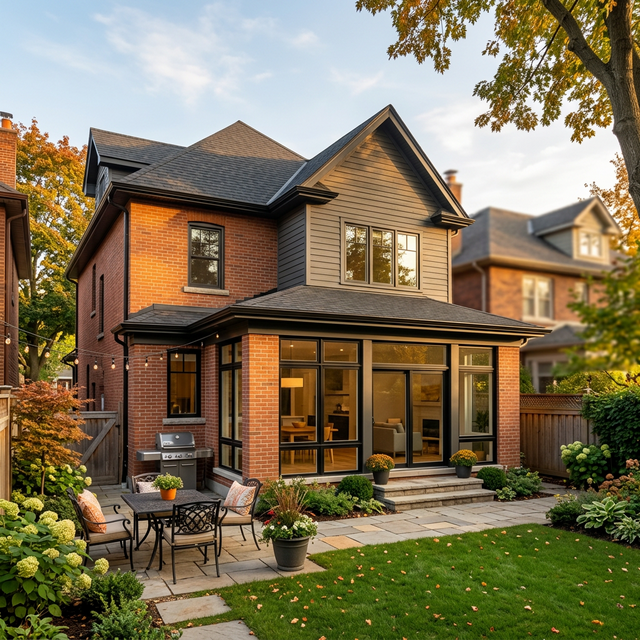
Reasons to Build an Addition
- You love your neighbourhood — schools, parks, commute, and community
- Land transfer tax savings — buying a new home in Toronto triggers the municipal land transfer tax on top of the provincial one (1.5 to 2.5 percent of purchase price)
- Moving costs add up — real estate commissions (typically 4 to 5 percent), legal fees, moving expenses, temporary housing during the search
- You want customised space — an addition is designed exactly to your specifications
- Your lot has room — not all properties can accommodate an addition, but if yours can, it is often the smarter financial decision
Reasons to Move Instead
- You need significantly more space (additions have practical size limits)
- Your foundation, electrical, or plumbing systems need major upgrades regardless
- Zoning restrictions prevent the addition you want
- The cost of the addition exceeds 50 percent of your home’s current value
- You are ready for a change in neighbourhood or lifestyle
In many cases, a well-planned home addition costs less than the transaction costs alone of buying and selling in Toronto’s real estate market. An addition also lets you invest that money directly into your existing asset rather than enriching agents, lawyers, and the government through taxes.
Cost-Saving Tips for Toronto Home Additions
While a home addition is a major investment, there are smart ways to manage costs without sacrificing quality.
- Build on the existing footprint footings: Cantilevered bump-outs avoid costly foundation work
- Match existing finishes: Using the same siding, roofing, and trim materials reduces custom fabrication costs
- Plan mechanical layouts carefully: Keeping new plumbing close to existing stacks and keeping the HVAC trunk line runs short saves thousands in mechanical costs
- Choose a design-build firm: Combining design and construction under one contract eliminates coordination issues and change orders between separate designers and builders
- Consolidate projects: If you are planning a kitchen renovation or bathroom renovation anyway, doing it as part of the addition project is more efficient and cost-effective than doing it separately
- Select materials early: Last-minute changes and upgrades are the biggest source of budget overruns
Choosing a Contractor for Your Toronto Home Addition
The contractor you choose will determine the quality, timeline, and overall experience of your addition project. Here is what to look for.
Must-Have Qualifications
- WSIB and liability insurance — non-negotiable for homeowner protection
- Verifiable portfolio — ask to see completed addition projects in Toronto, not just kitchens or bathrooms
- Permit experience — your contractor should know Toronto’s permit process intimately
- In-house project management — a dedicated project manager keeps the job on schedule
- Written fixed-price contract — with a detailed scope of work and payment schedule
- Warranty — minimum 2-year workmanship warranty
Red Stone Contracting brings all of these qualifications to every home addition project. Our design-build approach means one team handles everything from architectural design through final inspection, ensuring seamless coordination and accountability.
Home Addition Impact on Property Value
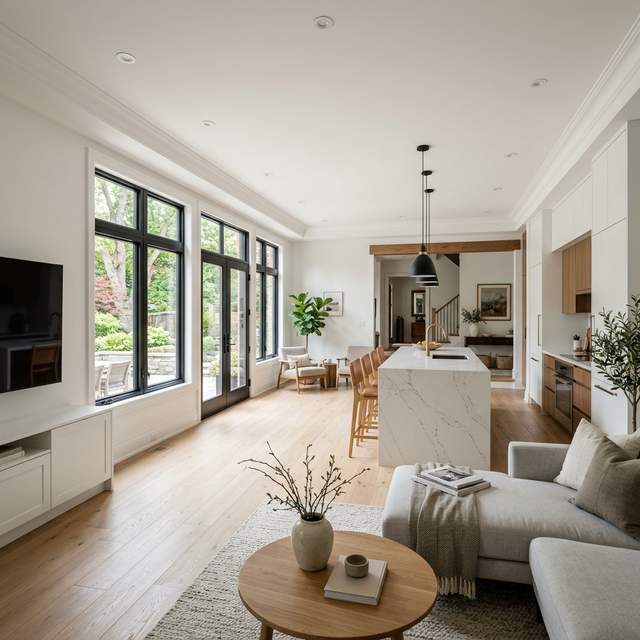
A well-executed home addition is one of the best investments you can make in your Toronto property. The return depends on the type of addition and the quality of execution.
| Addition Type | Typical ROI | Key Value Drivers |
|---|---|---|
| Kitchen Extension | 70 – 85% | Open-concept layout, modern finishes, natural light |
| Second Storey | 60 – 75% | Bedroom count increase, additional bathrooms |
| Primary Suite Addition | 55 – 70% | En-suite bathroom, walk-in closet, private space |
| In-Law Suite | 65 – 80% | Rental income potential, multi-generational living |
| Sunroom / Three-Season | 45 – 60% | Additional living space, connection to outdoors |
Beyond the direct ROI at resale, a home addition eliminates the significant transaction costs of buying a larger home — land transfer taxes, real estate commissions, and moving costs that can easily total $80,000 to $150,000 for a typical Toronto home purchase.
How much does a home addition cost in Toronto?
Do I need a permit for a home addition in Toronto?
How long does a home addition take to build in Toronto?
Is building an addition cheaper than buying a bigger house in Toronto?
What type of home addition adds the most value?
Can I live in my home during an addition project?
Ready to Expand Your Toronto Home?
If you are considering a home addition in Toronto, Red Stone Contracting is here to guide you through every step. From initial design concepts through final inspection, our design-build team delivers additions that feel like they were always part of your home.
Call us today at (905) 901-1006 or request a free consultation online. We will visit your property, discuss your goals, and provide a detailed scope and estimate for your project.
Red Stone Contracting proudly serves Toronto, Mississauga, Burlington, Oakville, and communities across the Greater Toronto Area. With a commitment to craftsmanship, transparency, and client satisfaction, we are your trusted partner for custom home additions.