
Deciding to keep living at home during renovation Toronto projects is one of the biggest practical questions GTA homeowners face in 2026. With renovation costs climbing and temporary rentals in Toronto, Mississauga and Burlington running between $3,000 and $6,000 a month, many families choose to stay put through a kitchen tear-out, basement build or whole-home refresh. It is absolutely doable, but it takes planning, dust discipline and a contractor who understands how to phase work around an occupied house. This guide walks you through the dust control, scheduling, safety and budgeting realities so you can survive your renovation with your sanity intact.
At Red Stone Contracting, we have run hundreds of occupied-home projects across the GTA, and the difference between a tolerable renovation and a miserable one almost always comes down to preparation. Below you will find real 2026 cost data, realistic timelines and the survival tactics that separate the homeowners who thrive from those who flee to a hotel halfway through.
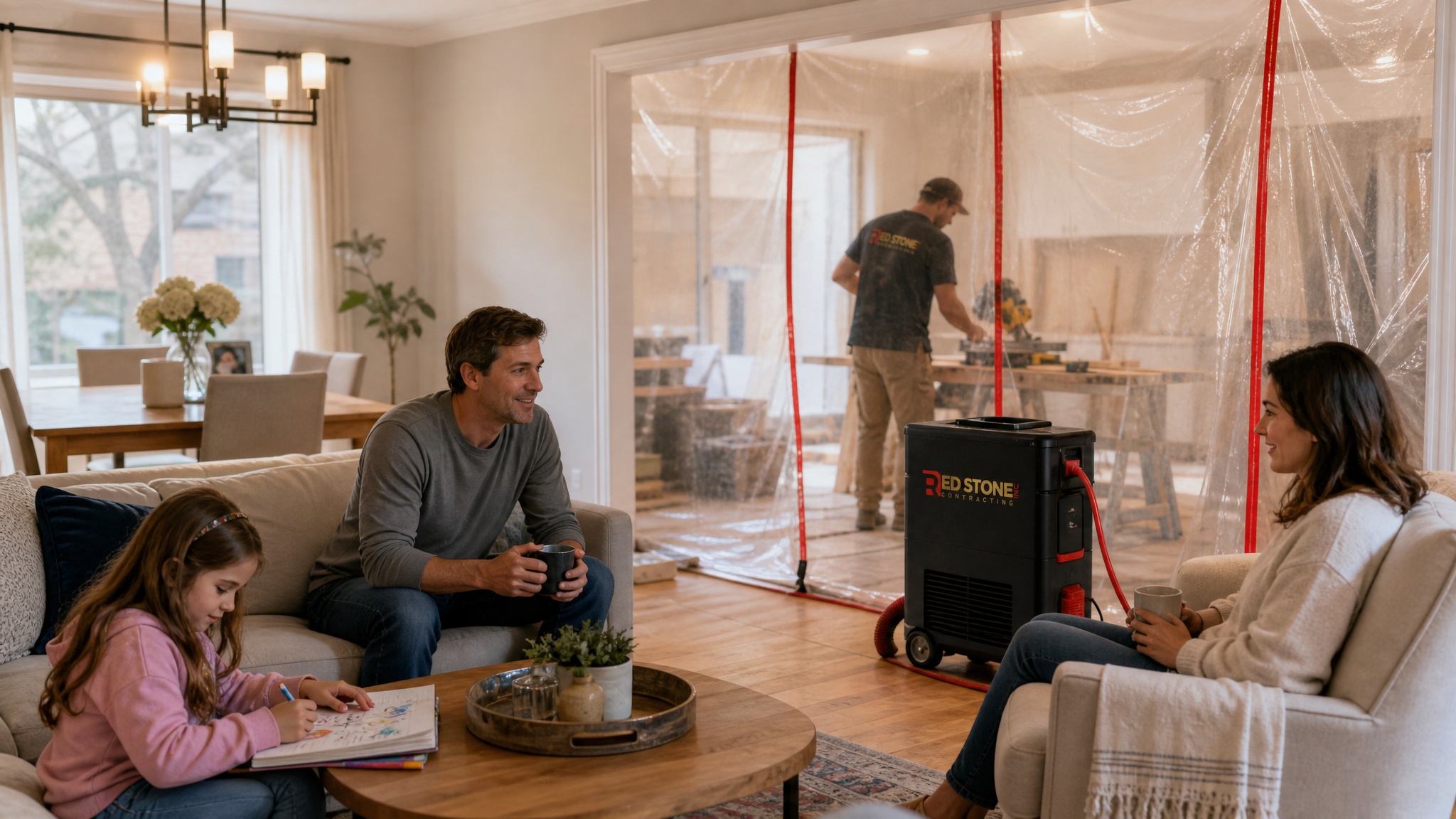
Should You Stay? The Real Decision Behind Living at Home During Renovation in Toronto
The choice to stay or relocate is not just emotional, it is financial and logistical. Living at home during renovation Toronto projects can save thousands in rent and storage, but it carries hidden costs in stress, lost productivity and slower work. Contractors often move faster in a vacant home because they can run multiple trades simultaneously without protecting occupied zones. When you stay, the schedule typically stretches by 10 to 25 percent because of dust barriers, daily cleanup and limited working hours.
Start by mapping which rooms are affected. A single bathroom renovation is very different from a gut kitchen renovation that knocks out your only cooking space, or a basement renovation that disrupts your laundry and mechanical room. The more central the space is to daily life, the harder staying becomes. Whole-home projects and additions are usually the strongest candidates for temporary relocation, while contained, single-zone work is very liveable.
| Project Type | Liveability While Occupied | Typical GTA Duration | Recommended Approach |
|---|---|---|---|
| Single bathroom | High | 2 to 4 weeks | Stay, use alternate bathroom |
| Kitchen gut renovation | Moderate | 6 to 10 weeks | Stay with temporary kitchen |
| Basement finishing | High | 5 to 8 weeks | Stay, seal stairwell |
| Whole-home or addition | Low | 4 to 9 months | Relocate or phase tightly |
| Second-storey addition | Very low | 5 to 10 months | Relocate during framing |
Dust Control: The Number One Survival Skill
Dust is the single biggest complaint from homeowners who stay during a renovation. Construction dust is not ordinary household dust, it contains fine silica from concrete and drywall, wood particulate and sometimes lead in pre-1980 Toronto homes. It travels through HVAC systems, settles on every surface and lingers for weeks. Proper containment is non-negotiable, and it is worth asking your contractor exactly how they plan to manage it before signing.
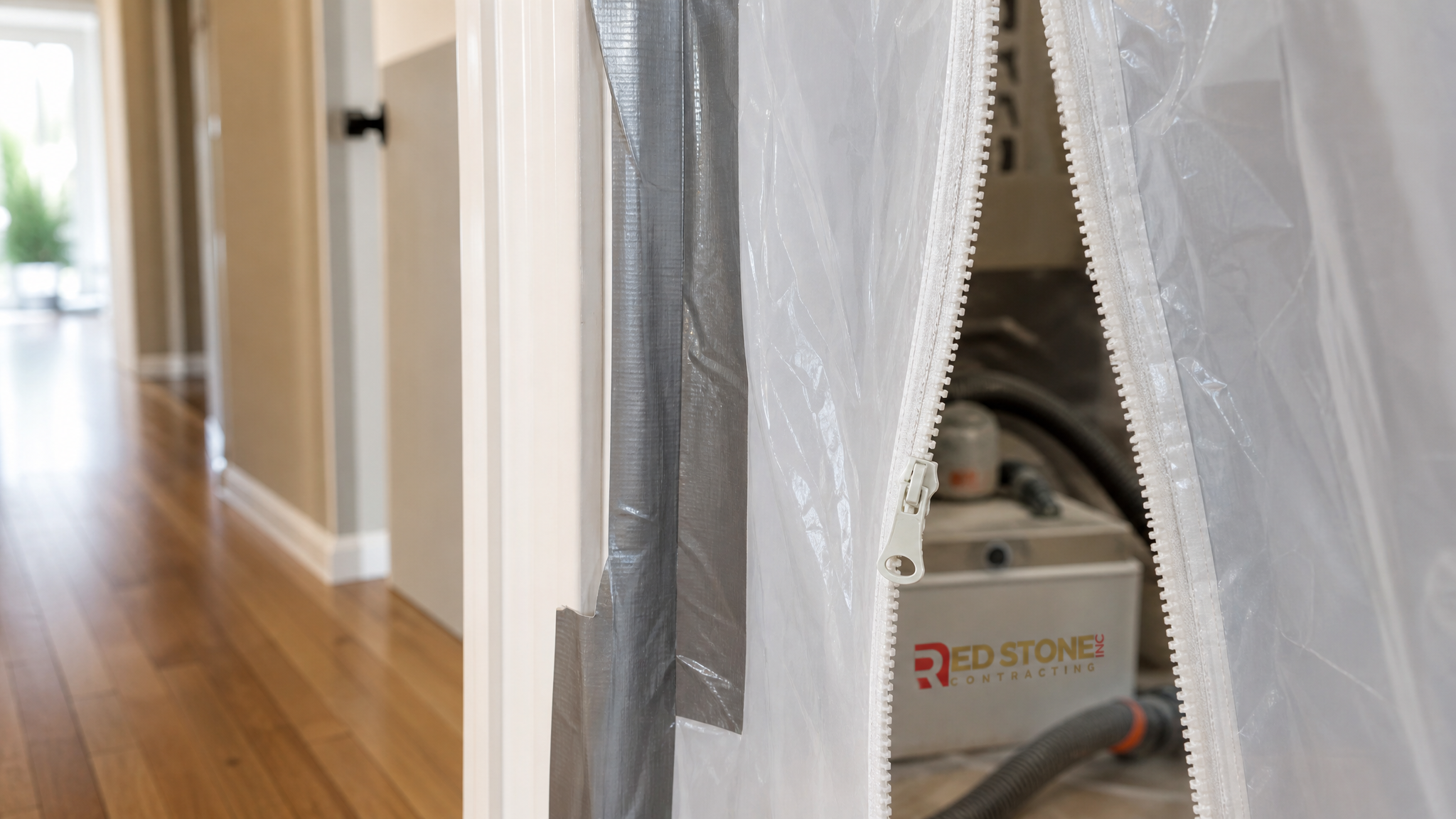
Professional dust containment in 2026 typically combines physical barriers, negative air pressure and HEPA filtration. A reputable GTA contractor will seal the work zone with 6-mil poly sheeting on zip-wall frames, cover return-air registers, run a HEPA air scrubber and use negative air machines that vent dust outdoors. Cheaper crews skip these steps, and you will be cleaning fine grey film off your bookshelves for months afterward.
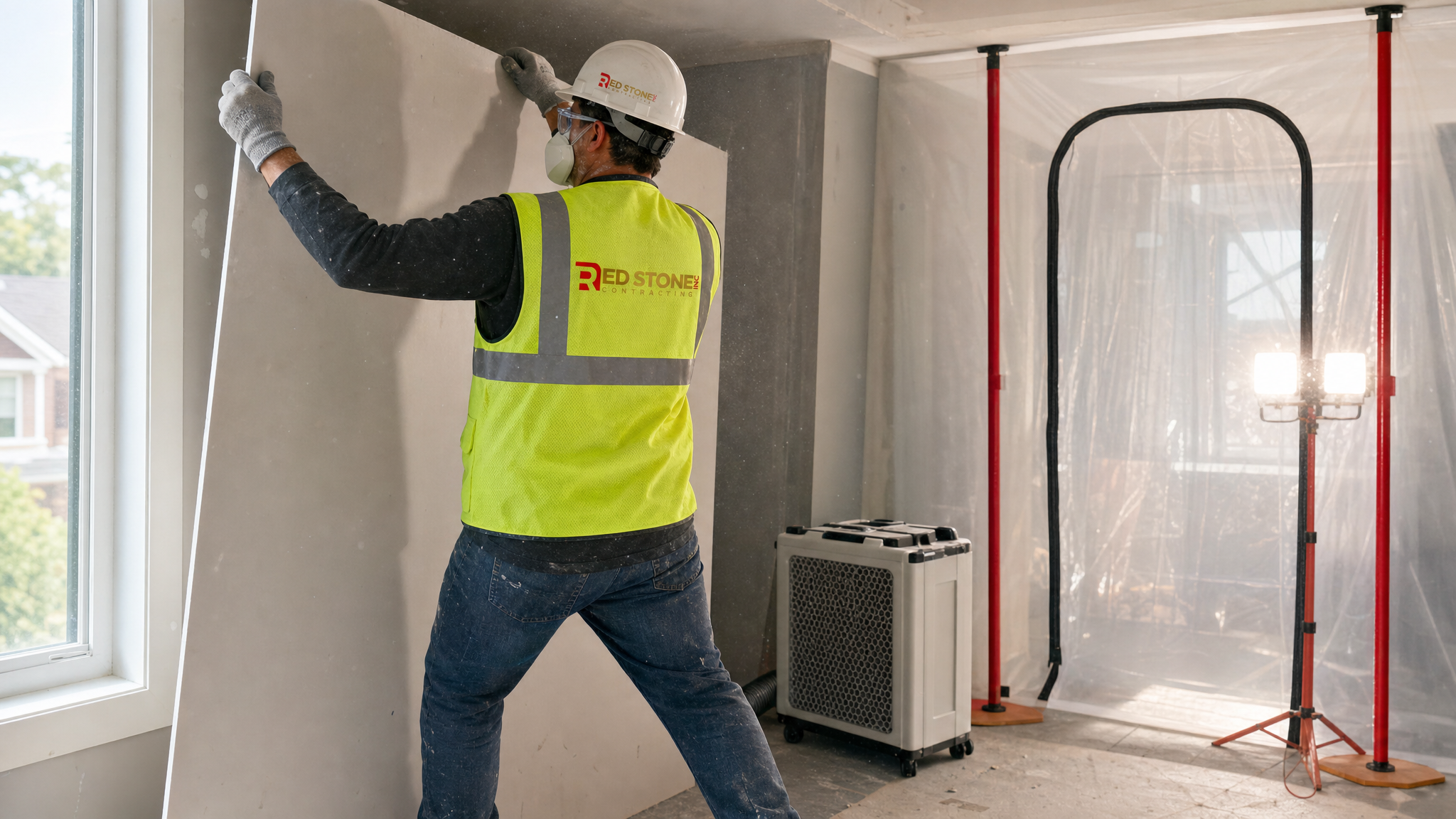
| Dust Control Method | What It Does | Typical 2026 GTA Cost | Effectiveness |
|---|---|---|---|
| 6-mil poly zip-wall barrier | Seals room openings | $200 to $600 per zone | High |
| HEPA air scrubber rental | Filters airborne particulate | $300 to $700 per month | Very high |
| Negative air machine | Vents dust outdoors | $400 to $900 per month | Very high |
| HVAC register sealing | Stops duct contamination | $100 to $250 flat | High |
| Sticky tack mats at exits | Catches foot-tracked debris | $40 to $120 | Moderate |
On your side, keep interior doors closed, run portable HEPA purifiers in bedrooms, change your furnace filter weekly during heavy work and wipe surfaces with damp microfibre cloths rather than dry dusting, which just redistributes particulate. Families with asthma, allergies or young children should be especially strict, and in some cases a short relocation during the dustiest demolition phase is the smartest call.
Phasing the Schedule Around an Occupied Home
A well-phased schedule is what makes staying bearable. The goal is to always preserve at least one functioning bathroom, a sleeping area and a way to prepare food. Experienced contractors sequence work so that disruptive, dusty and noisy tasks are batched together and completed quickly, rather than dragging on for weeks. Demolition and rough mechanical work are the worst phases, while finishing work like painting and trim is comparatively gentle.
For a kitchen project, a smart contractor will pre-order cabinets and appliances so the gap between tear-out and reinstallation is as short as possible. For a basement, the stairwell gets sealed first so the rest of the house stays clean. For larger jobs through our custom home renovation and home additions teams, we often build the new structure first and only break through to the existing house at the latest possible moment, minimizing the time your home is open to the elements and dust.
| Renovation Phase | Disruption Level | Noise & Dust | Survival Tip |
|---|---|---|---|
| Demolition | Severe | Very high | Leave the house for these days |
| Rough plumbing & electrical | Moderate | Moderate | Expect water and power shutoffs |
| Drywall & sanding | High | Very high dust | Seal zone, run air scrubber |
| Flooring & tile | Moderate | Moderate | Block off cured areas |
| Paint & trim | Low | Low, fumes only | Ventilate, low-VOC products |
| Final fixtures & cleanup | Low | Low | Reclaim your space |
Setting Up Temporary Living Zones
The homeowners who cope best are the ones who build a temporary command centre before work begins. If your kitchen is out of commission, set up a mini-kitchen in the dining room or basement with a microwave, toaster oven, electric kettle, mini-fridge and a portable induction burner. Wash dishes in a bathroom sink or a basement utility sink, and stock disposable plates for the worst weeks. A good design solutions consultation can even help you plan where these temporary zones go so they do not block the contractor’s access routes.
Protect your belongings before demolition day. Move furniture, electronics and anything fragile well away from the work zone and cover what remains. Designate a clean entrance the crew will not use, and agree on a single path through the house for workers to limit tracked dirt. Establish daily start and stop times, and confirm whether the crew will broom-clean their zone each evening, which most professional GTA contractors do as standard practice.
| Temporary Setup | Why It Matters | Estimated Cost |
|---|---|---|
| Portable induction cooktop | Replaces stove during kitchen work | $80 to $200 |
| Mini-fridge rental or buy | Keeps food without a kitchen | $120 to $300 |
| Portable HEPA air purifier | Clean air in bedrooms | $150 to $400 each |
| Storage pod rental | Protects furniture off-site | $180 to $350 per month |
| Hotel nights for worst phases | Escape demolition or sanding | $180 to $300 per night |
Safety, Kids, Pets and Working From Home
An active jobsite inside your home introduces real hazards: trip lines from extension cords, open floor cavities, sharp tools and temporary power arrangements. Keep children and pets physically separated from work zones with locked doors or sturdy gates, and never let them wander into a space with exposed nails or wiring. Toronto homes built before 1980 may contain asbestos or lead paint, so insist on testing before any demolition, and confirm your contractor follows Ontario Ministry of Labour abatement procedures if either is found.
If you work from home, talk to your contractor about a quiet block in the schedule for important calls, or relocate your office to the far side of the house. Noise from demolition, tile saws and nail guns is unavoidable during certain phases, so plan meetings around the quieter finishing weeks. Many of our GTA clients across Toronto, Mississauga and Burlington simply book hotel nights for the three or four loudest days and treat the rest as normal life.
Budgeting for the Hidden Costs of Staying
Staying in your home is usually cheaper than relocating, but it is not free. Build a contingency line for the extras that occupied renovations create. Dust control equipment, temporary kitchen gear, higher utility bills from running air scrubbers, occasional hotel nights and increased takeout spending all add up. A realistic occupied-renovation budget includes 8 to 12 percent on top of the construction cost for these living expenses, while full relocation can add 15 to 25 percent.
The trade-off is straightforward. Relocating speeds up the build and removes daily stress, but costs more in rent and storage. Staying saves money but stretches the timeline and demands patience. The right answer depends on your project scope, your tolerance for disruption and whether anyone in the household has health sensitivities. A transparent contractor will help you model both scenarios honestly before you commit.
| Cost Factor | Stay at Home | Temporary Relocation |
|---|---|---|
| Monthly rental | $0 | $3,000 to $6,000 |
| Storage / pod | $0 to $350 | $180 to $500 |
| Dust & air equipment | $700 to $1,800 | Minimal |
| Extra food / takeout | $400 to $900 per month | Lower, full kitchen |
| Schedule impact | 10 to 25% longer | Fastest completion |
Is living at home during renovation in Toronto actually safe?
How do contractors keep dust out of the rest of the house?
How much longer does a renovation take if I stay in the home?
Can I keep using my kitchen during a kitchen renovation?
Should I relocate for a whole-home renovation or addition?
What is the biggest mistake homeowners make when staying during a renovation?
Plan Your Living at Home During Renovation Toronto Project With Confidence
A major renovation does not have to upend your life. With disciplined dust control, smart scheduling and well-planned temporary living zones, thousands of GTA families stay comfortably in their homes through kitchens, basements, bathrooms and additions every year. The key is partnering with a contractor who treats your occupied home with the care it deserves. That is exactly how Red Stone Contracting approaches every project, sequencing work to protect your daily routine while delivering the renovation you envisioned.
Call us today at (905) 901-1006 or request a free consultation to map out a survival plan tailored to your home and timeline.
Red Stone Contracting has been serving Toronto, Mississauga, Burlington and the Greater Toronto Area with expert, occupant-friendly home renovations for years, helping families live well even while their homes are being transformed.