
If your Toronto home was built before 1950, there is a strong chance the original electrical system still hides behind your plaster walls, and that makes knob and tube wiring removal toronto homeowners need to understand before any major renovation begins. Knob and tube wiring was the standard installation method in Ontario from roughly 1900 to the late 1940s, and while it was perfectly adequate for the lighting loads of that era, it cannot safely carry the demands of a modern household full of heat pumps, induction ranges, EV chargers and home offices. When you open up walls for a kitchen, bathroom or basement renovation, that is the ideal and often the only practical moment to remove it. This guide walks through the real 2026 costs, the insurance landscape, and the Ontario Electrical Safety Code requirements that apply across Toronto, Mississauga, Burlington and the wider GTA.
What Knob and Tube Wiring Is and Why Toronto Renovations Trigger Its Removal
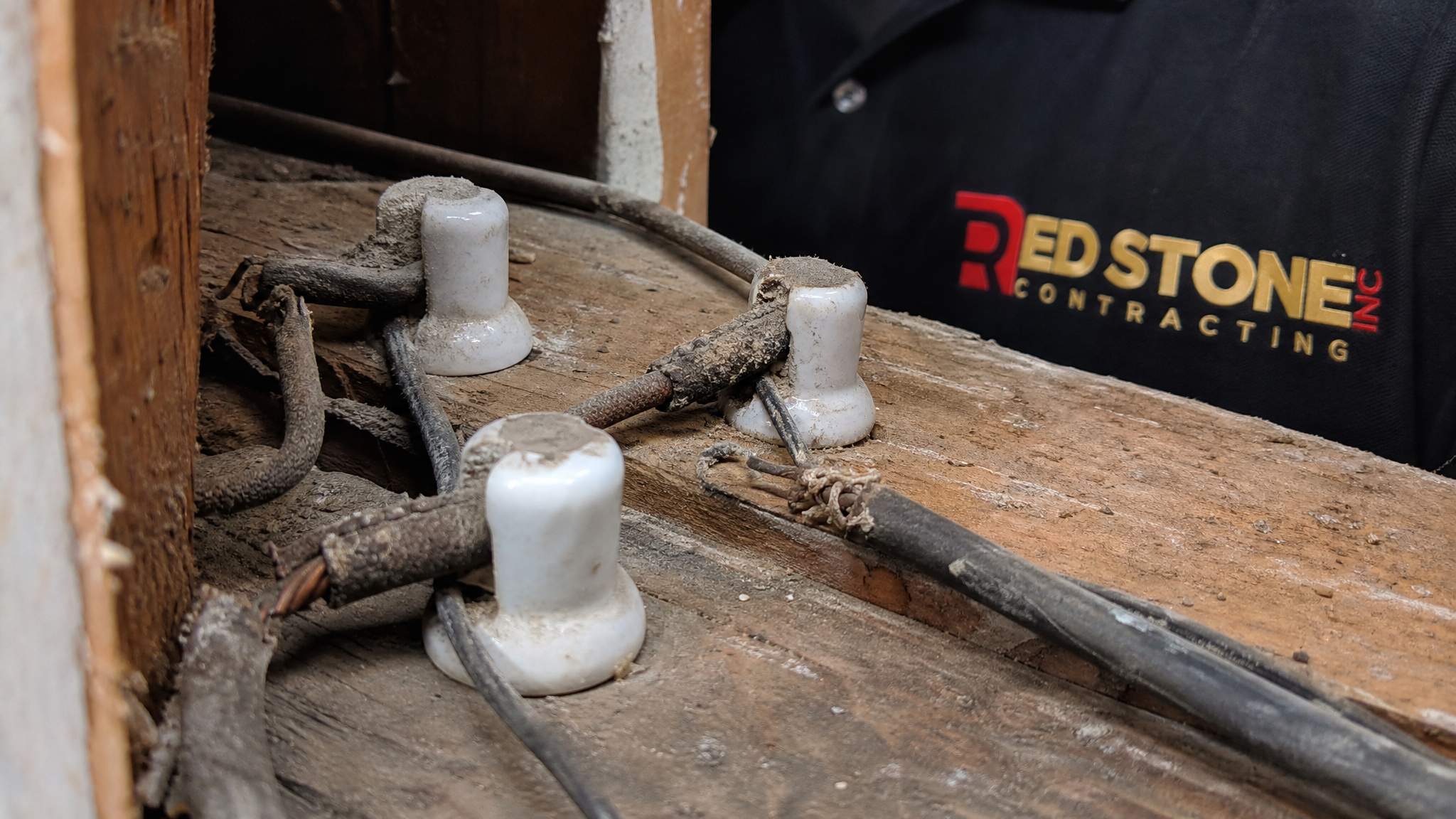
Knob and tube wiring removal toronto projects almost always begin during a renovation because the wiring is buried inside finished walls, ceilings and floors. The system gets its name from the ceramic knobs that suspend the conductors away from framing and the ceramic tubes that protect wires where they pass through joists and studs. It uses two separate single conductors, a hot and a neutral, run several centimetres apart through open air. Critically, it has no ground wire, which means none of your outlets can safely accept a modern three-prong plug or protect against shock.
The deeper problem is age and modification. Most original knob and tube in the GTA is now 75 to 120 years old. The rubber and cloth insulation has dried, cracked and in many cases crumbled away entirely. Decades of well-meaning but unqualified modifications, splices buried in walls, circuits extended with modern cable, and blown-in attic insulation packed directly over conductors that were designed to dissipate heat into open air, have turned a once-safe system into a real fire hazard. When you remove drywall or plaster for a renovation, the wiring becomes accessible, and replacing it then costs a fraction of what it would as a standalone job that requires reopening walls.
2026 Cost of Knob and Tube Wiring Removal in Toronto and the GTA
Cost is the first question every homeowner asks, and the honest answer is that it depends on the size of the home, how many circuits exist, how accessible the wiring is, and whether your electrical panel also needs upgrading. The figures below reflect typical 2026 pricing from licensed electrical contractors working in Toronto, Mississauga and Burlington. They assume the work is done as part of an active renovation where walls are already open, which lowers labour considerably.
| Home Size / Scope | Circuits Affected | Typical 2026 Cost (Walls Open) | Standalone Cost (Walls Closed) |
|---|---|---|---|
| Partial removal (one floor) | 3 to 6 circuits | $3,500 to $7,000 | $7,000 to $12,000 |
| Small home / semi (under 1,400 sq ft) | 8 to 12 circuits | $8,000 to $14,000 | $14,000 to $22,000 |
| Average detached (1,500 to 2,500 sq ft) | 14 to 20 circuits | $12,000 to $20,000 | $20,000 to $32,000 |
| Large or multi-unit century home | 22+ circuits | $20,000 to $35,000+ | $32,000 to $55,000+ |
The single biggest reason to bundle this work into a renovation is the difference between those two right-hand columns. Demolition and drywall repair often account for 40 to 60 per cent of a standalone rewiring quote. If you are already gutting a space for a kitchen renovation or a basement renovation, the walls are open, the dust containment is in place, and the electrician can pull new cable freely. That coordination is exactly why a general contractor and electrician should plan the sequence together from day one.
| Related Cost Component | Toronto / GTA 2026 Range | Notes |
|---|---|---|
| Panel upgrade to 200A | $2,800 to $4,500 | Often required; old K&T homes frequently have 60A or 100A service |
| ESA permit and inspection | $120 to $400+ | Scales with project size; mandatory for all rewiring |
| New grounded outlets / device | $90 to $180 each | Includes box, device, cover and labour |
| Drywall patch and paint (if standalone) | $60 to $120 per patch | Avoided when done during a renovation |
| Hydro service mast / meter relocation | $1,500 to $4,000 | Only if exterior service entrance is upgraded |
The Insurance Problem: Why Knob and Tube Is a Coverage Dealbreaker
For many GTA homeowners, the financial urgency around removal is driven less by safety alarm and more by insurance. Since the mid-2000s, most Canadian home insurers have treated active knob and tube wiring as an unacceptable risk. The practical reality in the 2026 Ontario market falls into a few clear patterns.
Some insurers will not write a new policy at all on a home with active knob and tube. Others will offer coverage on the condition that the wiring is fully removed and certified within 30, 60 or 90 days of purchase. A shrinking number will continue an existing policy but at a steep premium surcharge, and some require an ESA inspection report confirming the system is in safe working order before they renew. For buyers, this is a deal-shaping issue: a financed purchase generally requires bound insurance to close, so undisclosed knob and tube can derail a closing entirely.
| Insurer Stance (2026 GTA Market) | What It Means for You | Typical Condition |
|---|---|---|
| Decline to insure | No policy until wiring is removed | Full removal + ESA certificate required first |
| Conditional binding | Coverage starts, removal deadline set | 30 to 90 days to complete and certify |
| Surcharge / loaded premium | Higher annual cost while K&T remains | Often 25% to 100% premium increase |
| Renew with inspection | Existing policy continues | ESA inspection report on file |
The takeaway is straightforward: budgeting a renovation on an older Toronto home without confirming your insurer’s knob and tube policy is a gamble. We always recommend homeowners contact their broker early, ideally before the renovation scope is finalised, so the electrical work can be scheduled to satisfy any binding deadline. Removing the wiring during a planned renovation, rather than scrambling under an insurance clock, is far less stressful and far less expensive.
Ontario Electrical Safety Code and ESA Requirements in 2026
All electrical work in the province is governed by the Ontario Electrical Safety Code, which is administered and enforced by the Electrical Safety Authority (ESA). For any knob and tube removal and rewiring, three things are non-negotiable. First, the work must be performed by, or under the supervision of, a licensed electrical contractor holding an ECRA/ESA licence number. Second, a notification (permit) must be filed with the ESA before work begins. Third, the completed work must pass ESA inspection, after which a Certificate of Acceptance is issued, the document your insurer and any future buyer will want to see.
The code requires that modern circuits use grounded copper conductors, typically NMD90 cable, sized correctly for their breaker, with arc-fault (AFCI) protection on most living-area circuits and ground-fault (GFCI) protection in kitchens, bathrooms, laundry rooms, garages and outdoors. Tamper-resistant receptacles are mandatory throughout living spaces. These are exactly the protections knob and tube cannot provide, which is why partial patch-jobs rarely satisfy either the code or the insurer.
| Code / ESA Requirement | Knob and Tube | Modern 2026 Standard |
|---|---|---|
| Equipment ground | None | Dedicated ground conductor on every circuit |
| Arc-fault protection (AFCI) | Not possible | Required on most bedroom/living circuits |
| GFCI protection (wet areas) | Not possible | Required in kitchen, bath, laundry, exterior |
| Conductor insulation | Rubber/cloth, degraded | Thermoplastic NMD90, rated 90°C |
| Permit and inspection | Predates ESA program | ESA notification + Certificate of Acceptance |
How Removal Works Step by Step During a Renovation
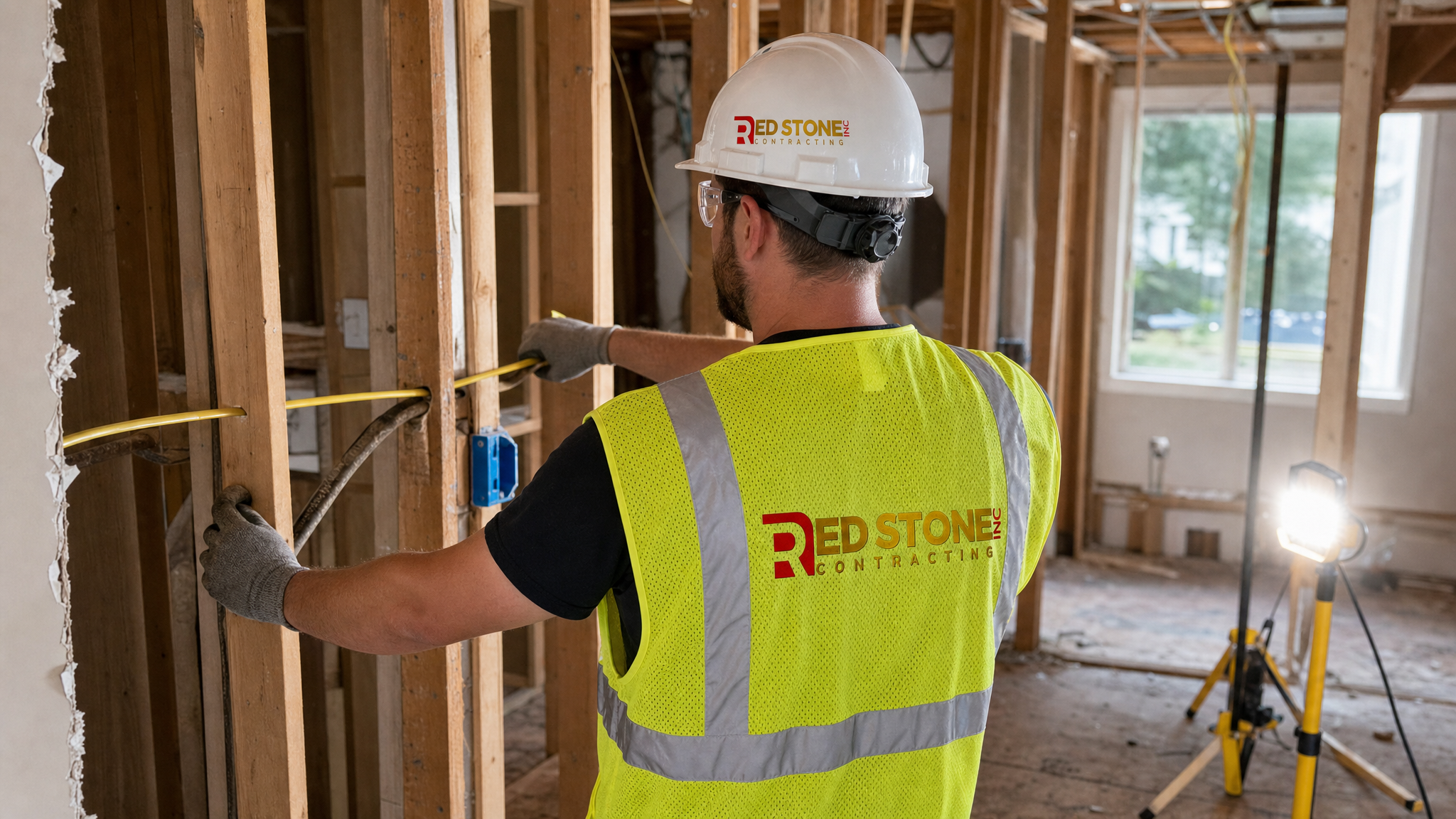
Done properly, removal is methodical rather than dramatic. Once walls and ceilings are open as part of the renovation, the licensed electrician maps every existing circuit and traces it back to the panel. New grounded cable is run from the panel to each device location, often reusing the same wall cavities the old wiring occupied. Old knob and tube is then disconnected at the source and physically removed wherever it is accessible; abandoned-in-place conductors must be fully disconnected so they can never be energised again.
In most GTA century homes the existing 60-amp or 100-amp service is undersized for a modern load calculation, so a 200-amp panel upgrade is folded into the same project. New outlets, switches, smoke and carbon monoxide alarms, and dedicated circuits for major appliances are installed to current code. The ESA inspects the rough-in before walls are closed and again at final, and only then is drywall installed and finishes completed. Coordinating this sequence with your contractor’s schedule is what keeps a project on time, something our team manages closely on every whole-home renovation we take on.
Timeline, Sequencing and What to Expect on Site
Homeowners are often surprised that the electrical portion is not the longest part of the job. Rough-in wiring moves quickly once walls are open; the schedule is usually dictated by inspection bookings and by the rest of the renovation. The table below shows a realistic sequence for a mid-sized GTA home where removal is bundled into a larger renovation.
| Phase | Typical Duration | What Happens |
|---|---|---|
| Planning and ESA notification | 3 to 7 days | Load calculation, scope, permit filed |
| Demolition / wall opening | 2 to 5 days | Coordinated with renovation demo |
| Rough-in wiring and panel | 4 to 8 days | New cable, new 200A panel, devices roughed |
| ESA rough inspection | 1 to 3 day wait | Must pass before walls close |
| Close walls, finish, final ESA | 5 to 15 days | Drywall, devices, certificate issued |
Because the wiring touches every room, removal pairs naturally with renovations that already involve multiple spaces, such as a combined main-floor and bathroom renovation or a full second-storey home addition. If you live in the west GTA, our Mississauga renovation services and Burlington renovation services teams handle the same code-compliant coordination with local ESA inspectors. The goal is one continuous project, one inspection schedule, and one finished result rather than a wiring job today and a renovation later.
Is knob and tube wiring removal in Toronto mandatory by law?
How much does knob and tube wiring removal cost in the GTA in 2026?
Will my home insurance be cancelled because of knob and tube?
Do I need an ESA permit and inspection?
Can knob and tube wiring be partially removed?
Why is doing it during a renovation cheaper?
Schedule Your Knob and Tube Wiring Removal Toronto Consultation Today
Removing decades-old wiring is not a place for guesswork, and it is far easier when it is planned into the renovation rather than treated as an emergency. Red Stone Contracting coordinates licensed electrical work, ESA inspections and full interior finishing into one seamless renovation across Toronto and the GTA, so your home comes out safer, insurable and built to current code.
Call us today at (905) 901-1006 or request a free consultation to map out your project and get a clear, itemised estimate. Explore our Toronto renovation services or our design solutions to see how we bring older homes up to modern standards.
Red Stone Contracting proudly serves homeowners in Toronto, Mississauga, Burlington and the wider GTA with code-compliant, fully managed home renovations.