
If your kitchen layout still works but the cabinet doors look tired, kitchen cabinet refacing toronto homeowners are asking whether they should reface or fully replace their cabinetry in 2026. The answer depends on the condition of your cabinet boxes, your budget, how long you plan to stay in the home, and the resale market in your neighbourhood. Refacing keeps your existing cabinet boxes and replaces the doors, drawer fronts, and surface veneers, while replacement strips everything out and starts fresh. This guide breaks down real Greater Toronto Area pricing, timelines, and the trade-offs so you can make a confident, informed decision.
Across Toronto, Mississauga, Burlington and the wider GTA, kitchens are one of the highest-return renovation projects you can undertake. But “renovating the kitchen” can mean a $9,000 refacing refresh or a $55,000 gut and rebuild. Understanding where refacing fits in that spectrum saves you from overspending on a kitchen that only needed a cosmetic update, or under-investing in one that has structural problems hiding behind the doors.
What Is Kitchen Cabinet Refacing in Toronto?
Kitchen cabinet refacing toronto contractors define refacing as replacing the visible exterior of your cabinets while keeping the existing cabinet boxes (the structural carcasses) in place. A typical reface includes new doors, new drawer fronts, new hinges and hardware, and a thin veneer or laminate skin applied over the exposed face frames and end panels so the boxes match the new doors. The result looks like brand-new cabinetry, but you avoid demolishing and rebuilding the entire structure.
The process works best when your existing boxes are sound. Most GTA homes built from the 1980s onward used plywood or particleboard boxes that, if they have not suffered water damage, remain perfectly serviceable for decades. Refacing is essentially a cosmetic and hardware upgrade layered onto that solid foundation. If you like your current kitchen layout and the cabinet placement still suits how you cook, refacing is often the smartest spend. Our team handles this work as part of our broader kitchen renovation services.
There are three common refacing material tiers in the GTA market. Rigid thermofoil (RTF) and laminate are the most affordable and durable for high-moisture rooms. Real wood veneer offers a premium, stainable finish. Solid wood replacement doors paired with veneered boxes sit at the top end. Each tier changes the price and the look significantly, as the table below shows.
| Refacing Material | Typical GTA Cost (10×10 kitchen) | Durability | Best For |
|---|---|---|---|
| Laminate / RTF doors | $5,500 – $9,000 | High; moisture-resistant | Budget refresh, rentals, busy families |
| Real wood veneer | $8,500 – $13,000 | High with sealing | Mid-range homes wanting a natural look |
| Solid wood doors + veneer boxes | $12,000 – $18,000 | Very high | Premium homes, long-term owners |
| Painted MDF shaker doors | $9,000 – $14,000 | High; can chip at edges | Modern transitional kitchens |
Kitchen Cabinet Refacing Toronto Cost vs Full Replacement in 2026
The single biggest reason homeowners choose refacing is cost. In 2026, a full cabinet replacement in the GTA typically runs two to three times the price of a comparable reface, largely because replacement adds demolition, disposal, new boxes, and usually new countertops, backsplash, and sometimes plumbing or electrical relocation. Refacing lets you isolate the visual upgrade from those costlier structural items.
That said, replacement buys you things refacing cannot: a new layout, deeper or taller boxes, soft-close everything, integrated organizers, and the ability to fix water-damaged or sagging carcasses. The table below compares the two paths on the metrics that matter most to GTA budgets.
| Factor | Cabinet Refacing | Full Replacement |
|---|---|---|
| Typical cost (10×10 kitchen) | $6,000 – $16,000 | $18,000 – $55,000+ |
| Project timeline | 3 – 5 days | 3 – 6 weeks |
| Layout changes possible | No | Yes |
| Kitchen usable during work | Mostly yes | No |
| Landfill waste generated | Minimal | Significant |
| Lifespan of result | 10 – 20 years | 20 – 40 years |
For many Mississauga and Burlington homeowners with mid-2000s kitchens, the numbers favour refacing decisively. If your boxes are solid and the layout works, spending $10,000 on a reface instead of $35,000 on a replacement frees up budget for other rooms, such as a bathroom renovation or a long-delayed basement renovation. The decision is less about which is “better” in the abstract and more about which matches the actual condition of your kitchen.
When Refacing Is the Smart Choice
Refacing makes financial and practical sense under a specific set of conditions. If most of these describe your kitchen, you are an excellent refacing candidate:
- Your cabinet boxes are structurally sound with no water swelling, delamination, or sagging shelves.
- You are happy with the layout and do not need to move the sink, stove, or major cabinet runs.
- Your kitchen is reasonably sized so the door and drawer count keeps material costs proportional.
- You want minimal disruption and cannot lose your kitchen for a month.
- You plan to sell within a few years and want maximum visual impact for minimum spend.
Refacing is especially popular among GTA homeowners preparing a property for sale. Real estate agents across Toronto consistently report that dated cabinet doors are one of the first things buyers notice. A clean reface in a neutral shaker style photographs beautifully and signals a well-maintained home without the multi-week chaos of a gut renovation. For investors and landlords managing rental units, laminate refacing offers a durable, low-maintenance surface that resists tenant wear.
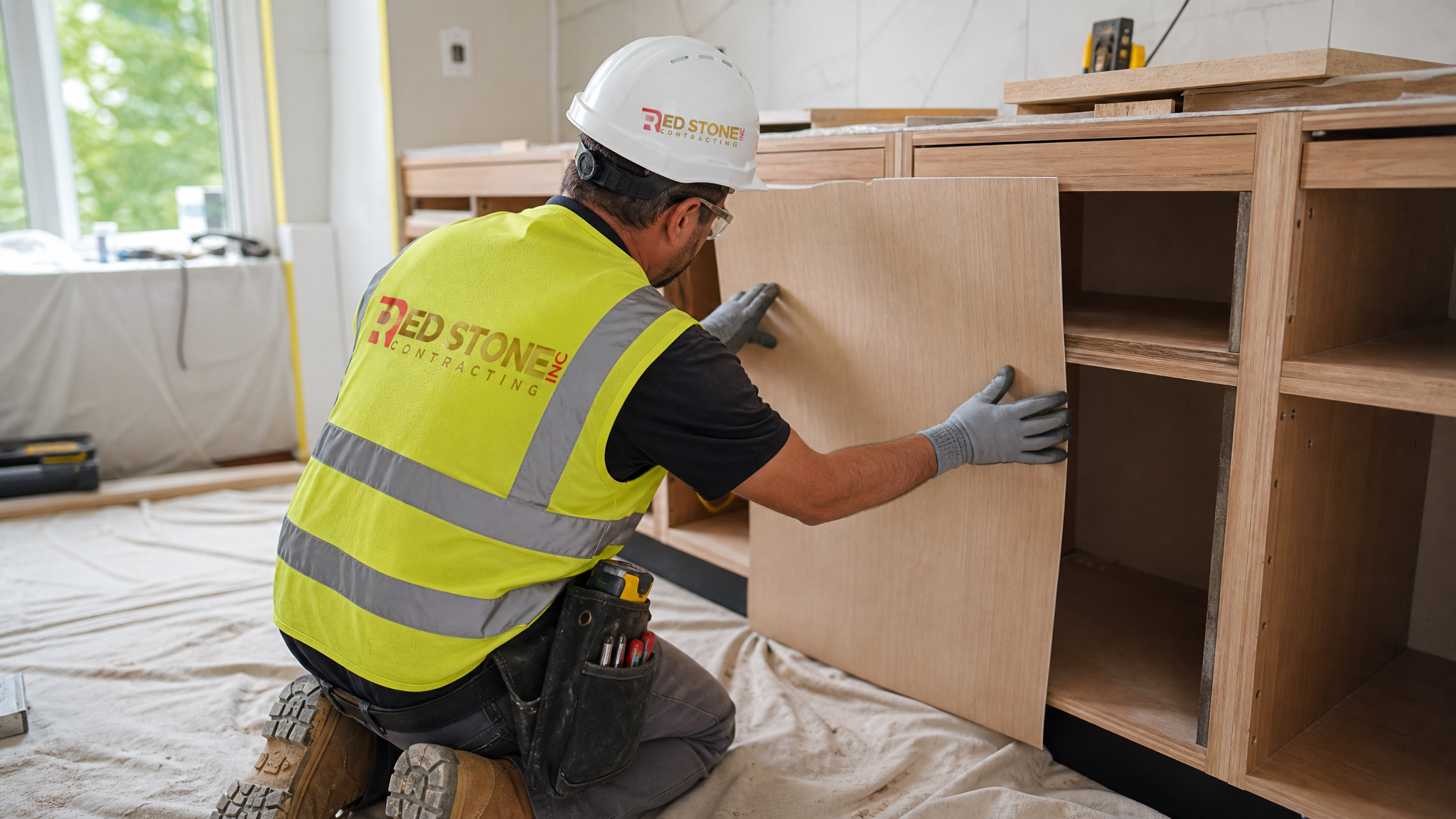
One caution: refacing only works if the installation is precise. Veneer that lifts at the edges, doors hung even slightly out of square, or mismatched grain direction will make a reface look cheap. This is craft-intensive work, which is why working with an experienced Toronto renovation team matters more than the material you select. A poor reface fails within a couple of years; a professional one lasts as long as the boxes underneath.
When Full Replacement Is Worth the Investment
Replacement becomes the right call when refacing simply cannot solve your problem. If your cabinet boxes have water damage, particleboard swelling, or chronic sagging, refacing only puts a pretty face on a failing structure. Similarly, if your kitchen layout fights against how your household actually lives, no amount of new doors will fix a cramped work triangle or a lack of counter space.
Replacement is also the path when you are combining the kitchen with a larger project, such as opening a wall into a dining room, adding an island with new electrical and plumbing, or extending the home. In those cases the kitchen is being reconfigured anyway, and reusing old boxes would limit the design. Homeowners undertaking a full custom home renovation or significant home addition almost always replace rather than reface.
| Condition or Goal | Recommended Path | Why |
|---|---|---|
| Boxes sound, layout liked | Reface | Maximum value, minimal disruption |
| Water-damaged or swollen boxes | Replace | Structure is compromised |
| Want a new layout or island | Replace | Refacing cannot move boxes |
| Selling within 1-3 years | Reface | Best return on a modest spend |
| Forever home, premium finish | Replace | Longest lifespan and full customization |
| Combining with wall removal | Replace | Kitchen is reconfigured anyway |
It is worth modelling the resale math for your specific neighbourhood. In higher-value Toronto and Oakville-adjacent markets, buyers increasingly expect fully modern kitchens, and a high-end replacement can return a strong portion of its cost at sale. In more moderate Mississauga and Burlington pockets, a tasteful reface often delivers a better return-on-investment ratio because the spend is so much lower. A good design consultation will help you weigh these market realities against your timeline.
The Refacing Process and Timeline in the GTA
One of refacing’s biggest advantages is speed. A typical GTA reface is measured in days, not weeks, and you can usually keep using your kitchen most evenings. Here is how a professional project unfolds:
- Consultation and measurement (Day 0): A designer measures every door and drawer, confirms box condition, and helps you choose materials and hardware.
- Manufacturing lead time (2-4 weeks): Custom doors and veneers are produced off-site. Your kitchen stays fully functional during this window.
- Removal of old fronts (Day 1): Existing doors, drawer fronts, and hardware come off. Boxes are cleaned and prepped.
- Veneer application (Days 1-2): New skins are precisely fitted to face frames and end panels.
- Door and drawer installation (Days 2-4): New fronts are hung, aligned, and adjusted; soft-close hardware is fitted.
- Final adjustments (Day 5): Everything is squared, cleaned, and walked through with you.
Because demolition is minimal, dust and debris are far lower than a full replacement, and there is no weeks-long period of washing dishes in the bathroom. For families with kids or anyone working from home, that reduced disruption is often as valuable as the cost savings. Homeowners in our Mississauga renovation and Burlington renovation service areas frequently cite the short timeline as the deciding factor.
Hidden Costs and Quality Factors to Watch
Whether you reface or replace, the headline price rarely tells the whole story. A few line items consistently surprise GTA homeowners, and understanding them up front prevents budget shock partway through the project.
| Hidden Cost | Refacing Impact | Replacement Impact |
|---|---|---|
| Countertop replacement | Optional add-on | Almost always required |
| Backsplash work | Sometimes needed | Usually required |
| Plumbing/electrical moves | Rarely | Common with layout changes |
| Disposal and dump fees | Minimal | $400 – $1,200 |
| Permit (structural changes) | Not needed | May be needed |
For refacing specifically, the quality of the doors and the skill of the installer drive the long-term result more than anything else. Cheap thermofoil can delaminate near heat sources like ovens, and bargain veneers can bubble in humid conditions. Ask your contractor what edge-banding and adhesives they use, whether the doors carry a warranty, and to see completed local projects. Reputable GTA renovators are happy to provide references and photographs of finished work.
Another factor is interior hardware. While refacing addresses the exterior, you can pair it with new soft-close hinges, drawer slides, pull-out organizers, and lazy-susan upgrades. These mid-project additions are far cheaper to install while the doors are already off, so it is worth deciding on them during the consultation rather than retrofitting later.
Schedule Your Kitchen Cabinet Refacing Toronto Consultation Today
Choosing between refacing and replacement comes down to the real condition of your boxes, your budget, and how long you will enjoy the result. The experienced team at Red Stone Contracting will assess your existing cabinetry honestly, walk you through both options with transparent GTA pricing, and recommend the path that delivers the best value for your home, not the most expensive one.
Call us today at (905) 901-1006 or request a free consultation to get an accurate, no-pressure quote for your kitchen.
Red Stone Contracting has proudly served homeowners across Toronto, Mississauga, Burlington and the Greater Toronto Area with quality kitchen, bathroom, and whole-home renovations.