
Upgrading your service from 100A to 200A is one of the most overlooked yet essential steps in a major home renovation, and an electrical panel upgrade Toronto renovation projects increasingly demand has become standard across the GTA. Whether you are gutting a kitchen, finishing a basement, or building a home addition, modern appliances, EV chargers, heat pumps, and induction cooktops draw far more power than the wiring most older Toronto, Mississauga, and Burlington homes were built with. If your panel is full of double-tapped breakers or still wears a 60A or 100A rating, your renovation plans may stall before the first wall comes down. This 2026 guide breaks down the real costs, the Electrical Safety Authority (ESA) permit process, and what GTA homeowners should expect from a compliant upgrade.
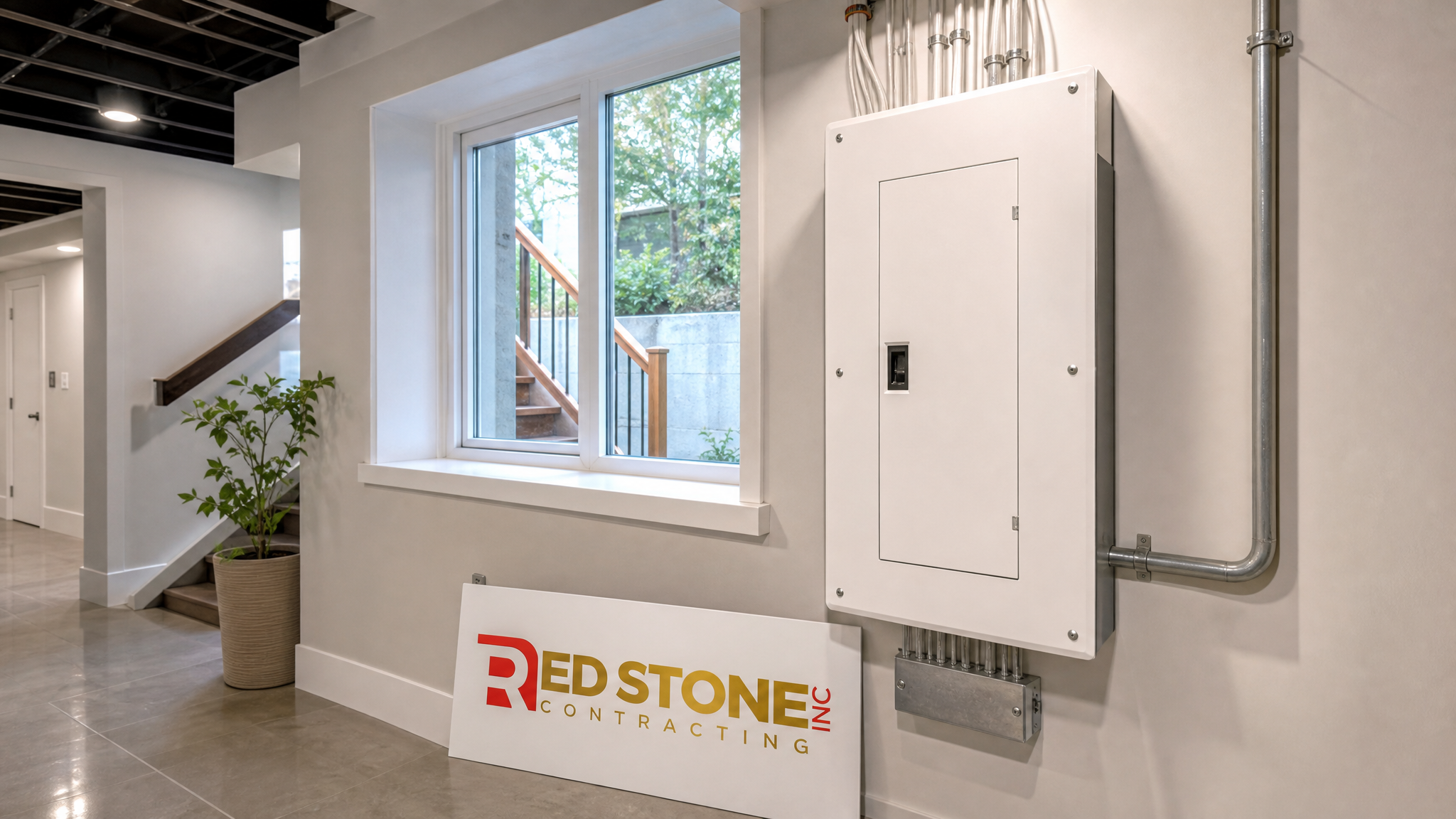
Why an Electrical Panel Upgrade Matters for Your Toronto Renovation
An electrical panel upgrade Toronto renovation work often hinges on is rarely about the panel alone. It is about capacity. A typical 1960s or 1970s home in Etobicoke, Scarborough, or Mississauga was wired for a household that ran a fridge, a television, and a few lamps. Today, the same square footage might host a 50A EV charger, a 40A heat pump, an induction range, a tankless water heater, and a finished basement with its own circuits. When you add these loads on top of an existing 100A service, you can exceed the safe capacity of the panel and the incoming service conductors.
Beyond raw capacity, older panels frequently lack the physical breaker spaces a renovation needs. A modern kitchen renovation alone can require six or more dedicated circuits: small-appliance counter receptacles, dishwasher, microwave, range, refrigerator, and lighting. If your panel is already full, an electrician must either install a sub-panel or upgrade the main service to 200A. For most homeowners planning a comprehensive remodel through Red Stone Contracting, the 200A upgrade is the cleaner, more future-proof choice that supports every phase of the project.
There is also a safety and insurance dimension. Certain legacy panels, particularly fused services and a few discontinued breaker brands, are flagged by insurers across the GTA. Upgrading to a modern 200A panel with proper arc-fault and ground-fault protection not only unlocks your renovation but can also reduce friction at policy renewal time.
100A to 200A Upgrade Cost in the GTA for 2026
Cost is the first question every homeowner asks, and it varies based on your home, your utility, and the scope of work behind the panel. The figures below reflect realistic 2026 pricing for Toronto, Mississauga, Burlington, and the surrounding GTA, including the ESA permit, the panel, the labour, and typical incidentals. These are guidance ranges; a site visit always refines the number.
| Upgrade Scope | Typical 2026 GTA Cost | What It Includes |
|---|---|---|
| 60A/100A to 200A (overhead service) | $3,200 – $4,800 | Panel, breakers, ESA permit, labour, mast if reusable |
| 100A to 200A (underground service) | $4,200 – $6,500 | Panel, breakers, ESA permit, trenching coordination |
| Service mast and meter base replacement | +$800 – $1,600 | New mast, weatherhead, meter base, riser |
| Knob-and-tube or aluminum remediation | +$2,000 – $8,000 | Rewiring affected circuits to code |
| Sub-panel for basement or addition | $1,200 – $2,400 | Sub-panel, feeder, breakers, permit |
The biggest cost swing comes from what the electrician finds behind the wall. If your service is overhead and the mast is in good shape, the job is quicker. If your home still has knob-and-tube or early aluminum branch wiring, code may require remediation of those circuits before the new panel is energized, which adds materially to the budget. Pairing the upgrade with a basement renovation often makes sense because the panel is usually located there and the walls are open anyway.
Understanding the ESA Permit Process in Ontario
In Ontario, any service upgrade legally requires an Electrical Safety Authority (ESA) notification, commonly called an ESA permit. This is not optional, and it is not the same as a municipal building permit. The ESA permit is filed by a Licensed Electrical Contractor (LEC) who holds an ECRA/ESA licence number. Homeowners can technically file under a homeowner permit for their own dwelling, but a 200A service upgrade involving the utility connection is best handled by a licensed contractor for safety and liability reasons.
The process protects you. ESA verifies that the work meets the Ontario Electrical Safety Code, and the final inspection produces a Certificate of Inspection that becomes part of your home’s record. When you sell, that paper trail reassures buyers and lawyers that the upgrade was done correctly. Skipping the permit can create disclosure problems at closing and can void insurance claims if a fault is later traced to unpermitted work.
| Stage | Who Handles It | Typical Timeline |
|---|---|---|
| ESA notification filed | Licensed Electrical Contractor | Day of booking |
| Utility disconnect coordination (Toronto Hydro, Alectra) | Contractor + utility | 3 – 15 business days |
| Panel installation | Licensed electrician | 4 – 8 hours |
| ESA inspection | ESA inspector | 1 – 10 business days after request |
| Certificate of Inspection issued | ESA | After passing inspection |
Coordination with your utility is often the longest lead time. In Toronto, Toronto Hydro must schedule a disconnect and reconnect; across Mississauga and parts of Halton, Alectra Utilities performs the same role. Booking this early in your renovation timeline prevents the panel from becoming a bottleneck for trades that follow, such as your kitchen renovation electrical rough-in.
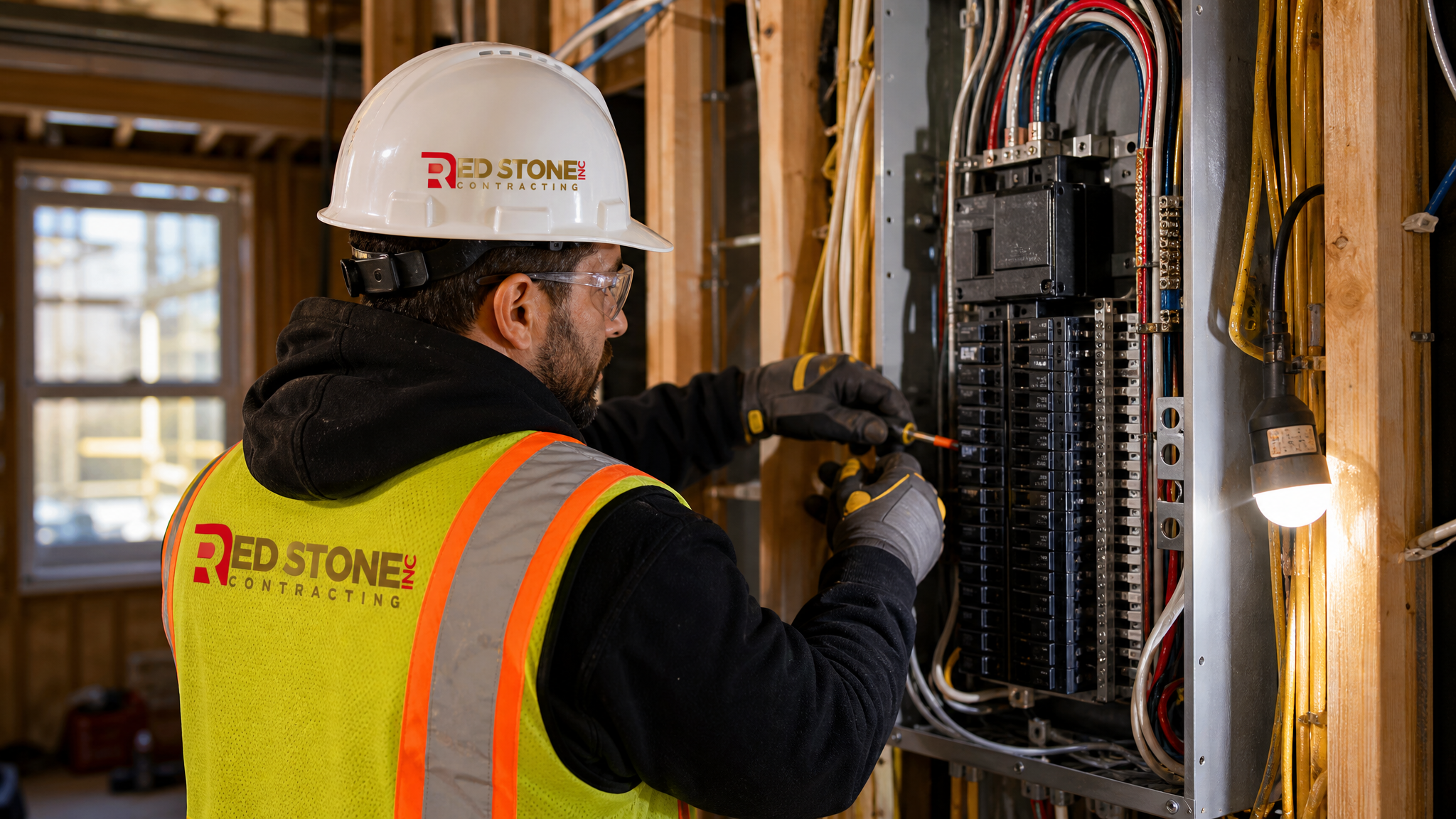
Signs Your GTA Home Needs a Panel Upgrade Before Renovating
Not every home needs a service upgrade, but several clear signals point to one. If you recognise more than one of the items below, raise it during your renovation planning rather than after demolition begins. Catching it early keeps your project on schedule and on budget.
- Your panel is rated 60A or 100A and you are adding an EV charger, heat pump, or induction range.
- The panel is full or relies on double-tapped breakers and tandem breakers to fit more circuits.
- You have a fused service rather than circuit breakers, common in pre-1970 GTA homes.
- Lights dim when large appliances start, signalling a strained service.
- You are planning a major addition that roughly doubles conditioned floor area.
- Your insurer flagged the panel brand or the home still has knob-and-tube wiring.
A whole-home custom home renovation almost always triggers a 200A upgrade because the combined load of new mechanical systems, lighting, and appliances exceeds what a legacy panel can safely carry. The same is true for many home additions, where the new wing needs its own feeder and circuits.
How a Panel Upgrade Fits Into the Renovation Timeline
Sequencing matters. The panel upgrade should be planned alongside the electrical rough-in, not bolted on at the end. In a well-run GTA renovation, the electrical contractor evaluates load early, files the ESA notification, and coordinates the utility disconnect during a window when power loss is least disruptive. Because summer is a common renovation season in the GTA, scheduling the brief power interruption on a mild summer day avoids the heating concerns a winter outage would create.
| Renovation Phase | Panel-Related Action | Why Timing Matters |
|---|---|---|
| Design and planning | Load calculation, capacity decision | Determines if 200A is required |
| Permitting | ESA notification + building permit | Utility lead times can be weeks |
| Demolition | Expose existing wiring | Reveals knob-and-tube or aluminum |
| Rough-in | New circuits pulled to panel | Panel must be sized first |
| Final and inspection | Energize, ESA inspection | Certificate closes the file |
Integrating the upgrade with your broader project through a single renovation partner avoids the classic problem of trades blaming each other. When the same team manages your bathroom renovation circuits, the kitchen, and the panel, the load calculation is done once and done right. Thoughtful design solutions also help by locating the panel where future expansion is easy.
Choosing the Right Contractor for an Electrical Panel Upgrade
The single most important decision is hiring a Licensed Electrical Contractor with a valid ECRA/ESA licence. Ask for the number and verify it. A reputable contractor will pull the ESA permit in their name, coordinate the utility, and hand you the Certificate of Inspection at completion. Be wary of any quote that omits the permit or asks you to file a homeowner notification to save money; that shifts liability onto you and can complicate insurance and resale.
Look for a contractor who provides a written load calculation, itemises the panel and breaker brands, and explains whether your service is overhead or underground. Quality matters here. A panel is a 30-year investment, and cutting corners on grounding, bonding, or breaker quality creates safety and code problems that surface during inspection. Homeowners pursuing renovations across Toronto renovation services, Mississauga renovation services, and Burlington renovation services benefit from a single team that understands both the construction and electrical sides of the project.
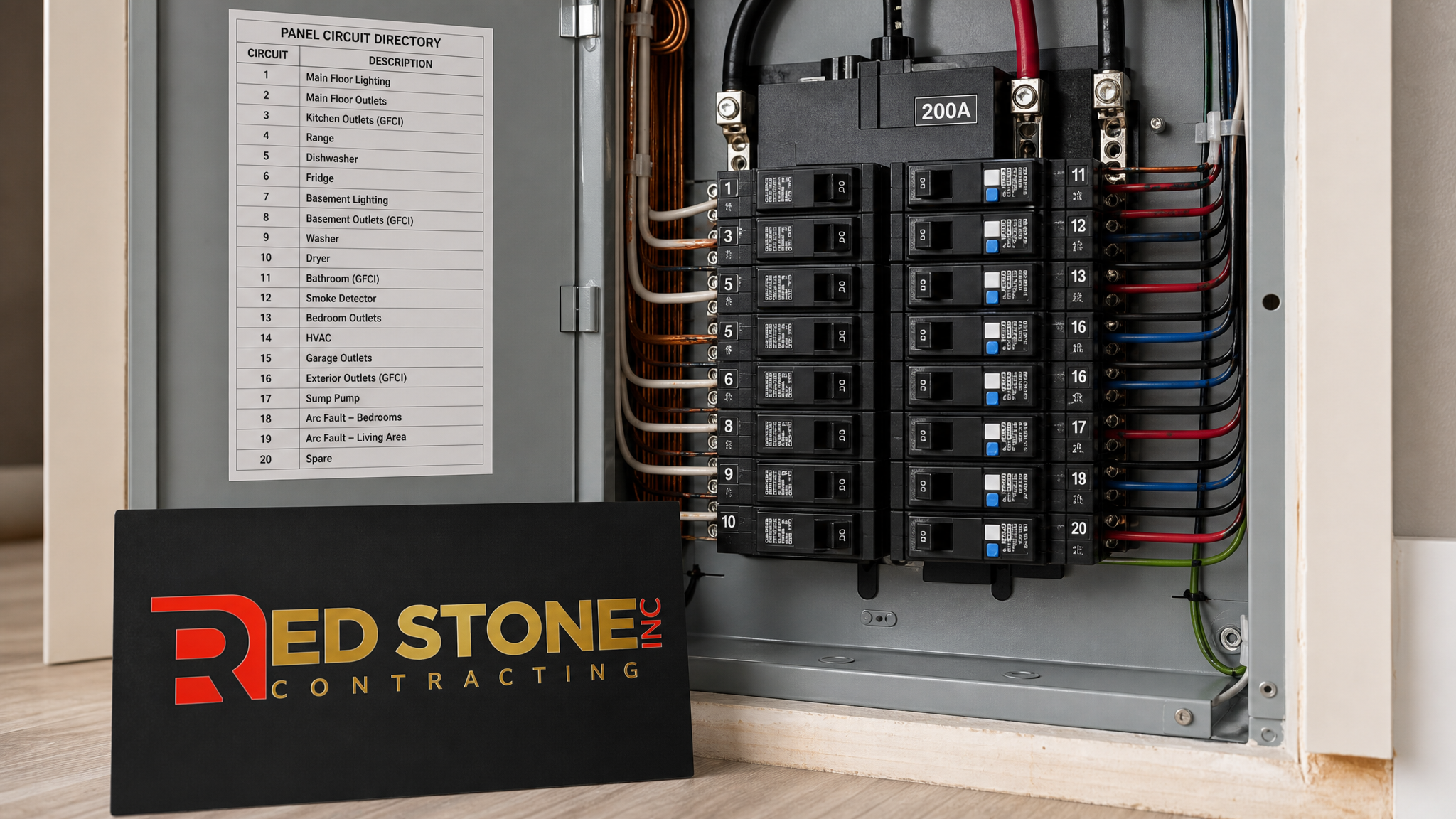
Common Mistakes to Avoid With Your Service Upgrade
Even straightforward upgrades go sideways when planning is rushed. The most frequent error is undersizing: installing a panel with just enough breaker spaces for today, leaving no room for the EV charger or heat pump you add in two years. Always plan for spare capacity. A second common mistake is ignoring grounding and bonding requirements, which inspectors scrutinise closely under the current Ontario Electrical Safety Code.
Another pitfall is failing to coordinate the utility early, which can leave a renovation idle while waiting for a disconnect appointment. Finally, some homeowners discover knob-and-tube or deteriorated aluminum wiring mid-project and have no budget reserve for remediation. Building a contingency of 10 to 15 percent into the electrical line of your renovation budget protects against these surprises and keeps the overall project moving smoothly.
How much does an electrical panel upgrade for a Toronto renovation cost in 2026?
Do I need an ESA permit for a panel upgrade?
How long does a 100A to 200A upgrade take?
Will I lose power during the upgrade?
Can I add an EV charger after a panel upgrade?
Should I upgrade the panel during a full renovation?
Schedule Your Electrical Panel Upgrade Toronto Renovation Today
A properly sized 200A service is the foundation that lets the rest of your renovation perform safely and reliably for decades. When you work with Red Stone Contracting, the load calculation, ESA permit, utility coordination, and finished construction are managed as one seamless project, so your panel never becomes the bottleneck that delays the rooms you actually care about.
Call us today at (905) 901-1006 or request a free consultation to plan your service upgrade as part of your full renovation. Our team will assess your existing panel, calculate your future loads, and give you a clear, written scope with no surprises.
Red Stone Contracting proudly serves homeowners across Toronto, Mississauga, Burlington and the GTA with expert renovations and code-compliant electrical work.