
A dedicated workout space at home has shifted from a luxury to a smart, value-adding investment for busy Greater Toronto Area households, and a well-planned home gym renovation toronto project delivers far more than a corner with a treadmill. Done properly, it transforms an underused basement, spare bedroom or garage into a comfortable, durable, climate-controlled training environment that you will actually want to use every single day. The difference between a frustrating space and a great one almost always comes down to four technical pillars: flooring, soundproofing, ventilation and a realistic budget. Get those right and your gym becomes the most-used room in the house.
Summer 2026 is the ideal window to start. The warm, dry weather across Toronto, Mississauga, Markham, Vaughan, Brampton, Oakville and Burlington makes it easier to manage dust control, ventilate freshly applied coatings and adhesives, and keep a renovation schedule on track without weather delays. A summer home gym renovation toronto build means your new space is ready well before the busy autumn season, and rubber flooring, epoxy coatings and paint all cure faster in warm conditions. That is why so many GTA homeowners book these projects between June and August.
In this guide we walk through everything you need to plan a successful conversion: choosing the right room, selecting flooring that protects both your equipment and your subfloor, building effective soundproofing so your early-morning lifts do not wake the household, designing ventilation that keeps the air fresh, and budgeting accurately so there are no surprises. Whether you are eyeing a basement, a spare room or a garage, this is the blueprint for a home gym renovation toronto families rely on for years.
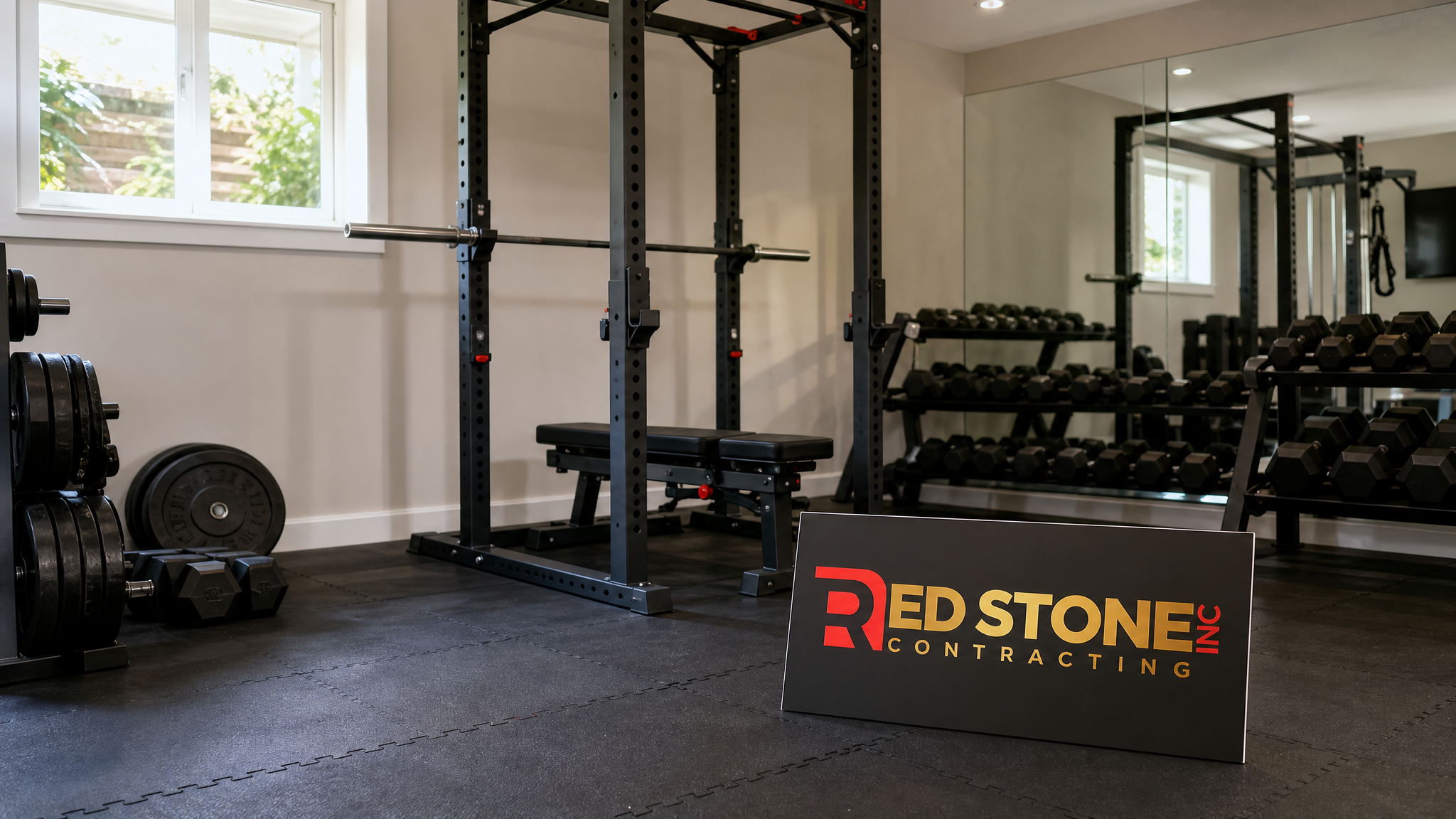
Why a Home Gym Renovation Toronto Homeowners Choose Pays Off
The case for a dedicated training space is stronger than ever. Monthly gym memberships across the GTA continue to climb, and commuting to a fitness centre eats up time that working families simply do not have. A home gym renovation toronto residents invest in pays for itself within a few years for most regular exercisers, and unlike a membership, the improvement stays with your property. Real estate agents across Toronto, Mississauga and Oakville consistently report that a thoughtfully finished basement gym is a genuine selling feature, particularly for buyers with young children or hybrid work schedules.
Beyond the financial logic, there is the convenience factor. A home gym removes every excuse: no drive, no waiting for equipment, no packed change rooms. You control the temperature, the music, the cleanliness and the schedule. For households juggling work, school and activities across Markham, Vaughan and Brampton, the ability to train at 5 a.m. or 10 p.m. without leaving the house is transformative. A properly executed renovation also protects your home, because the right flooring, moisture control and ventilation prevent the equipment, sweat and humidity from damaging your finishes. Pairing the project with a broader basement renovation often makes the most sense, since the same crew can handle waterproofing, framing and finishing in one coordinated build.
Choosing the Right Room for Your Home Gym Renovation
Location drives nearly every other decision. The three most common candidates in GTA homes are the basement, a spare bedroom and the garage, and each carries trade-offs that shape your flooring, soundproofing and ventilation plan. Basements are the most popular choice because they offer concrete subfloors that easily handle heavy equipment, generous square footage and natural sound isolation from the living areas above. The main consideration is ceiling height and moisture, both of which a professional can assess and address before any equipment arrives.
Spare bedrooms work well for lighter setups focused on cardio, yoga, mobility and adjustable dumbbells, but the wood-framed floor limits how much weight you can safely drop and amplifies impact noise to the rooms below. Garages offer huge open space and a forgiving concrete slab, making them ideal for heavy lifting, but they demand serious attention to insulation, ventilation and summer heat management to stay usable. A garage conversion frequently overlaps with a home addition or a reconfiguration handled through professional design solutions, so it pays to plan the layout carefully before committing.
| Room Type | Best For | Key Advantage | Main Challenge |
|---|---|---|---|
| Basement | Strength and mixed training | Concrete subfloor, sound isolation | Moisture control, ceiling height |
| Spare Bedroom | Cardio, yoga, light weights | Convenient, climate-controlled | Floor load limits, impact noise |
| Garage | Heavy lifting, large equipment | Open space, durable slab | Insulation, summer heat, ventilation |
| Bonus Room Over Garage | Functional fitness, cardio | Separated from living space | Joist reinforcement, sound transfer |
Home Gym Flooring Options and What They Cost
Flooring is the single most important technical decision in any home gym renovation toronto project, because it protects your subfloor, cushions your joints, reduces noise and defines how the space feels underfoot. The wrong floor cracks tiles, dents hardwood and transmits every dropped weight to the rooms below; the right floor shrugs off heavy use for a decade or more. Your choice depends on the type of training you do, the room you have selected and your budget.
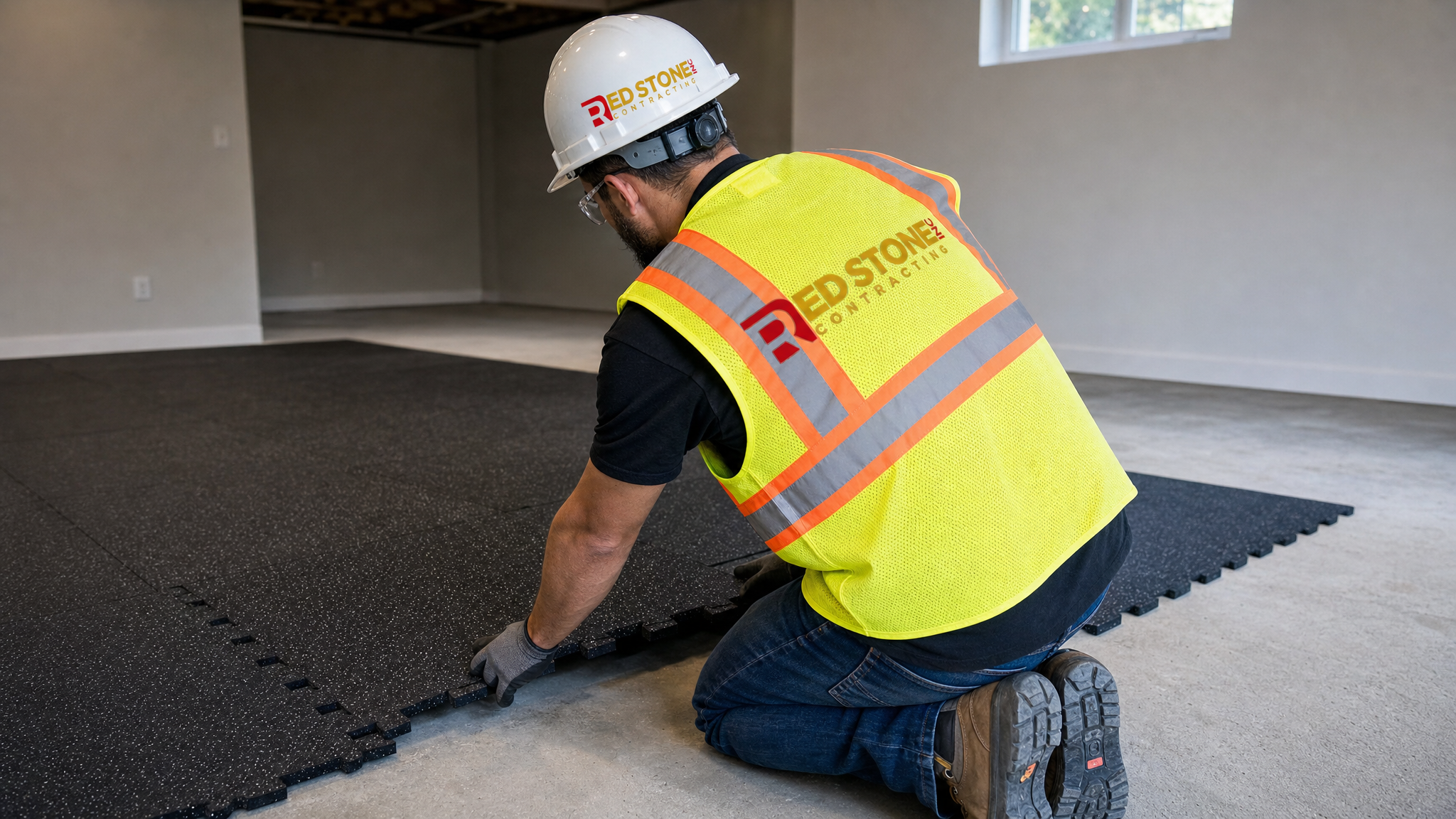
Rubber rolls and interlocking rubber tiles are the workhorse of serious home gyms. They absorb impact, protect concrete, stay grippy when you sweat and dampen noise effectively. Thicker rubber, from 8 to 12 millimetres or more, is essential under squat racks and free-weight zones. Foam tiles suit gentle stretching and bodyweight work but compress and tear under heavy equipment, so they are a supplement rather than a primary surface. Vinyl plank and engineered surfaces look attractive for multipurpose rooms but need rubber mats placed beneath any lifting station. Many GTA homeowners combine zones, using premium rubber in the lifting area and a cleaner finish elsewhere, an approach our crews refine through thoughtful design solutions.
| Flooring Type | Approx. Cost per Sq Ft (CAD) | Best Use | Lifespan |
|---|---|---|---|
| Rubber rolls (8-12 mm) | $4 – $9 | Free weights, racks, mixed gyms | 15+ years |
| Interlocking rubber tiles | $5 – $11 | Modular layouts, drop zones | 12-15 years |
| High-density foam tiles | $2 – $5 | Yoga, stretching, kids’ areas | 4-7 years |
| Vinyl plank over underlay | $6 – $12 | Cardio and multipurpose rooms | 10-20 years |
| Epoxy-coated concrete | $5 – $10 | Garage gyms, durable base | 10-15 years |
Summer is the best time to install rubber and epoxy. Warm temperatures help rubber rolls relax and lie flat faster, and epoxy coatings cure cleanly when humidity is managed and the space can be ventilated through open windows or fans. A professional crew will let off-gassing dissipate properly before you bring in equipment, which matters more than many homeowners realise.
Soundproofing Your Home Gym Renovation Toronto Project
Noise is the number one complaint in poorly planned home gyms. Dropped weights, the rhythmic thud of a treadmill and loud music travel easily through floors, walls and ceilings, turning early workouts into a household dispute. Effective soundproofing in a home gym renovation toronto build attacks the problem on two fronts: impact noise, which is the vibration of weights and footfalls travelling through the structure, and airborne noise, which is music and voices passing through the air. Each requires a different solution, and the best results come from combining several techniques.
For impact noise, the most effective layer is the floor itself. Thick rubber over a foam or cork underlay, or a dedicated platform with rubber mats, absorbs the energy of dropped weights before it reaches the joists. For ceilings below a gym, resilient channel, additional drywall layers and damping compound between them dramatically reduce transmission to living spaces. Walls benefit from insulation in the cavities, staggered framing or a second drywall layer with damping compound. Solid-core doors and quality weatherstripping seal the gaps where airborne sound escapes. These techniques are most efficient when built into a comprehensive basement renovation rather than retrofitted later.
| Soundproofing Method | Targets | Effectiveness | Relative Cost |
|---|---|---|---|
| Thick rubber flooring and platform | Impact noise | High | Moderate |
| Resilient channel and double drywall | Airborne and impact | High | Moderate to high |
| Acoustic damping compound | Airborne vibration | High | Moderate |
| Cavity insulation (mineral wool) | Airborne noise | Medium to high | Low to moderate |
| Solid-core door and seals | Airborne leakage | Medium | Low |
For households in semi-detached and townhome layouts common across Toronto, Mississauga and Brampton, soundproofing the shared wall deserves extra attention so workouts never disturb a neighbour. A professional assessment identifies the weakest acoustic links and prioritises the upgrades that deliver the biggest reduction per dollar spent.
Ventilation, Cooling and Air Quality
Ventilation is the most overlooked element of a home gym renovation, yet it determines whether the space feels fresh and inviting or stuffy and unbearable, especially during a GTA summer. Exercise generates heat, humidity and carbon dioxide quickly, and basements and garages without proper airflow become saturated within minutes. Poor ventilation also traps moisture that can encourage mould and degrade equipment, so getting the air management right protects both your health and your investment.
The strongest solution is to tie the gym into your home’s HVAC system with a dedicated supply and return, ensuring conditioned air circulates whenever you train. Where ductwork is impractical, a ductless mini-split delivers excellent cooling and dehumidification and runs efficiently through the hottest July and August afternoons. An exhaust fan or an energy recovery ventilator removes stale, humid air and brings in fresh air without wasting energy. Ceiling and oscillating fans keep air moving and make a workout feel noticeably cooler. In below-grade rooms, a dehumidifier is essential to control summer humidity and protect your flooring and weights from rust and odour.
| Ventilation Solution | Function | Approx. Cost (CAD) | Best For |
|---|---|---|---|
| HVAC supply and return extension | Conditioned air circulation | $1,200 – $3,500 | Basements tied to existing system |
| Ductless mini-split | Cooling and dehumidification | $3,500 – $6,500 | Garages, additions, isolated rooms |
| Energy recovery ventilator | Fresh air exchange | $2,000 – $4,500 | Sealed, high-use gyms |
| Exhaust fan | Humidity and odour removal | $300 – $900 | Smaller spare-room gyms |
| Portable dehumidifier | Moisture control | $250 – $700 | Below-grade basements |
Summer installation lets a crew test cooling and ventilation under real warm-weather load, confirming the space stays comfortable when you need it most. Coordinating mechanical work alongside a finished basement renovation avoids tearing into newly built walls later, which is exactly why we recommend planning airflow from the very first design meeting.
What a Home Gym Renovation Toronto Project Costs in 2026
Budget is where realistic planning matters most. A home gym renovation toronto homeowners undertake can range from a modest refresh of an existing finished room to a full basement build-out with waterproofing, framing, electrical, mechanical and premium finishes. Most projects fall into a predictable range once you account for the room, the flooring, the soundproofing and the ventilation systems we have covered. The figures below reflect typical 2026 pricing across the Greater Toronto Area and are intended as planning guidance; a precise quote always follows an on-site assessment.
A basic conversion of an already-finished spare room, mainly flooring, mirrors, lighting and electrical for equipment, sits at the lower end. A mid-range basement gym with quality rubber flooring, basic soundproofing, dedicated circuits and improved ventilation lands in the middle. A premium build with full soundproofing, a mini-split, mirrored walls, custom storage and high-end finishes reaches the upper tier. Electrical upgrades for cardio equipment and proper lighting are frequently underestimated, so always budget for dedicated circuits. Larger or structurally complex conversions may involve a home addition or work coordinated with a broader custom home renovation.
| Project Tier | Scope | Approx. Cost (CAD) | Typical Timeline |
|---|---|---|---|
| Basic refresh | Flooring, mirrors, lighting, outlets | $4,000 – $9,000 | 1 – 2 weeks |
| Mid-range basement gym | Rubber floor, basic soundproofing, ventilation | $12,000 – $25,000 | 3 – 5 weeks |
| Premium build-out | Full soundproofing, mini-split, custom finishes | $28,000 – $55,000 | 5 – 8 weeks |
| Garage conversion | Insulation, flooring, HVAC, finishing | $20,000 – $45,000 | 4 – 7 weeks |
Homeowners in Oakville, Burlington and Vaughan often combine a gym with adjacent upgrades such as a bathroom renovation for a post-workout shower, which improves both function and resale value while sharing labour and permit costs. Bundling related work in a single project nearly always lowers the per-item cost compared with separate jobs spread across the year.
The Summer Renovation Timeline and Process
A well-run home gym renovation toronto build follows a clear sequence, and summer conditions make every stage smoother. The process begins with an on-site consultation and measurement, followed by design and material selection. Once permits, where required, are secured, the build moves through framing and any moisture control, rough-in of electrical and mechanical systems, insulation and soundproofing, drywall and finishing, flooring installation, and finally fixtures, mirrors and equipment placement. Warm, dry weather keeps each phase on schedule and lets adhesives, paint and coatings cure quickly.
Working with an experienced GTA contractor means the trades are sequenced correctly, inspections are handled, and the finished space meets code. Our team coordinates the entire build so you deal with one accountable point of contact from the first sketch to the final walkthrough. Homeowners exploring a larger scope can fold the gym into a complete custom home renovation, and those across the region can review our local expertise through our Toronto renovation services, Mississauga renovation services and Burlington renovation services. Starting now means your home gym renovation toronto project is finished and ready well before fall.
How much does a home gym renovation toronto project cost in 2026?
What is the best flooring for a home gym renovation?
How do I soundproof a basement home gym renovation toronto build?
Do I need special ventilation for a home gym?
How long does a home gym renovation take?
Is summer a good time for a home gym renovation in the GTA?
Schedule Your home gym renovation Consultation Today
From flooring and soundproofing to ventilation and finishing, a successful project depends on getting every technical detail right, and Red Stone Contracting brings the experience, trades and project management to deliver a gym you will love for years. We handle the entire build from design through final walkthrough, so your summer renovation stays on schedule and on budget.
Call us today at (905) 901-1006 or request a free consultation to get started.
Red Stone Contracting proudly serves Toronto, Mississauga, Markham, Vaughan, Brampton, Oakville and Burlington.