
A whole-home renovation is the most ambitious and transformative project a Toronto homeowner can undertake. Unlike renovating a single room, a whole home renovation toronto project involves reimagining the entire property — stripping the interior to the studs, reconfiguring floor plans, upgrading every mechanical system, and rebuilding each room to modern standards. It is a complex, multi-trade operation that requires meticulous planning, experienced project management, and a clear understanding of timelines and budgets. This exhaustive 2026 guide walks you through every phase of a whole-home renovation, from initial planning through demolition, construction, and final finishing, with realistic costs specific to the Greater Toronto Area market.
When a Whole Home Renovation Toronto Project Makes More Sense Than Buying New
Toronto homeowners often face a critical decision: renovate the existing home or sell and buy something newer. In most cases, a whole-home renovation delivers significantly more value per dollar than purchasing a move-in-ready property, particularly in established neighbourhoods where land values are high and housing stock is predominantly 30 to 80 years old.
Consider the economics: a 1960s-era three-bedroom home in a desirable Toronto neighbourhood might be worth $1.2 million based primarily on its land value. Investing $250,000 to $400,000 in a comprehensive whole-home renovation transforms it into a property valued at $1.6 to $1.8 million — a new-build equivalent that would cost $2 million or more to purchase outright. You also retain your existing neighbourhood, school catchment, commute patterns, and community connections, which have real lifestyle value that cannot be quantified.
A whole-home renovation also allows you to customize every detail to your specific needs and preferences. With a custom home renovation, you choose the exact layout, finishes, fixtures, and features — something that is impossible when purchasing a pre-built home designed to appeal to the broadest possible buyer pool.
What Does a Whole-Home Renovation Include?
A true whole-home renovation typically involves every major system and surface in the house. Understanding the full scope helps set realistic expectations for budget and timeline.
| System/Area | What Is Typically Done | Estimated Cost Range |
|---|---|---|
| Demolition and Structural | Strip interior to studs, remove non-load-bearing walls, install new headers and beams for open-concept layouts, reinforce floor joists as needed | $15,000 – $35,000 |
| Electrical | Full rewiring to current Ontario Electrical Safety Code, upgrade panel to 200 amps, new circuits for kitchen appliances, bathrooms, HVAC, and EV charging | $15,000 – $30,000 |
| Plumbing | Replace aging copper or galvanized pipes with PEX, new drain lines, relocate fixtures for new layout, install backwater valve | $12,000 – $25,000 |
| HVAC | New furnace and air conditioner or heat pump, new ductwork sized for open-concept layout, zoned climate control, HRV for fresh air | $12,000 – $25,000 |
| Insulation | Spray foam or batt insulation in exterior walls, attic, and basement rim joists to meet current energy code requirements | $5,000 – $12,000 |
| Windows and Doors | Energy-efficient triple-pane windows, new exterior doors, sliding or folding patio doors for rear yard access | $15,000 – $40,000 |
| Kitchen | Complete custom kitchen with cabinetry, stone countertops, backsplash, appliances, island, lighting | $40,000 – $100,000 |
| Bathrooms (2-3) | Full renovations including tile, vanities, fixtures, glass enclosures, heated floors | $25,000 – $60,000 |
| Flooring | Engineered hardwood or luxury vinyl throughout main and upper levels, tile in wet areas | $10,000 – $25,000 |
| Drywall, Paint, Trim | New drywall throughout, modern baseboards and casings, professional paint | $15,000 – $30,000 |
| Total Range | Complete whole-home renovation for a typical 1,500-2,500 sq ft Toronto home | $200,000 – $450,000+ |
Phase 1: Planning, Design, and Permitting

A successful whole-home renovation begins months before any demolition hammer swings. The planning phase typically takes 8 to 16 weeks and involves architectural design, engineering assessments, material selections, and building permit applications.
Your renovation contractor and architect will work together to create a detailed scope of work, architectural drawings showing the proposed floor plan, and a comprehensive budget with line-item costs for every trade and material. This document becomes the project bible — it governs every decision made during construction and protects both the homeowner and the contractor from scope creep and misunderstandings.
Building permits are required for structural changes, electrical upgrades, plumbing modifications, and HVAC replacements. In the City of Toronto, permit processing times range from 4 to 10 weeks depending on the complexity of the project and the current workload at the building department. Your contractor should submit permits early in the planning phase to avoid delays once the project is ready to begin.
Phase 2: Demolition and Discovery
Demolition is simultaneously the most exciting and the most unpredictable phase of a whole-home renovation. Once walls are opened and finishes are stripped, the true condition of the home’s structure, wiring, plumbing, and insulation is revealed for the first time.
Common discoveries during demolition include knob-and-tube wiring that must be completely replaced, galvanized steel plumbing that has corroded internally, inadequate or missing insulation, evidence of past water damage or termite activity, and structural members that have been improperly modified by previous owners. An experienced renovation contractor builds a contingency allowance of 10 to 15 percent into the project budget specifically to address these discoveries without derailing the overall project timeline.
Professional demolition for a whole-home project typically takes 1 to 2 weeks and generates significant debris. Disposal costs, including dumpster rentals and disposal fees, typically range from $3,000 to $6,000 depending on the volume of material removed.
Phase 3: Rough-In Trades
With the home stripped to studs, the rough-in phase begins. This is when the critical infrastructure trades — electrical, plumbing, HVAC, and framing — install their systems inside the wall and floor cavities before drywall is hung.
Coordination between trades during rough-in is one of the most important aspects of project management. The framing crew must complete structural changes before electrical and plumbing can begin. The electrician and plumber must coordinate their routing through shared wall cavities. The HVAC installer must size and route ductwork to accommodate the new open-concept layout without creating dead spots or airflow issues. A skilled project manager sequences these trades efficiently to minimize idle time and keep the project on schedule.
The rough-in phase typically takes 3 to 5 weeks and includes municipal inspections at key milestones. The electrical rough-in must pass an ESA inspection, and the plumbing rough-in must pass a city plumbing inspection before drywall can be installed. Scheduling these inspections promptly is critical to avoiding delays.
Phase 4: Insulation, Drywall, and Finishing
Once all rough-in inspections pass, insulation is installed in exterior walls, interior sound-dampening partitions (between bedrooms, around bathrooms), and the attic. Spray foam insulation provides the best thermal performance and air sealing but costs more than fibreglass batt insulation. Many homeowners opt for a hybrid approach — spray foam on exterior walls and rim joists, batt insulation in interior partitions.
Drywall installation, taping, mudding, and sanding follow insulation and typically take 2 to 3 weeks for a whole-home project. This is followed by priming and painting, trim installation (baseboards, door casings, window casings, crown moulding), and kitchen cabinet installation. The finishing phase is where the home transforms from a construction site into a beautiful living space, and it requires careful attention to detail and craftsmanship.
Flooring installation — typically engineered hardwood on the main and upper floors with porcelain or luxury vinyl tile in wet areas — follows the cabinetry and major fixture installations. Final electrical trim (outlets, switches, light fixtures, panel covers), plumbing fixture installation (faucets, toilets, shower heads), and appliance delivery complete the mechanical systems. A thorough final cleaning and a detailed walkthrough with the homeowner ensure every detail meets expectations before move-in.
Choosing the Right Contractor for a Whole-Home Project
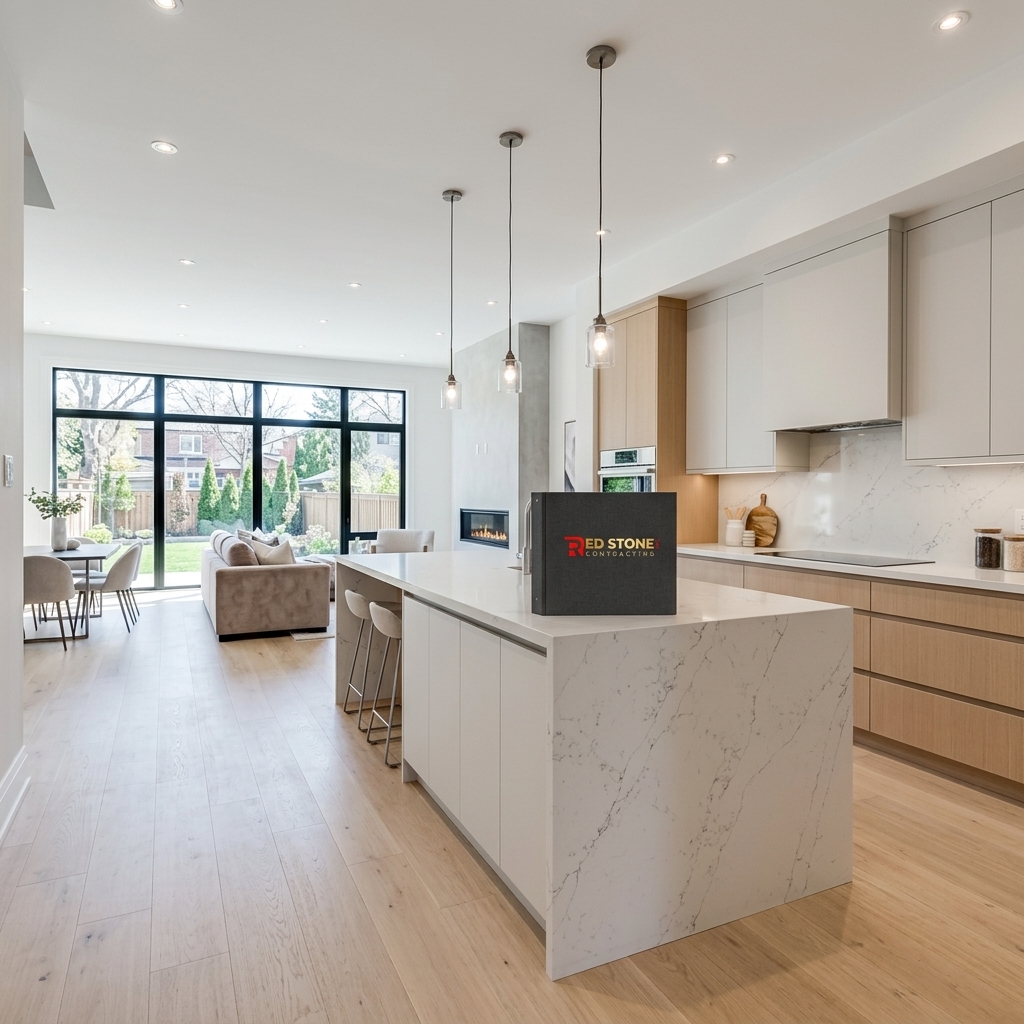
The contractor you select for a whole-home renovation must possess a different calibre of capability than a single-room specialist. They need experience managing 8 to 12 different trades simultaneously, maintaining a cohesive schedule, resolving the inevitable conflicts and surprises that arise during demolition, and communicating transparently with homeowners throughout a 6 to 8 month process.
Key criteria when evaluating contractors for a whole-home renovation include verifiable references from completed whole-home projects of similar scope, proof of WSIB (Workplace Safety and Insurance Board) coverage for all workers on-site, comprehensive liability insurance of at least $2 million, a clear and detailed contract with fixed pricing rather than vague allowances, and a demonstrated track record of managing building permits and municipal inspections in your specific municipality.
Request a detailed project schedule — a professional contractor will provide a Gantt chart or timeline showing each trade’s start and completion dates, inspection milestones, and material delivery windows. This schedule should be updated weekly and shared with the homeowner to ensure full visibility into progress and any potential delays. Avoid contractors who cannot provide a written schedule or who offer vague timelines like “it’ll take about six months.”
Protecting Your Investment: Warranties and Documentation
A reputable renovation contractor provides a comprehensive warranty covering workmanship and materials — typically one to two years on general workmanship, with longer manufacturer warranties on specific products like windows (often 20+ years), roofing, and HVAC equipment. Ensure that all warranty terms are documented in the contract before work begins. Additionally, request copies of all inspection certificates, material warranties, and as-built drawings showing the final locations of all plumbing, electrical, and structural modifications. These documents are invaluable for future maintenance, insurance claims, and resale.
Managing Your Life During a Whole-Home Renovation
| Living Arrangement Option | Pros | Cons |
|---|---|---|
| Move out entirely (rental or family) | Most comfortable, no dust or noise disruption, trades work faster without occupant restrictions | Additional cost of temporary housing ($2,000-$4,000/month), inconvenience of packing and moving twice |
| Live in basement during upper-floor renovation | No rental costs, can monitor progress daily | Significant dust, noise, limited access to kitchen and bathrooms, safety concerns during demolition |
| Phase the renovation (one floor at a time) | Maintain partial use of the home throughout | Extends total project timeline by 30-50%, increases overall cost due to multiple mobilizations |
Timeline: How Long Does a Whole-Home Renovation Take?
A complete whole-home renovation for a typical Toronto detached home takes 5 to 8 months from demolition to move-in, plus the preceding 2 to 4 months of planning and permitting. The most common timeline breakdown is approximately 2 weeks for demolition, 4 to 5 weeks for rough-in trades, 2 to 3 weeks for insulation and drywall, and 6 to 10 weeks for finishing including bathroom renovations, kitchen installation, flooring, paint, trim, and final inspections.
How much does a whole-home renovation cost in Toronto?
How long does a whole-home renovation take in the GTA?
Should I renovate my Toronto home or buy a new one?
Can I live in my home during a whole-home renovation?
What permits are needed for a whole-home renovation in Toronto?
What should I budget for contingency in a whole-home renovation?
Transform Your Home with Red Stone Contracting
A whole-home renovation is the ultimate expression of homeownership — taking a property with good bones and transforming it into the custom home you have always envisioned. It requires a contractor with the experience to manage dozens of trades, the design sensibility to create cohesive, beautiful spaces, and the project management discipline to deliver on time and on budget.
Our team has managed hundreds of renovation projects across the GTA, from targeted single-room refreshes to comprehensive whole-home transformations. We provide transparent, detailed proposals with fixed pricing, maintain clear communication throughout every phase, and deliver craftsmanship that stands the test of time.
Call us today at (905) 901-1006 or book your free design consultation online to start planning your whole-home renovation.
Red Stone Contracting transforms Toronto, Oakville, Burlington, and Mississauga homes with expert craftsmanship, transparent pricing, and meticulous project management. Your dream home is closer than you think.