
When your growing Toronto family runs out of space, you face a critical decision: do you build up with a second storey addition, or do you sell and move to a bigger home? Both options have significant financial and lifestyle implications, and the right choice depends on your neighbourhood, your budget, and how long you plan to stay.
In this comprehensive guide, Red Stone Contracting compares both options head-to-head so Toronto families can make an informed decision with real numbers and real-world experience.
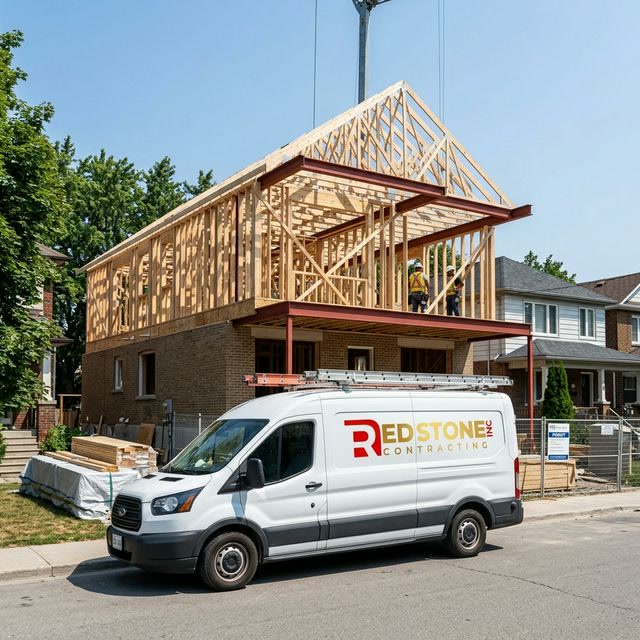
The Cost Comparison: Second Storey Addition vs. Moving
The single biggest factor for most families is cost. Here is a realistic breakdown of what each option costs in the 2026 Toronto market.
| Expense Category | Second Storey Addition | Selling and Buying |
|---|---|---|
| Core Project / Purchase Price | $250,000 – $500,000+ | $1,200,000 – $2,000,000+ (purchase of larger home) |
| Land Transfer Tax (Toronto) | $0 (you stay) | $30,000 – $60,000+ (double land transfer tax for Toronto) |
| Real Estate Commission (5%) | $0 | $50,000 – $80,000 (on the sale of your current home) |
| Legal Fees | $2,000 – $5,000 | $3,000 – $5,000 |
| Moving Costs | $0 | $3,000 – $8,000 |
| Mortgage Penalty (if breaking) | $0 – $5,000 (refinance only) | $10,000 – $30,000+ |
| Permit and Engineering Fees | $5,000 – $15,000 | $0 |
| Temporary Housing (during build) | $5,000 – $15,000 (if needed) | $0 |
Key Insight: When you add up real estate commissions, double land transfer tax in Toronto, legal fees, moving costs, and mortgage penalties, the total transaction cost of selling and buying can easily reach $100,000 to $150,000 before you even account for the price difference between your current home and a larger one. A second storey addition, while expensive, allows you to invest that money directly into your property.
How Long Does a Second Storey Addition Take?
A complete second storey addition is a major structural project. Here is the typical timeline for a Toronto home:
| Phase | Duration | What Happens |
|---|---|---|
| Design and Engineering | 4 – 8 weeks | Architectural drawings, structural engineering, interior layout design. |
| Permit Approval | 4 – 12 weeks | City of Toronto building permit application and review. Timelines vary by ward. |
| Roof Removal and Structural Work | 2 – 3 weeks | Existing roof removed, temporary weather protection installed, structural steel and framing erected. |
| Framing and Sheathing | 2 – 4 weeks | Full second floor framed, sheathed, windows installed, new roof built. |
| Mechanical Rough-Ins | 2 – 3 weeks | HVAC, plumbing, and electrical extended to the new second floor. |
| Insulation, Drywall, and Interior | 4 – 6 weeks | Insulation, vapour barrier, drywall, taping, priming, flooring, trim, paint. |
| Final Finishes and Inspection | 2 – 3 weeks | Fixtures, hardware, final paint, cleaning, occupancy permit obtained. |
Total: Approximately 5 to 9 months from permits to move-in. The most disruptive phase is the 2 to 3 weeks when the existing roof is removed and the structure is open to weather, which requires careful scheduling and temporary protection.
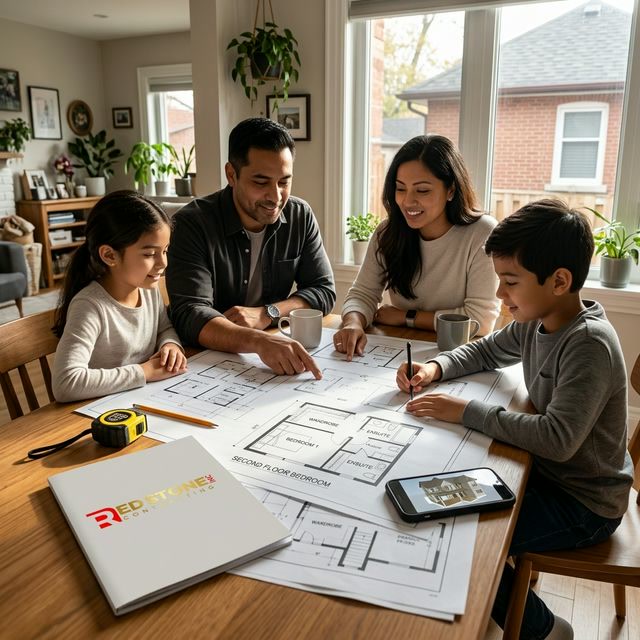
Advantages of Building a Second Storey Addition
- Stay in Your Neighbourhood: If you love your street, your kids’ school, your commute, and your neighbours, moving to a bigger home often means relocating to a completely different area. A second storey addition lets you keep everything you love about your location.
- Avoid Transaction Costs: As shown above, the real estate transaction costs of selling and buying in Toronto are staggering. Every dollar you save on commissions and taxes goes directly into your home’s value.
- Massive ROI: A well-executed second storey addition in desirable Toronto neighbourhoods like the Danforth, Leaside, High Park, or Bloor West Village can increase your home’s value by 50% to 80% of the construction cost, sometimes more. Bungalows on large lots in these areas are specifically sought after by developers for this exact reason.
- Custom Design: Unlike buying a resale home and compromising on layout, a custom addition lets you design exactly what your family needs—the number of bedrooms, the master suite size, the bathroom count, and even a laundry room on the second floor.
- Preserve Main Floor: Your existing main floor, kitchen, and living areas can remain largely untouched, minimizing disruption to your daily routine during the upper-level construction.
When Does Moving Make More Sense?
Despite the significant advantages of building up, there are clear scenarios where selling and buying a larger home is the smarter choice:
- Your Foundation Cannot Support a Second Floor: Older Toronto homes, especially war-era bungalows with rubble foundations, may require prohibitively expensive foundation underpinning before a second storey can be added. If the underpinning cost is $100,000+, moving may be more practical.
- Your Lot Is Too Small: Toronto zoning bylaws restrict height, setbacks, and lot coverage percentages. If your lot is very narrow or shallow, you may not be able to build a second floor that is large enough to justify the investment.
- You Need More Outdoor Space: Building up does not give you a bigger yard. If your family needs a larger lot, a pool, or significant outdoor living space, moving to a property with a bigger footprint is the only solution.
- You Want a Different Neighbourhood: If your current neighbourhood no longer meets your family needs—schools, safety, commute, proximity to family—then no amount of renovation will fix a location problem.
Structural Considerations for Toronto Homes
Not every bungalow or side-split can simply have a second floor dropped on top. The structural engineering assessment is the most critical step in the process. Your structural engineer will evaluate:
- Foundation Type and Condition: Poured concrete foundations (post-1970) are generally strong enough. Older block or rubble foundations may require reinforcement or full underpinning.
- Load-Bearing Walls: The engineer identifies which existing walls can carry the weight of the new floor and where steel beams or additional posts are needed.
- Soil Conditions: In certain Toronto areas, particularly near ravines and the waterfront, clay soils and high water tables can complicate foundation work.
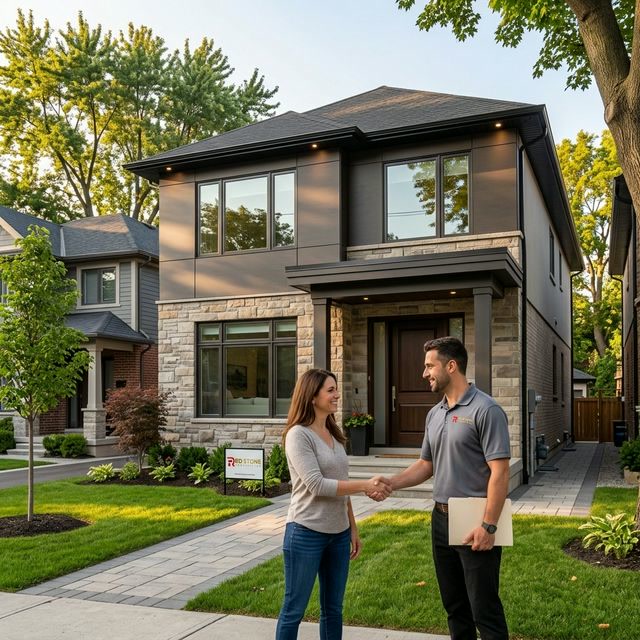
Toronto Permit and Zoning Requirements
Any second storey addition in Toronto requires a building permit from the City of Toronto. The process involves submitting detailed architectural drawings that comply with the Ontario Building Code and local zoning bylaws. Key zoning rules include:
- Maximum Building Height: Typically 10 metres in residential zones.
- Angular Plane Restrictions: The new storey must not overshadow neighbouring properties beyond certain angular plane limits, measured from the shared property line.
- Lot Coverage: The total building footprint cannot exceed a specific percentage of the lot area.
- Minimum Setbacks: Distance from the building to front, side, and rear property lines must meet minimums.
If your planned addition exceeds any zoning requirements, you may need to apply for a minor variance through the Committee of Adjustment, which adds 3 to 6 months and additional costs to the project timeline.
| Decision Factor | Build Up (Addition) | Move |
|---|---|---|
| Love your neighbourhood | ✅ Stay where you are | ❌ Must find new area |
| Transaction costs | ✅ $0 commissions/taxes | ❌ $100K–$150K+ in fees |
| Timeline disruption | ⚠️ 5–9 months construction | ⚠️ 2–6 months search + move |
| Custom layout | ✅ Design exactly what you want | ⚠️ Compromise on resale homes |
| Need more yard space | ❌ Yard stays the same | ✅ Can buy bigger lot |
| Foundation issues | ❌ May need underpinning ($100K+) | ✅ No structural concerns |
| Long-term ROI | ✅ 50–80% cost recovery | ⚠️ Subject to market conditions |
How a Second Storey Addition Impacts Your HVAC System
One of the most overlooked aspects of a second storey addition is the impact on your existing heating and cooling system. Your current furnace was sized for a single-storey home. Adding 800 to 1,200 square feet of living space on a second floor requires a thorough evaluation of your HVAC capacity. In most cases, the existing furnace will need to be upgraded to a higher BTU unit, and the ductwork must be extended through interior walls to reach the new bedrooms and bathrooms above.
Air conditioning is equally critical. Heat rises, and without proper cooling capacity and ductwork design, the new second floor will be significantly hotter than the main level during Toronto summers. Many homeowners opt to install a separate mini-split or zoned HVAC system for the second floor, providing independent temperature control upstairs. This typically adds ,000 to ,000 to the project but significantly improves comfort and energy efficiency year-round.
Financing Your Second Storey Addition in the GTA
A second storey addition is a substantial investment, but Toronto homeowners have several financing options available:
- Construction Mortgage: Many Canadian banks offer construction-specific mortgages that release funds in stages as each construction milestone is completed. This protects both you and the lender by ensuring work is progressing before releasing additional funds.
- Home Equity Line of Credit (HELOC): If you have significant equity in your home, a HELOC allows you to borrow against it at competitive variable rates. This is the most flexible option since you only pay interest on the amount you actually draw.
- Refinancing Your Mortgage: If mortgage rates are favourable, refinancing your existing mortgage to a higher amount can provide the funds for the addition at the lowest possible interest rate. Speak with your mortgage broker about current rates and penalties for breaking your existing term.
- Personal Renovation Loan: For smaller additions or when home equity is limited, unsecured personal renovation loans are available through major Canadian banks at fixed rates, though interest rates will be higher than secured options.
Regardless of which financing route you choose, always ensure your total monthly housing costs including the new mortgage or loan payments remain within a comfortable percentage of your household income. A general rule of thumb is that total housing costs should not exceed 30% to 35% of your gross family income.
Real-World Case Study: Leaside Bungalow Transformation
One of our recent projects involved a 1950s brick bungalow on a quiet street in Leaside. The young family of five needed four bedrooms and three bathrooms but could not find anything in their price range within the same school catchment. Instead of moving, they hired Red Stone Contracting to add a full second storey. The project included a master suite with a walk-in closet and ensuite bathroom, three additional bedrooms, a second full bathroom, and a dedicated laundry room upstairs. Total construction cost was approximately ,000 over 7 months. Post-renovation, a comparable two-storey home on the same street was listed at .4 million, meaning their total investment in the home including the original purchase price and renovation was approximately 25% below market value for an equivalent property. This is the power of building up in a premium Toronto neighbourhood.
How much does a second storey addition cost in Toronto?
A second storey addition in Toronto typically costs between $250,000 and $500,000 or more, depending on the size of the addition, the structural work required, and the quality of finishes. This includes architectural design, engineering, permits, all construction, and interior finishing.
Can I live in my house during a second storey addition?
In many cases, yes. The main floor typically remains habitable during most of the construction. However, during the 2 to 3 week period when the existing roof is removed and the new floor is being framed, the house may be exposed to weather and very noisy. Some families choose to temporarily relocate during this critical phase.
Does a second storey addition increase my property taxes?
Yes. When you pull a building permit for a second storey addition, the Municipal Property Assessment Corporation (MPAC) will reassess your property at the next assessment cycle. The increase is based on the added square footage and overall improvement to the home. Expect a meaningful increase in your annual property tax bill.
Do I need a structural engineer for a second storey addition?
Absolutely. A licensed structural engineer must assess your existing foundation, load-bearing walls, and overall structure to determine if it can support a second floor. Their stamped engineering drawings are required as part of the building permit application to the City of Toronto.
How long does it take to get a building permit for a second storey addition in Toronto?
Building permit review timelines in Toronto typically range from 4 to 12 weeks, depending on the complexity of your project and the current workload at the city’s building department. If a minor variance is needed through the Committee of Adjustment, add an additional 3 to 6 months.
Is it cheaper to build up or build out for more space?
Building up (second storey) is generally less expensive per square foot than building out (ground-floor addition) because you avoid the costly foundation and excavation work. However, building up requires temporary roof removal and structural reinforcement. Your specific lot, foundation condition, and zoning will determine which option is most cost-effective for your situation.
If your Toronto family is outgrowing your home but you love your neighbourhood, a second storey addition may be the perfect solution. request a free consultation for a free consultation. We will assess your home structure, review zoning requirements, and provide a detailed, transparent quote so you can make the best decision for your family.