
Every dollar you invest in your home should work as hard as possible — both for your daily comfort and for your long-term financial position. Understanding which renovation roi toronto projects deliver the strongest returns is the difference between a renovation that pays for itself when you sell and one that simply looks nice but adds little to your property’s market value. In the competitive Greater Toronto Area real estate market, where detached homes regularly trade above $1.3 million, strategic renovations can add $50,000 to $200,000 or more to your resale price while dramatically improving your quality of life today. This comprehensive 2026 guide ranks the highest-ROI renovation categories, provides realistic cost-to-value data specific to the GTA market, and explains why some projects consistently outperform others.
Why Renovation ROI Toronto Homeowners Should Understand Before Starting Any Project
Return on investment in the context of home renovation measures how much of your renovation spending you can expect to recover through increased property value when you sell. A renovation with a 75 percent ROI means that for every $100,000 you invest, your home’s market value increases by approximately $75,000. However, ROI is not the only metric that matters. Some renovations deliver moderate ROI but provide enormous daily quality-of-life improvements that justify the investment regardless of resale considerations.
Toronto’s housing market has unique characteristics that influence renovation ROI differently than other Canadian cities. The extreme land values in the GTA mean that maximising the usable square footage and functional quality of the existing structure is almost always more cost-effective than buying a larger home. Additionally, Toronto buyers in 2026 have increasingly specific expectations around kitchen finishes, bathroom quality, and energy efficiency — properties that meet these expectations sell faster and for higher prices.
The Top Renovation Categories Ranked by ROI
| Renovation Type | Average Cost (CAD) | Estimated Value Added | Typical ROI |
|---|---|---|---|
| Minor Kitchen Renovation | $25,000 – $45,000 | $20,000 – $40,000 | 75% – 100% |
| Major Kitchen Renovation | $50,000 – $100,000 | $35,000 – $70,000 | 60% – 80% |
| Bathroom Renovation (Main) | $15,000 – $35,000 | $12,000 – $28,000 | 70% – 85% |
| Basement Finishing | $30,000 – $60,000 | $25,000 – $50,000 | 70% – 90% |
| Basement Underpinning + Finishing | $55,000 – $100,000 | $60,000 – $120,000 | 80% – 120%+ |
| Exterior Curb Appeal (Door, Siding, Landscaping) | $10,000 – $30,000 | $10,000 – $35,000 | 80% – 120% |
| Secondary Rental Suite (Legal Basement Apt) | $80,000 – $150,000 | $100,000 – $200,000+ | 100% – 150%+ |
| Energy Efficiency Upgrades (Windows, Insulation) | $15,000 – $40,000 | $10,000 – $25,000 | 55% – 70% |
Kitchen Renovation: The Undisputed ROI Leader
The kitchen consistently ranks as the single most impactful renovation for both resale value and buyer perception. In the GTA, a dated kitchen with laminate countertops, builder-grade cabinets, and fluorescent lighting can reduce a property’s perceived value by $30,000 to $50,000 compared to comparable homes with modern kitchens.
A strategic kitchen renovation does not need to involve a complete gut job to deliver strong returns. Minor kitchen renovations — refacing or painting existing cabinets, replacing countertops with quartz, upgrading to stainless steel appliances, installing a tile backsplash, and adding under-cabinet LED lighting — consistently deliver 75 to 100 percent ROI because they transform the room’s appearance at a fraction of the cost of a full rebuild.
Major kitchen renovations involving layout changes, structural wall removal to create open-concept living, custom cabinetry, premium stone countertops, and high-end appliances deliver lower percentage ROI (60 to 80 percent) but add significantly more absolute dollar value to the property. In neighbourhoods like Oakville, Burlington, and Mississauga where buyers expect premium finishes, a major kitchen renovation is often necessary to compete with comparable listings.
Bathroom Renovation: High Impact Per Dollar Spent
A bathroom renovation delivers one of the highest per-dollar impacts of any renovation category. Dated bathrooms with yellowed fixtures, worn tile, and poor lighting are immediately noticeable to buyers and create a negative impression that can overshadow an otherwise well-maintained home.
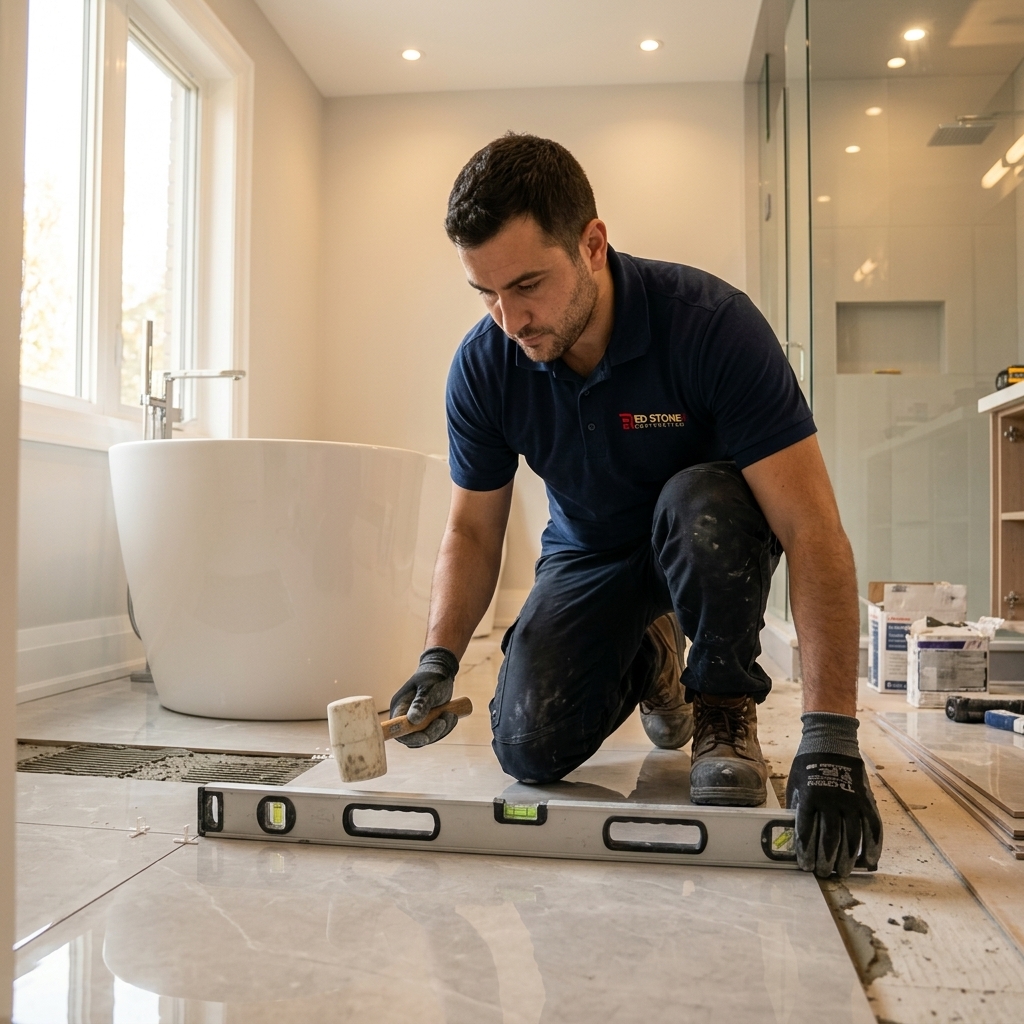
The key to maximising bathroom ROI is focusing on the elements that buyers value most: a clean, modern vanity with quartz or marble countertop, a frameless glass shower enclosure replacing an old tub-shower combo, large-format porcelain floor tiles, and proper lighting including a backlit mirror. These upgrades typically cost $15,000 to $25,000 for a main bathroom and recover 70 to 85 percent of the investment at resale.
| Bathroom Upgrade | Cost | Impact on Value |
|---|---|---|
| Replace vanity with floating modern unit + quartz top | $1,500 – $3,500 | High — immediately modernises the room |
| Install frameless glass shower enclosure | $2,500 – $5,000 | Very High — the single most desirable bathroom feature |
| Retile floor with large-format porcelain | $2,000 – $4,000 | High — eliminates dated small mosaic tiles |
| Add heated floors (electric mat system) | $800 – $1,500 | Medium — a luxury touch that buyers love |
| Replace lighting with LED recessed + backlit mirror | $500 – $1,200 | High — transforms ambience at low cost |
Basement Finishing and Underpinning: The Square Footage Multiplier
In Toronto’s land-scarce market, adding livable square footage to an existing home is the single most powerful value-creation strategy. A finished basement renovation transforms dead storage space into a functional living area — a family room, home theatre, guest suite, or home office — and buyers consistently pay a premium for homes with finished basements.
The ROI equation becomes even more compelling when you combine basement finishing with underpinning to achieve full-height ceilings and create a legal secondary suite. Toronto’s secondary suite bylaws now permit basement apartments in most residential zones, and a legal rental unit generating $1,800 to $2,200 per month transforms the property from a single-family home into an income-producing asset. This rental income potential is directly factored into the property’s market value by appraisers and buyers alike, often adding $100,000 to $200,000 to the sale price.
The key to maximising basement ROI is treating the finished space as a genuine extension of the home rather than an afterthought. This means proper ceiling height (achieved through underpinning if necessary), adequate natural light through enlarged window wells, a dedicated HVAC zone for comfortable year-round temperature control, and high-quality finishes that match the standard of the upper floors. A professionally finished basement with engineered hardwood, pot lights, a full bathroom, and a kitchenette is valued entirely differently by buyers than a basement with bare concrete, drop ceilings, and mismatched carpet tiles.
Home Additions: Expanding Your Footprint
When your property has the lot coverage to support it, a home addition can deliver exceptional ROI by physically expanding the livable square footage of your home. Second-storey additions, rear bump-outs, and side extensions are all common in the GTA, where land values make vertical or horizontal expansion far more cost-effective than purchasing a larger home.
A well-executed addition that adds a master suite with ensuite bathroom, a family room extension, or a main-floor expansion can recover 65 to 85 percent of the investment at resale. The ROI is highest when the addition addresses a clear functional deficiency — for example, adding a primary bedroom with walk-in closet and ensuite to a home that currently has all bedrooms upstairs sharing a single bathroom, or extending a cramped kitchen into a spacious open-concept kitchen and dining area.
The critical factor with additions is ensuring that the new construction blends seamlessly with the existing home. Mismatched rooflines, different siding materials, or obviously “tacked on” rooms can actually reduce the property’s appeal. Working with an experienced renovation contractor who manages both the structural and design aspects ensures the addition looks and feels like it was always part of the original home.
Energy Efficiency: The Growing ROI Category
Energy efficiency renovations have historically delivered lower ROI than cosmetic upgrades because their value is not immediately visible to buyers. However, this is changing rapidly in 2026 as energy costs rise, government incentive programs expand, and buyers increasingly prioritise sustainability. Window replacements, attic insulation upgrades, and heat pump installations reduce monthly utility costs by $100 to $300 per month — savings that compound over the lifetime of ownership.
The Canada Greener Homes Grant and various provincial rebate programs can offset 25 to 40 percent of energy efficiency renovation costs, effectively boosting the ROI calculation. For homeowners planning to stay in their property for five or more years, these upgrades deliver both immediate monthly savings and a meaningful contribution to resale value as energy-efficient homes continue to command a premium in the market.
Curb Appeal: The First Impression Premium
Real estate agents universally agree that buyers form their initial opinion of a property within the first seven seconds of seeing it from the street. Curb appeal renovations — a new front door, updated exterior lighting, fresh landscaping, a repaired driveway, and clean siding — are among the least expensive renovations but deliver outsized returns because they directly influence a buyer’s emotional response before they even enter the home.
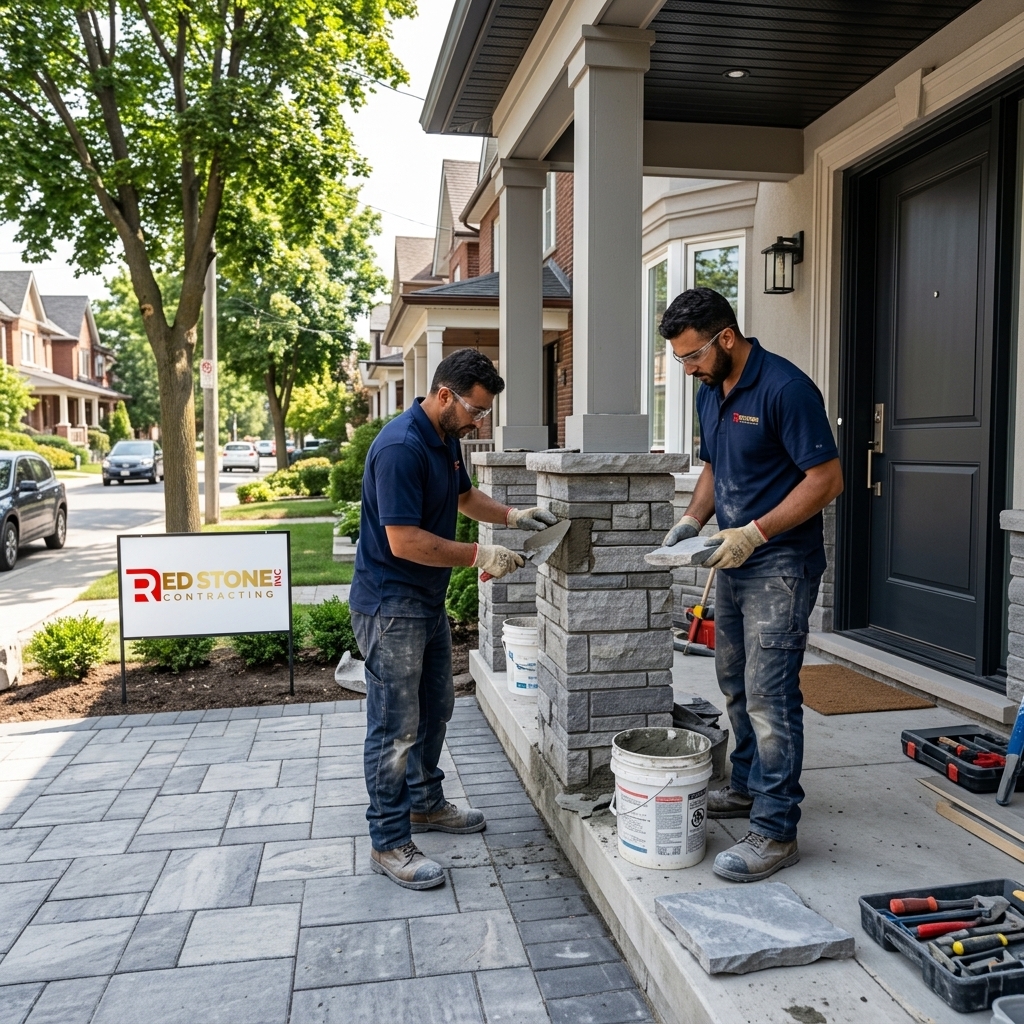
A new fibreglass or steel entry door in a contemporary dark finish (charcoal, navy, or black) with sidelights costs $2,000 to $5,000 installed and consistently recovers 100 percent or more of its cost. Combined with exterior stone veneer on porch columns, interlocking stone walkways, and strategic landscape lighting, a $10,000 to $20,000 curb appeal investment can increase a home’s perceived value by $20,000 to $35,000.
Renovations with Lower ROI (But Still Worth Considering)
| Renovation | Typical ROI | Why It Is Lower | When It Makes Sense |
|---|---|---|---|
| Swimming Pool | 20% – 40% | High installation cost, ongoing maintenance, insurance liability, limits buyer pool (some buyers see pools as a negative) | Only if you will personally enjoy it for 5+ years and your neighbourhood supports it |
| Luxury Home Theatre | 30% – 50% | Highly personalised, technology depreciates rapidly, buyers may prefer the space for other uses | If you are a film enthusiast and plan to stay long-term |
| Over-Customised Master Suite | 40% – 60% | Highly personal design choices (bold colours, unusual layouts) may not align with buyer preferences | Focus on neutral, timeless finishes to maximise appeal |
| Solar Panels | 50% – 70% | Long payback period (8-12 years), technology evolving rapidly, some buyers unsure about maintenance | If you plan to stay 10+ years and want to reduce energy bills immediately |
Strategic Renovation Planning for Maximum Value
- Renovate the kitchen and main bathroom first: These two rooms have the most influence on buyer perception and appraisal value. Even with a limited budget, prioritising these spaces delivers the strongest overall return.
- Match the neighbourhood: Over-improving beyond the price ceiling of your street delivers diminishing returns. A $200,000 kitchen in a neighbourhood of $800,000 homes will not recover its cost. Conversely, under-improving in a premium neighbourhood leaves money on the table.
- Focus on finishes buyers expect in 2026: Quartz countertops, wide-plank engineered hardwood, frameless glass showers, pot lights, and clean modern hardware are now expected standard finishes in the GTA market — not luxury upgrades.
- Create legal square footage: Any renovation that adds legally recognised livable space — finishing a basement, building a home addition, or constructing a secondary suite — directly increases the property’s appraised value per square foot.
- Do not skip permits: Unpermitted renovations can reduce property value because buyers and their lawyers will demand proof that structural, electrical, and plumbing work was inspected and approved.
Which renovation has the highest ROI in Toronto?
How much value does a kitchen renovation add to a Toronto home?
Is finishing a basement worth it for resale in the GTA?
Does a bathroom renovation increase home value?
What renovations should I avoid for ROI purposes?
How do I know which renovations my home needs for maximum value?
Maximise Your Investment with Red Stone Contracting
Every renovation is an investment — and like any investment, it should be guided by data, experience, and strategic thinking. Our team helps Toronto homeowners identify the highest-impact renovation opportunities, execute them with precision craftsmanship, and achieve results that deliver both daily enjoyment and long-term financial value.
Whether you are preparing to sell and want to maximise your listing price, or you are planning to stay and want to build the home of your dreams, we deliver exceptional results across custom home renovations, kitchens, bathrooms, basements, and home additions.
Call us today at (905) 901-1006 or schedule your free consultation online to discuss your renovation goals.
Red Stone Contracting delivers award-quality craftsmanship across Toronto, Oakville, Burlington, and Mississauga. We help homeowners make smart renovation decisions that pay dividends for years to come.