
Planning a home renovation Peel Region homeowners can actually budget for starts with understanding what the local housing stock demands. Mississauga, Brampton and Caledon cover an enormous range of construction eras and lot sizes, from compact postwar bungalows and 1970s sidesplits to sprawling 2000s subdivisions and rural estate properties on well and septic. Each of those categories carries different structural realities, different mechanical systems and different permit paths, and all of that lands in the final invoice.
This guide lays out realistic 2026 pricing, typical timelines, permit requirements and the specific cost drivers that show up repeatedly across Peel. The numbers below are ranges rather than fixed quotes, because a home renovation Peel Region project is priced off the actual conditions behind your walls, not off a catalogue. Use them to build a working budget and to recognise when a quote is unrealistically low.
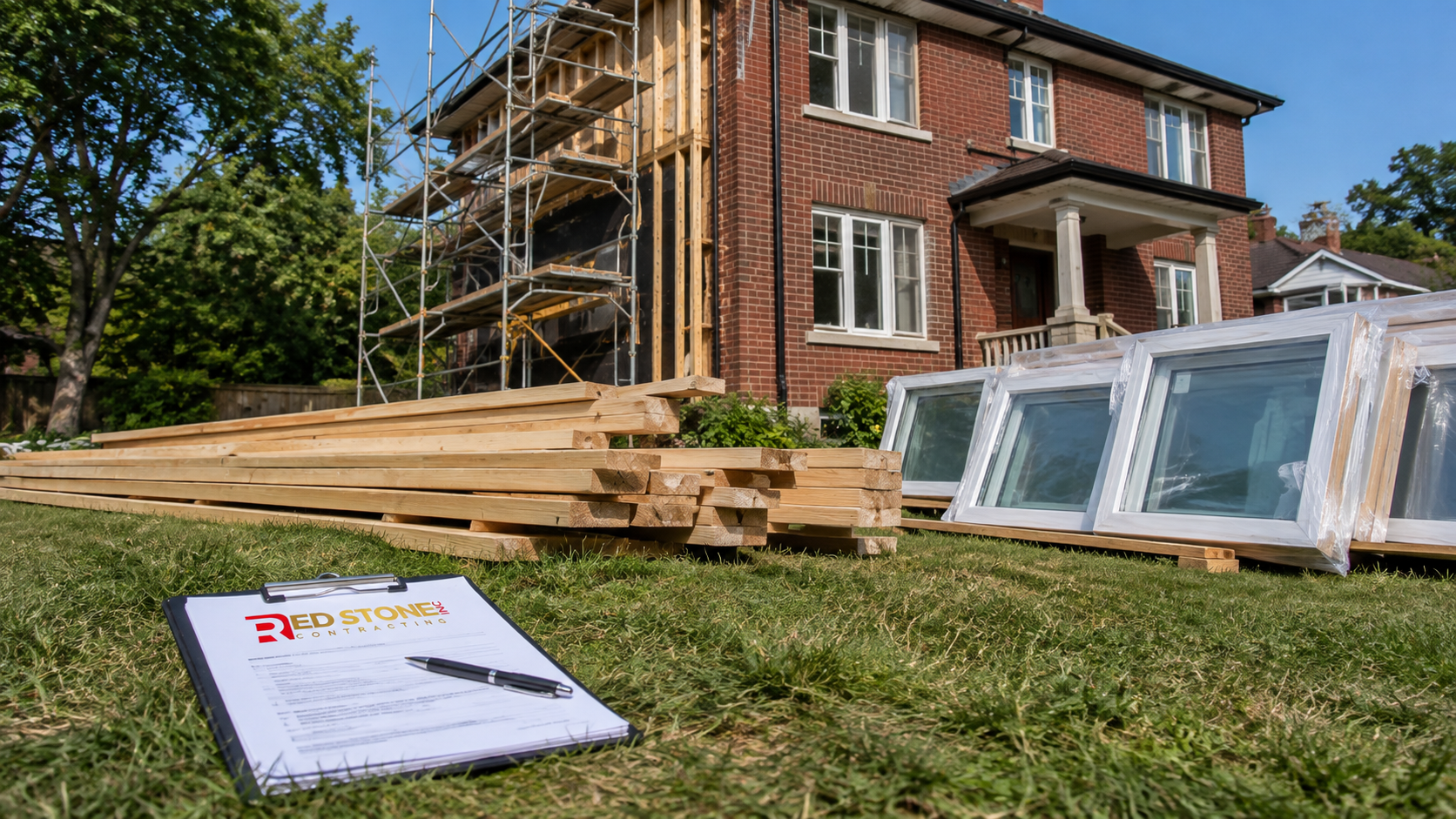
What a Home Renovation Peel Region Project Costs in 2026
Renovation pricing in Ontario has stabilised somewhat after several volatile years, but labour rates and skilled trade availability remain the dominant pressure. For 2026, most homeowners planning a home renovation Peel Region project should expect finished costs in the range of $250 to $450 per square foot for interior work involving plumbing and electrical, and $180 to $300 per square foot for work that is largely cosmetic.
Those figures assume permitted work performed by licensed trades, with proper insulation, vapour barrier and mechanical upgrades where the Ontario Building Code requires them. Quotes materially below that band usually exclude permits, exclude mechanical rework, or assume the existing electrical and plumbing will be left in place. That is sometimes acceptable and sometimes a serious problem, which is why scope clarity matters more than the headline number.
| Renovation Type | Typical 2026 Cost Range (Peel Region) | Typical Duration |
|---|---|---|
| Mid-range kitchen renovation (same layout) | $38,000 to $65,000 | 6 to 9 weeks |
| High-end kitchen with layout changes | $70,000 to $130,000 | 10 to 16 weeks |
| Main bathroom renovation | $22,000 to $38,000 | 3 to 5 weeks |
| Primary ensuite with custom shower | $32,000 to $60,000 | 5 to 7 weeks |
| Basement finishing (900 to 1,100 sq ft) | $70,000 to $120,000 | 10 to 16 weeks |
| Rear or side addition (per square foot) | $400 to $625 per sq ft | 5 to 9 months |
| Whole-home interior renovation | $250,000 to $600,000+ | 8 to 14 months |
Home renovation Peel Region pricing is not uniform across the three municipalities. Caledon projects often sit at the upper end of these ranges. Larger footprints, longer travel for trades, private servicing and site conditions on rural lots all add cost. Mississauga and Brampton projects tend to cluster mid-range, though Mississauga’s older lakeside and central neighbourhoods can push higher because of the age of the housing stock.
How Peel Region’s Housing Stock Shapes Renovation Scope
The single biggest predictor of what a home renovation Peel Region budget will look like is the era the house was built in. Peel contains distinct construction generations, and each brings a predictable set of conditions.
Postwar and 1960s Bungalows
These homes typically have low basement ceiling heights, undersized electrical services, cast iron or galvanised drain lines and minimal insulation in exterior walls. Renovating them well almost always means service upgrades and mechanical replacement rather than surface work. On the positive side, their simple roof structures and generous lots make additions and second-storey work more feasible than in denser urban areas.
1970s and 1980s Sidesplits and Two-Storeys
This group frequently has aluminum branch wiring, original single-pane or early double-glazed windows, and load-bearing wall configurations that complicate open-concept conversions. Structural beam work is common here, and that is where engineering fees and permits enter the picture.
1990s Through 2010s Subdivision Homes
Newer subdivision houses across Brampton and northern Mississauga are structurally sound but often finished with builder-grade materials that homeowners want replaced. Work here is more predictable and less likely to uncover surprises, which usually keeps contingency requirements lower.
Caledon Estate and Rural Properties
Estate lots bring their own variables: well and septic systems, propane or oil heating, longer service runs and conservation authority considerations near watercourses. Any substantial home renovation Peel Region project in Caledon should confirm septic capacity early, particularly when adding bathrooms or bedrooms.
If you are weighing a full rebuild of your interior rather than a room-by-room approach, our custom home renovation services for whole-house projects cover the design, structural and finishing work as a single coordinated scope. Homeowners looking for the full breakdown of what we handle locally can review our Peel Region home renovation services page.
Kitchen and Bathroom Renovation Costs Across Mississauga, Brampton and Caledon
Kitchens and bathrooms remain the two highest-demand home renovation Peel Region projects, and they drive most of the enquiries we receive. They are also the two rooms where the gap between a competent job and a poor one shows up fastest, because both involve concealed plumbing, ventilation and waterproofing.
A kitchen renovation that keeps the existing layout is considerably cheaper than one that relocates the sink, range or island. Moving plumbing in a slab-on-grade or finished-basement condition means opening floors, and in older Peel homes that often reveals drain lines that should be replaced anyway.
For a bathroom renovation, the cost drivers are waterproofing method, tile size and layout, glass, and whether the existing subfloor and joists can carry a new tile assembly without deflection. Curbless showers, heated floors and niche work all add labour hours rather than just material cost.
Cabinetry is the largest single line item in most kitchens. Stock cabinetry runs roughly $12,000 to $22,000 for an average Peel kitchen, semi-custom lands around $22,000 to $40,000, and full custom millwork typically starts near $40,000 and climbs with species, finish and hardware selections. Countertops in quartz generally run $95 to $180 per square foot installed in 2026, with porcelain and natural stone above that.
Basement Finishing and Secondary Suites in Peel Region
Basement work is one of the most requested home renovation Peel Region categories, partly for family space and partly for rental income. Both Mississauga and Brampton permit second dwelling units in most residential zones, subject to conditions, and Caledon has its own framework.
A legal secondary suite is not simply a finished basement. It requires compliance with Ontario Building Code provisions covering fire separation, egress windows or doors, ceiling height, smoke and carbon monoxide alarm interconnection, and independent heating and ventilation performance. Retrofitting these into a 1970s basement with 7-foot ceilings and a single small window is where budgets expand quickly.
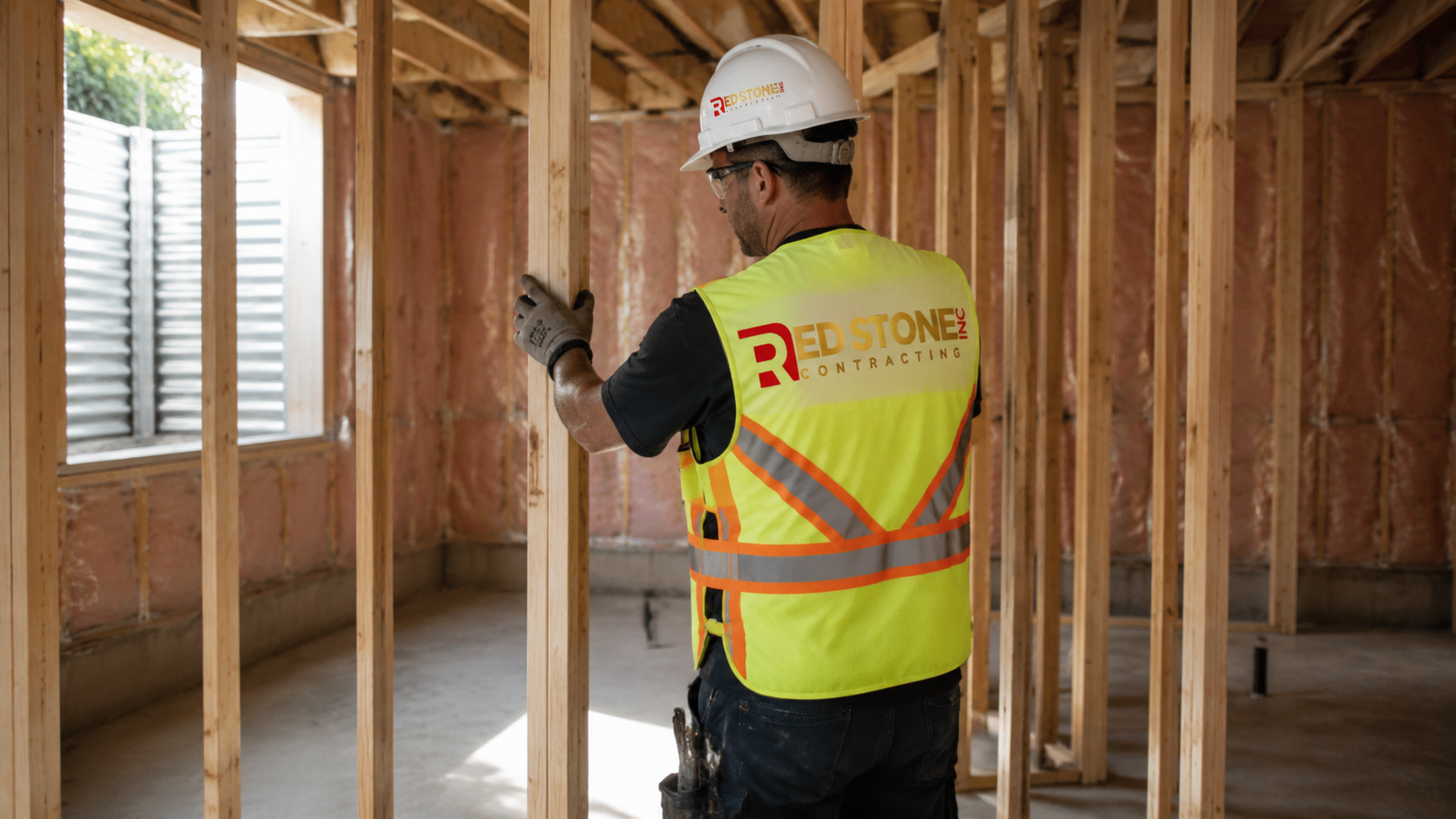
Typical additional costs when converting a plain basement finish into a legal second unit include egress window and window well installation at roughly $6,500 to $14,000, underpinning or bench footing where ceiling height is deficient at $400 to $700 per linear foot, a separate HVAC provision or upsized system at $6,000 to $18,000, and fire-rated ceiling assemblies at $8 to $16 per square foot. A basement renovation planned as a suite from day one is always cheaper than one converted after the fact.
Permits, Zoning and Ontario Building Code Requirements
Permits are handled by the individual municipality, not by the Region of Peel. Mississauga, Brampton and Caledon each issue their own building permits and apply their own zoning by-laws, while the Region handles water, wastewater and certain road matters. Anyone planning a home renovation Peel Region project should confirm requirements with the specific municipality rather than assuming they are identical.
| Work Type | Permit Required? | Typical 2026 Fee Range | Typical Review Time |
|---|---|---|---|
| Cosmetic finishes, flooring, painting, cabinet swap | No | Not applicable | Not applicable |
| Finished basement (non-suite) | Yes | $700 to $1,600 | 2 to 5 weeks |
| Second dwelling unit | Yes | $1,300 to $3,200 | 4 to 10 weeks |
| Removing or altering a load-bearing wall | Yes, with engineered drawings | $600 to $1,500 plus engineering | 3 to 6 weeks |
| Rear, side or second-storey addition | Yes, plus zoning review | $2,500 to $8,000+ | 8 to 20 weeks |
| Relocating plumbing fixtures or drains | Yes (plumbing permit) | $300 to $900 | 1 to 3 weeks |
Two additional items catch homeowners off guard. First, a minor variance is required when a design exceeds zoning limits for coverage, height or setbacks, and that process adds roughly three to five months plus application fees. Second, development charges may apply to additional dwelling units in some circumstances, and confirming the current exemption status with the municipality before finalising a budget is essential.
Engineered drawings for structural work generally run $1,800 to $5,000 depending on complexity. Architectural or design drawings for an addition typically fall between $6,000 and $20,000. These are real, unavoidable line items on permitted work, and a quote that omits them is incomplete rather than competitive.
What Drives Your Renovation Budget Up or Down
Two houses on the same street can produce quotes that differ by forty percent for identical-looking scopes. The reasons are almost always concealed conditions, mechanical capacity and finish tier. Understanding these in advance is the most reliable way to avoid change orders on a home renovation Peel Region project.
| Cost Driver | Where It Shows Up | Typical Budget Impact |
|---|---|---|
| Aluminum or knob-and-tube branch wiring | Pre-1980 homes | $4,500 to $16,000 to remediate |
| Undersized electrical service (60A or 100A) | Bungalows and older sidesplits | $3,500 to $8,000 for a 200A upgrade |
| Asbestos in vermiculite, tile or drywall compound | Homes built before 1990 | $3,000 to $15,000 for testing and abatement |
| Load-bearing wall removal | Open-concept conversions | $8,000 to $25,000 including engineering |
| HVAC capacity for added square footage | Additions and basement suites | $6,000 to $18,000 |
| Finish tier (stock to full custom) | All projects | Can double the interior budget |
| Septic capacity on rural Caledon lots | Added bathrooms or bedrooms | $18,000 to $45,000 if replacement is needed |
A sensible contingency for a home renovation Peel Region project is 10 percent on newer subdivision homes and 15 to 20 percent on anything built before 1980. That reserve is not padding: it is the buffer that lets you make good decisions when a wall comes open and reveals something the quote could not have accounted for.
Realistic Timelines and How to Sequence the Work
Homeowners consistently underestimate the pre-construction phase. Design, engineering, permit review and material lead times routinely consume more calendar time than the physical build. For a mid-sized home renovation Peel Region schedule, plan roughly four to eight weeks for design development, two to ten weeks for permitting depending on scope, and six to eight weeks of lead time on cabinetry and windows ordered at the same time.
Windows, custom millwork and specialty tile are the three items on a home renovation Peel Region schedule that most often delay otherwise well-run projects. Ordering them the moment drawings are final, rather than when demolition starts, removes the majority of that risk.
Seasonality also matters in Peel. Exterior work including additions, window replacement and foundation excavation is best scheduled between late spring and early autumn. Interior work runs year-round, so many homeowners sequence the exterior envelope in summer and the interior finishing through the colder months. If your project involves both, discuss phasing and consider our design solutions process to lock the plan before trades are booked.
How to Evaluate a Contractor in Peel Region
The home renovation Peel Region market, like the wider GTA market, is crowded, and the quality range is wide. A few checks separate serious firms from the rest, and they apply equally whether you are in Mississauga, Brampton or Caledon.
- Written scope, not a lump sum. A proper quote lists inclusions, exclusions, allowances and the specific products assumed. A single number on a page tells you nothing.
- WSIB clearance and liability insurance. Ask for current certificates. Verify the coverage amount and the policy dates.
- Permit responsibility in writing. Confirm who applies, who pays and who attends inspections.
- Realistic allowances. Low allowances for tile, plumbing fixtures and countertops are the most common way a quote is made to look cheaper than it is.
- Payment schedule tied to milestones. Deposits should be modest and progress payments should follow completed stages, not the calendar.
- Recent, relevant references. Ask for projects of similar scope and age of home, not just similar budget.
For an addition specifically, confirm the contractor has completed permitted structural work recently. An addition project touches foundation, framing, roofing, mechanical and envelope work in one scope, and it is the least forgiving type of home renovation Peel Region homeowners commission.
Return on Investment and Which Projects Pay Back
Not every home renovation Peel Region project returns its cost at sale, and it is worth being honest about that. In the current Peel market, kitchen and bathroom updates continue to recover the highest proportion of their cost, generally in the 60 to 80 percent range when finishes are chosen for broad appeal rather than personal taste. Legal secondary suites can perform differently, because they generate income and appeal to buyers seeking multi-generational or rental potential.
Additions and whole-home renovations are rarely dollar-for-dollar propositions. They are lifestyle decisions that also protect value by bringing an older house up to modern standards. That said, correcting deferred maintenance, upgrading electrical service, improving insulation and addressing moisture issues consistently protect value even when they are invisible in listing photos.
The one category that reliably destroys value is unpermitted work. Buyers and their lawyers increasingly ask for permit closure, and an open or missing permit can delay or derail a sale. Any home renovation Peel Region project involving structure, plumbing relocation or a new dwelling unit should be permitted and closed properly.
Working With a GTA Renovation Contractor Across Peel
Red Stone Contracting is based in the Toronto area and serves homeowners throughout the Greater Toronto Area, including Mississauga, Brampton and Caledon. That regional coverage matters practically: the same team that handles projects in Halton Region and communities such as Milton works to consistent standards across municipal boundaries, while adapting to each municipality’s permit process.
What does not change is the process. Site assessment first, then design and drawings, then permitting, then a fixed schedule with named trades. Homeowners who insist on that sequence get better outcomes than those who let demolition start before the plan is complete, and that holds true for every home renovation Peel Region project regardless of size.
How much does a home renovation in Peel Region cost in 2026?
Do I need a permit for a home renovation in Peel Region?
How long does a full home renovation take?
Can I legally build a basement apartment in Mississauga or Brampton?
What renovation problems are most common in older Peel homes?
Does a renovation increase my property value in Peel Region?
Plan Your Home Renovation Peel Region Project With Confidence
Accurate budgets come from accurate assessments. Red Stone Contracting works with homeowners across Mississauga, Brampton and Caledon to scope projects properly before a number is quoted, so the price you plan around is the price you pay. Whether you are finishing a basement, reworking a kitchen or planning a full addition, the process starts with a site visit and a clear written scope.
Call us today at (905) 901-1006 or request a free consultation to discuss your project, review realistic costs and set a schedule that works around your household.
Red Stone Contracting serves homeowners throughout Peel Region and the Greater Toronto Area, including Mississauga, Brampton, Caledon and surrounding communities.