
The automotive landscape of the Greater Toronto Area is undergoing a massive, irreversible paradigm shift. By 2026, the transition toward Electric Vehicles (EVs) is no longer a niche environmental statement; it is the absolute mainstream reality for the luxury homeowner. However, bringing a high-performance EV home exposes a catastrophic, deeply hidden flaw in the vast majority of older Toronto properties: the residential electrical grid is mathematically incapable of supporting them. Attempting to charge a modern, massive-battery EV (like a Rivian or a Tesla Model X) on a standard 120-volt wall outlet is agonizingly slow, frequently taking over 48 hours for a full charge. A Level 2 high-speed charger requires immense, dedicated 240-volt power. When executing a massive custom home renovation, failing to aggressively upgrade your home’s electrical infrastructure to support dual EV charging is a profound architectural and financial error. Redstone Contracting integrates elite, future-proof electrical engineering directly into the framing phase of our projects. This exhaustive 2026 technical guide dissects the exact mechanics of an EV charger home renovation Toronto homeowners require, detailing the massive electrical panel upgrades, the complex trenching of underground conduit, and the strategic integration of smart load-management systems.
The Physics of Electrical Bottlenecks: Why Your Current Panel Will Fail
To understand the massive scope of the required electrical upgrade, you must understand the mathematics of your home’s current power load. The vast majority of Toronto homes built between 1950 and 1990 were equipped with a 100-Amp electrical panel. This was perfectly adequate when the most power-hungry appliance in the house was an electric oven.
Today, the modern luxury home is an absolute energy glutton. A sprawling kitchen renovation frequently includes dual wall ovens and a massive induction cooktop. A basement renovation adds a dedicated HVAC heat pump and an electric sauna. When you attempt to add a single 60-Amp Level 2 EV charger to this existing 100-Amp panel, you instantly exceed the physical capacity of the main breaker. If you plug your car in while the oven and the air conditioner are running, the main breaker will violently trip, instantly plunging the entire house into darkness. The mathematical reality is absolute: to support modern luxury living and high-speed EV charging simultaneously, you must execute a massive, heavily permitted electrical service upgrade.
| EV Charger Level | Electrical Requirement | Typical Charging Speed | Installation Complexity |
|---|---|---|---|
| Level 1 (Standard Outlet) | Standard 120V / 15-Amp household outlet. | Agonizingly slow (3 to 5 miles of range per hour). | Zero. Just plug it into the wall. |
| Level 2 (Standard 40-Amp) | Dedicated 240V / 40-Amp to 50-Amp circuit. | Excellent overnight charging (25 to 30 miles per hour). | Requires pulling massive, thick copper wire from the panel to the garage. |
| Level 2 (High-Speed 60-Amp) | Hardwired 240V / 60-Amp to 80-Amp circuit. | Maximum residential speed (40 to 60 miles per hour). | Mandates a massive 200-Amp or 400-Amp main panel upgrade. |
| Level 3 (DC Fast Charger) | Massive 480V 3-Phase commercial power. | Hyper-fast (0 to 80% in 20 minutes). | Physically impossible and illegal for residential Toronto zoning. |
| Dual Level 2 (Load Sharing) | Two chargers linked via a smart energy management system. | Dynamically splits power based on which car needs it most. | Requires advanced smart-panel integration (e.g., SPAN panel). |
The 200-Amp (or 400-Amp) Heavy Service Upgrade
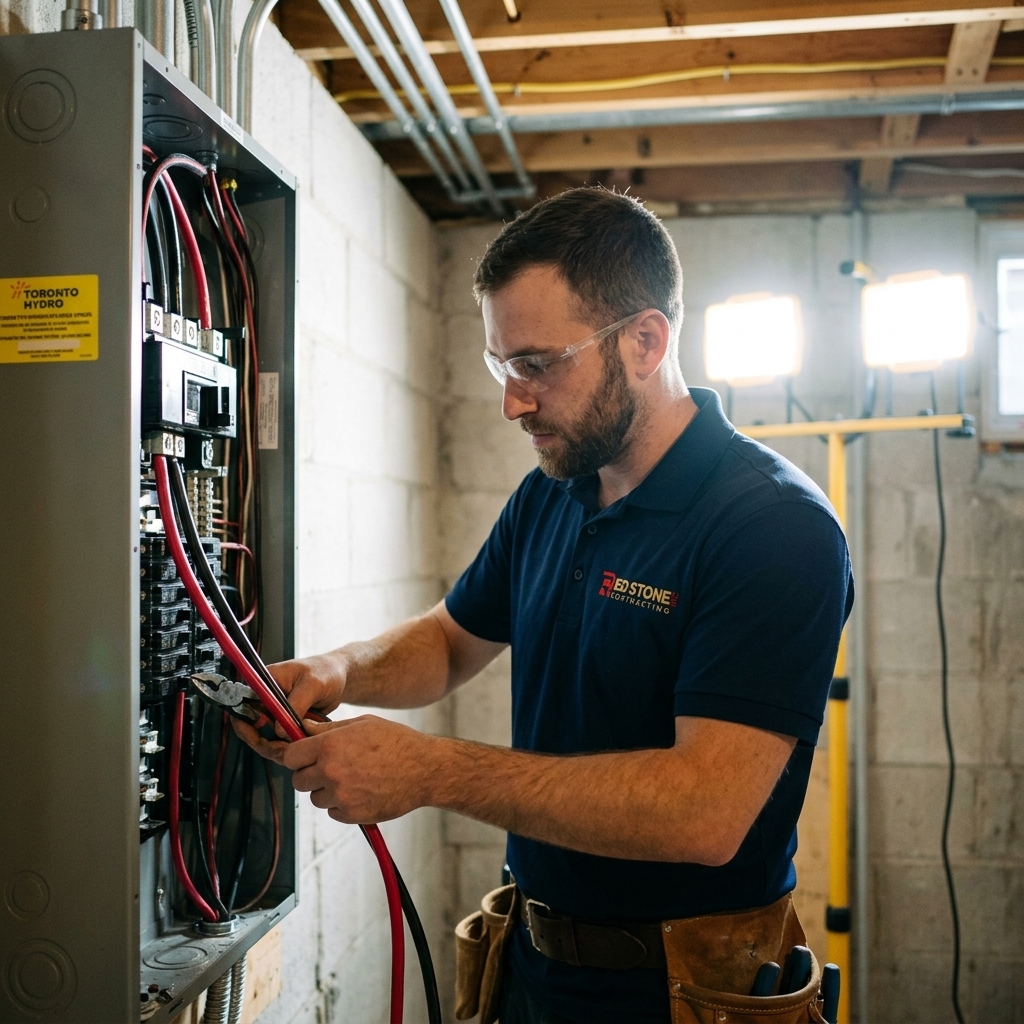
The absolute foundation of an EV-ready home is the Heavy Service Upgrade. This is not a simple matter of swapping out a metal box in your basement; it is a massive, multi-trade logistical operation that involves the local utility company (Toronto Hydro or Alectra) and the Electrical Safety Authority (ESA).
The contractor must completely disconnect the home from the municipal power grid. The old, thin electrical wire running from the street (or the overhead pole) to the house is violently cut down and replaced with massive, heavy-gauge commercial copper wiring. The old 100-Amp panel is completely ripped out of the basement wall, and a massive, towering 200-Amp (or increasingly, for massive custom estates, a 400-Amp) electrical panel is bolted in its place. Every single circuit in the house must be painstakingly re-wired into the new breakers. This upgrade instantly provides the massive electrical bandwidth required to seamlessly run dual 60-Amp EV chargers, a luxury induction kitchen, and a heavy-duty heat pump without ever tripping a master breaker.
The Trenching Nightmare: Detached Garages
If your property features an attached garage, routing the massive, heavy-gauge copper wire from the basement electrical panel to the garage wall is relatively straightforward during a major renovation, as the walls and ceilings are already stripped down to the wooden studs.
However, thousands of older Toronto homes (especially in East York, the Annex, and High Park) feature detached garages located at the absolute far end of a long backyard. This presents a massive, expensive engineering hurdle. You cannot simply string a heavy electrical wire through the air across your backyard. The Ontario Electrical Safety Code absolutely mandates that the high-voltage line powering the EV charger must be buried underground inside heavy-duty, rigid PVC conduit.
This requires the aggressive deployment of specialized trenching machines to physically carve a deep, 24-inch to 36-inch deep trench straight through your expensive backyard landscaping, cutting through massive tree roots, avoiding buried gas lines, and smashing through old concrete walkways. The massive copper wire (often a thick Teck cable) is laid in the trench, inspected by the ESA, and buried. If you are executing a massive outdoor living renovation, it is absolutely critical to trench and lay this EV conduit before pouring the expensive concrete patios or building the composite decks.
| Electrical Upgrade Component | The Engineering Requirement | Estimated 2026 Cost Bracket |
|---|---|---|
| 100-Amp to 200-Amp Panel Upgrade | Requires Toronto Hydro disconnect, new heavy gauge mast wire, massive new breaker panel, and strict ESA inspection. | $3,500 – $6,500 |
| 100-Amp to 400-Amp Panel Upgrade | For massive luxury estates. Often requires replacing the underground municipal transformer at the street level. | $10,000 – $25,000+ |
| Underground Trenching (Detached Garage) | Aggressive excavation 24+ inches deep, rigid PVC conduit, massive Teck cable, and landscape restoration. | $3,000 – $8,000+ (Distance dependent) |
| Smart Load Management Device | A highly advanced computer module that actively monitors total house power and briefly throttles the EV charger if the oven turns on. | $1,200 – $2,500 |
| Physical EV Charger Hardware | The actual Level 2 wall-mounted unit (e.g., Tesla Wall Connector, ChargePoint Home Flex). | $800 – $1,500 (Unit only) |
The Smart Panel Revolution (SPAN)
For the ultra-luxury homeowner, simply installing a larger metal box with analog breakers is obsolete. The bleeding edge of residential electrical engineering is the Smart Panel (such as the SPAN panel). A smart panel replaces the traditional metal breakers with highly advanced, internet-connected solid-state relays.
Through a sleek smartphone app, the homeowner can view the exact, real-time electrical consumption of every single appliance in the house down to the precise watt. More importantly, the smart panel provides dynamic load shedding. If the home’s total electrical draw approaches the maximum limit, the panel’s computer will automatically, instantly throttle down the EV charger in the garage, allowing the massive induction stove in the kitchen to run flawlessly. Once the cooking is finished, the panel instantly ramps the EV charger back up to maximum speed. This brilliant technology often completely eliminates the need for an incredibly expensive 400-Amp upgrade, allowing massive power utilization on a standard 200-Amp grid.
Future-Proofing: The “EV Ready” Garage
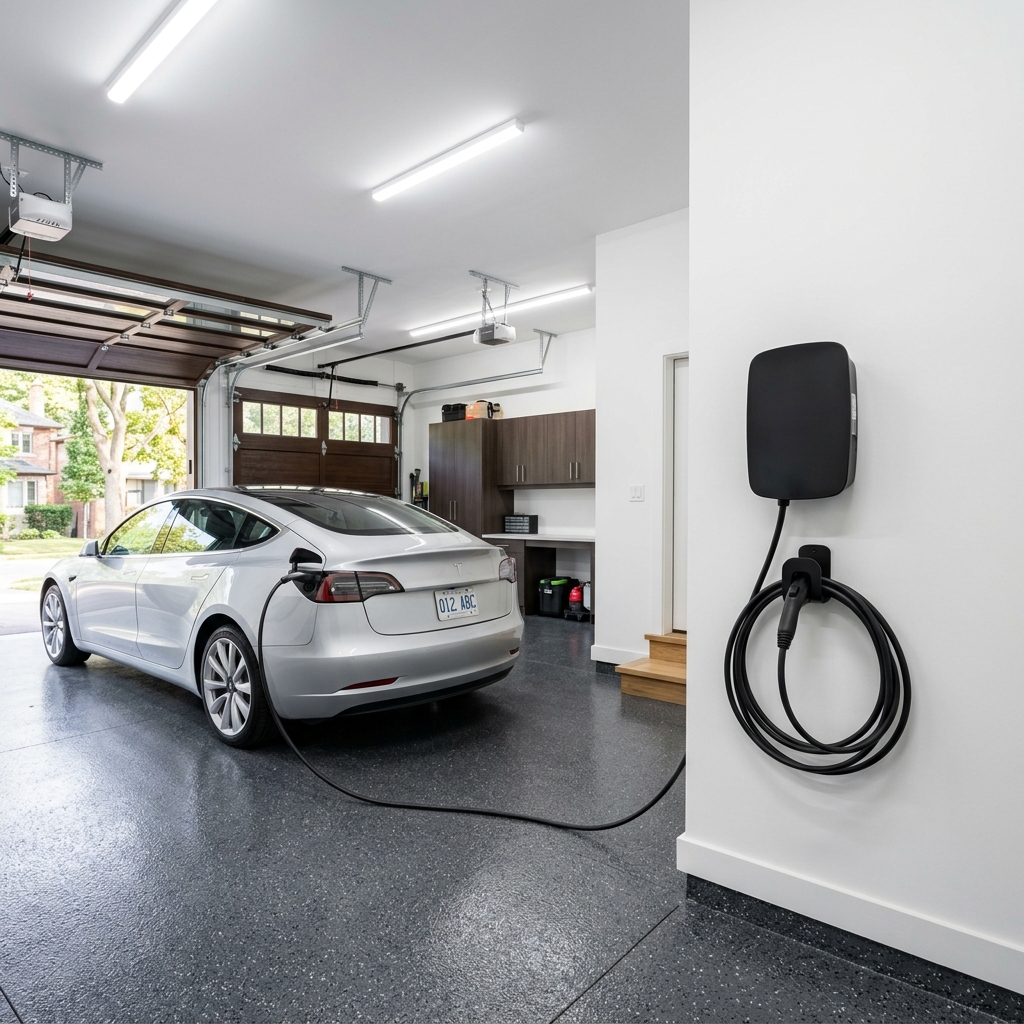
Even if you currently only own one electric vehicle, it is a massive architectural error to wire the garage for only a single charger during a major renovation. The walls are open, the drywall is removed, and the electrician is already on site. The marginal cost to pull a second massive copper wire to the opposite wall of the garage is incredibly low during the framing stage.
A flawlessly executed EV charger home renovation Toronto project dictates that the garage is wired with dual 60-Amp circuits, terminating in heavy-duty NEMA 14-50 receptacles or hardwired junction boxes. Furthermore, the garage renovation must include massive lighting upgrades, heavy-duty epoxy floor coatings to resist chemical spills and winter road salt, and aggressive, R-20 spray foam insulation in the walls. A freezing cold garage violently degrades the chemical efficiency of an EV battery; a heavily insulated, climate-controlled garage ensures the battery charges at absolute maximum efficiency during a brutal January deep-freeze.
| Garage Upgrade Element | The Specific Benefit for EVs | Estimated ROI / Impact |
|---|---|---|
| Dual High-Speed Circuits | Guarantees massive charging capacity when the family inevitably transitions to a two-EV household. | Immense. Saves $3,000+ in future drywall tearing and rewiring. |
| Spray Foam Wall Insulation | Keeps the garage ambient temperature significantly higher during winter, preserving the EV battery’s chemical efficiency. | High. Faster charging speeds and lower hydro bills. |
| Commercial Epoxy Flooring | Completely seals the porous concrete, preventing highly corrosive winter road salt from destroying the foundation slab. | Excellent aesthetic and structural preservation. |
| Dedicated Sub-Panel in Garage | Provides a massive, localized electrical hub for the EV chargers, heavy power tools, and massive garage heaters. | Maximum electrical flexibility. |
| Upgraded Wi-Fi Mesh Network | Modern EVs require massive overnight software updates via Wi-Fi; a weak garage signal causes update failures. | Critical for vehicle software health. |
The Municipal Permit Imperative
Electrical work is not a DIY weekend project; it is the most highly regulated, lethal component of residential construction. In Ontario, any modification to the main panel or the hardwiring of a Level 2 EV charger must be executed by a Licensed Electrical Contractor (LEC) and strictly inspected by the Electrical Safety Authority (ESA).
If you hire an unlicensed handyman to cheaply hardwire a massive 60-Amp charger, and that faulty connection arcs and burns the garage to the ground, your homeowner’s insurance will instantly and completely void your policy. You will receive zero compensation for the destroyed house or the burned $100,000 vehicle. At Redstone Contracting, our elite, licensed master electricians handle every single aspect of the ESA permitting, load calculations, and municipal utility coordination, ensuring absolute, ironclad legal compliance and safety.
Why is the existing 100-Amp electrical panel in my Toronto home mathematically incapable of charging a modern EV?
What is the exact financial cost to execute a massive 200-Amp heavy service upgrade during an EV charger home renovation Toronto project?
If my garage is totally detached at the end of the backyard, how do you physically get massive electrical power to it?
What is a Smart Electrical Panel, and how does it prevent the house from overloading?
Why did the contractor insist on massively insulating the garage walls if I am only installing an EV charger?
Is it legally required to pull an ESA permit just to plug a Level 2 charger into an existing garage outlet?
Schedule Your Elite Electrical and Garage Consultation Today
Do not allow an obsolete, mathematically insufficient electrical grid to violently bottleneck the performance of your luxury electric vehicles. A comprehensive renovation must aggressively prioritize the hidden, massive infrastructure that powers your modern life.
Call us today at (905) 901-1006 or request a comprehensive architectural consultation to discuss integrating elite electrical engineering into your custom home project.
Redstone Contracting has been the trusted authority for highly complex, massive structural renovations and elite electrical integration across Toronto, Mississauga, and Burlington for decades. From complete 400-Amp heavy service upgrades to flawless smart-home integration, our master craftsmen deliver uncompromising luxury and absolute technical safety.