
As the massive demographic wave of Toronto’s aging population crests, families are aggressively rejecting the catastrophic financial drain and profound emotional trauma associated with transitioning into institutionalized, long-term care facilities. The overwhelming mandate in 2026 is absolute independence: homeowners are deploying serious capital into aggressive architectural modifications to forcefully bend their current property to accommodate their evolving physical frailties. An “Aging-in-Place” renovation is not merely installing a cheap plastic handrail; it is a profound, highly technical re-engineering of an estate to eradicate life-threatening physical barriers while preserving uncompromised luxury and aesthetic dignity. Red Stone Contracting is an elite specialist in executing these massive accessibility overhauls across the volatile architecture of the GTA. This exhaustive guide dissects the critical priority zones, the intense structural challenges of barrier-free design, and the immense financial subsidies available to fund them.
The Immense Financial Reality of Accessibility
Engineering a home to safely accommodate a wheelchair turning radius, or eradicating dangerous step-ups, requires profound structural intervention. Here are the realistic 2026 costs to harden your home against the ravages of aging:
| Crucial Modification Scope | Estimated 2026 Financial Range | Urgency & Impact Value |
|---|---|---|
| Heavy-Duty Grab Bars & Lighting Surge | $1,500 – $4,500 | Absolute Minimum Baseline (Prevents the majority of nighttime falls). |
| Barrier-Free Walk-In Shower Transformation | $12,000 – $25,000 | Critical (The bathroom is the single most lethal room in the home). |
| Zero-Threshold Exterior Ramps/Lifts | $6,000 – $18,000 | Mandatory for wheelchair or heavy walker dependency. |
| Aggressive Doorway Widening (Entire Floor) | $8,000 – $15,000 | Essential for eliminating violent wheelchair collisions with tight framing. |
| Massive Main-Floor Master Suite Conversion | $45,000 – $110,000+ | The Ultimate Defense (Completely eradicates the lethal threat of staircases). |
While spending $80,000 to drastically reconfigure your main floor sounds terrifying, contrast it immediately against the brutal economic reality of a premium assisted-living facility in Ontario, which routinely extorts $4,000 to $7,000 per month. At that staggering burn rate, an elite $80,000 renovation mathematically pays for itself entirely in less than two years, while keeping the homeowner surrounded by their cherished community.
The Epicenter of Danger: The Bathroom Overhaul
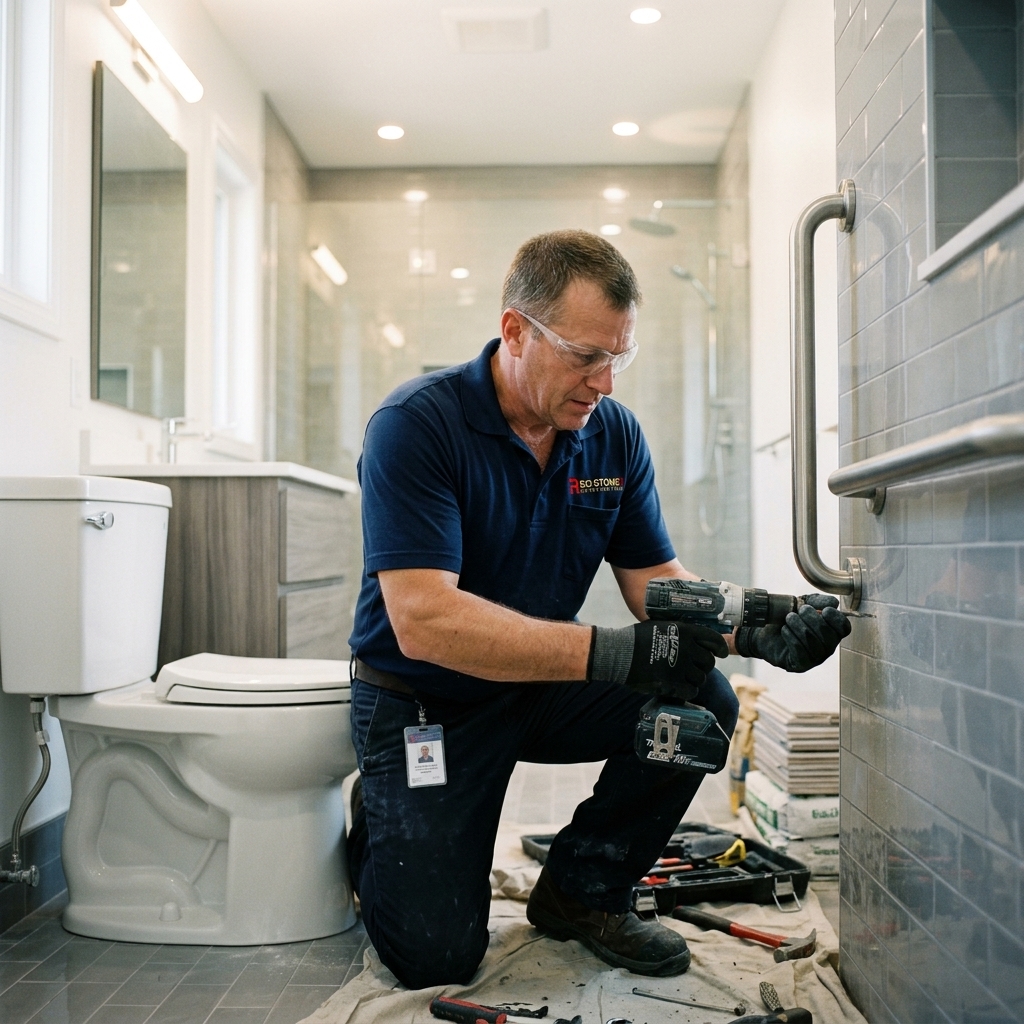
The vast majority of catastrophic, life-altering injuries suffered by seniors occur on the wet, slippery porcelain of a traditional bathtub. Ripping out this archaic death trap and engineering a flawless barrier-free environment is the highest conceivable priority.
Zero-Threshold Curbless Showers
You cannot simply place tile on the floor and call it a shower; water will violently flood the house. Engineering a truly “curbless” shower (where a wheelchair rolls straight in without hitting a lip) requires immense structural aggression. Contractors must physically sever and lower the heavy wooden floor joists beneath the bathroom to accommodate an advanced, sloped waterproof “pan” (like the Schluter-Kerdi system) perfectly flush with the adjacent floor. This is an incredibly precise, intensely technical maneuver.
Non-Slip Imperatives and Ballistic Hardware
Glossy marble tile is an immediate death sentence for the frail. A professional accessibility renovation mandates highly textured, matte-finish porcelain with a massive Coefficient of Friction (COF rating exceeding 0.60). Furthermore, grab bars cannot be screwed into flimsy half-inch drywall—they will violently rip out of the wall under the heavy dynamic load of a falling human. During the gut-phase, massive 2×6 timber plates (blocking) are lag-bolted securely between the studs specifically to anchor the heavy stainless steel rails, guaranteeing they can sustain endless 300-pound impacts.
Achieving the Ultimate Defense: Main-Floor Living
The standard Toronto two-story home, featuring bedrooms on the top floor and laundry in a dark, treacherous basement, is an architectural nightmare for the elderly. Navigating 14 steep wooden stairs multiple times a day eventually becomes a terrifying, insurmountable obstacle.
The pinnacle aging-in-place strategy is the aggressive architectural conversion of the main floor. This typically involves destroying a rarely used formal dining room or massive home office and merging it with a powder room to construct a sprawling, luxurious Master Suite entirely on the ground level. The renovation must aggressively widen the door frames from standard 28-inches to a massive 36-inches to permit zero-friction wheelchair access, and frequently involves relocating the heavy plumbing of the washing machine up from the freezing basement directly into the new suite’s walk-in closet.
The Technological Vanguard: Smart Home Fortification
In 2026, premium aging-in-place renovations are heavily augmented by militaristic arrays of smart technology, fundamentally shifting the house from a passive structure to an active, vigilant guardian.
- Automated LED Illumination Corridors: Seniors suffering from macular degeneration require massive light saturation. We install aggressive, motion-sensor activated LED floor tracking lighting from the bed directly to the bathroom. The moment feet touch the floor, a blindingly clear, glare-free path mathematically illuminates, destroying the threat of tripping over unseen objects in the dark.
- Thermal and Hydro Surveillance: Stove abandonment causes catastrophic fires. Advanced smart-stove systems utilizing thermal optics will aggressively instantly cut absolute power to the range if left unattended for specific durations. Simultaneously, heavy-duty smart-water sensors deployed near the water heater and under sinks instantly text family members the moment microscopic leaks are detected, preventing devastating slip-hazards.
Ruthlessly Exploiting Government Cash Subsidies
The Canadian government desperately wants you to stay in your home, because institutionalized care is bankrupting their healthcare system. They offer massive financial incentives to offset these heavy renovations.
- Home Accessibility Tax Credit (HATC): The federal government allows you to aggressively claim 15% of your total eligible accessibility renovation expenses, up to a massive maximum of $20,000. This legally forces a massive $3,000 tax reduction into your pocket.
- Ontario Seniors’ Home Safety Tax Credit: The province doubles down, offering a highly lucrative 25% credit on an additional $10,000 in expenses. A sharply organized, elite contractor will structure your bathroom renovation invoices impeccably to ensure you ruthlessly exploit both levels of government, frequently resulting in $5,500 in hard capital returns.
- The CMHC Forgivable Loan program (RRAP): If the homeowner operates beneath a specific severe low-income threshold, the government will deploy outright forgivable grants up to $16,000 to physically execute these lifesaving modifications.
The Strategic Superiority of Early Action
The most catastrophic error families commit is waiting for a violent, shattered hip to occur before scrambling to hire a contractor. A massive custom interior renovation requires weeks of intense planning and months to physically execute. You must assault this problem proactively during your 50s and 60s. By incorporating wide doorways, elegant non-slip flooring, and fortified shower blocking into your standard aesthetic home renovation today, you secretly construct an invisible bunker that will protect you decades later.
Maneuvering a complex, highly regulated aging-in-place renovation requires a firm with immense structural pedigree and extreme empathy for functional design. Red Stone Contracting executes heavy, beautiful, and completely barrier-free architecture across the GTA. Protect your family’s future, shield your independence, and contact us immediately for an exhaustive, life-changing architectural consultation across Toronto, Oakville, and Burlington.