
Bathroom accessibility is not just for seniors or people with disabilities — it is a forward-thinking design philosophy that makes every bathroom safer, more comfortable, and more functional for users of all ages and abilities. An accessible bathroom renovation toronto project incorporates universal design principles including barrier-free showers, strategically placed grab bars, non-slip flooring, wider doorways, and ergonomic fixtures that look beautiful while dramatically reducing the risk of falls and injuries. With Toronto’s aging population growing rapidly and more homeowners choosing to age in place rather than move to assisted living facilities, accessible bathroom design has become one of the most important renovation categories in the Greater Toronto Area. This comprehensive 2026 guide covers every element of an accessible bathroom renovation with realistic costs, design strategies, and the specific building standards that apply to Toronto homes.
Why Accessible Bathroom Renovation Toronto Homeowners Are Prioritizing
Falls in the bathroom are the leading cause of injury-related emergency room visits among adults over 65 in Ontario. Wet tile floors, high bathtub walls that require stepping over, glass shower doors, and the absence of grab bars create a hazardous environment that becomes increasingly dangerous as mobility, balance, and vision decline with age. An accessible bathroom renovation eliminates these hazards while creating a space that is simultaneously safer, more spacious, and more visually appealing than a conventional bathroom.
But accessibility is not exclusively about aging. Young families benefit from curbless showers that are easier to clean and safer for children. Homeowners recovering from knee or hip surgery need temporary accessibility features that become permanent conveniences. Athletes and active individuals appreciate the stability that grab bars provide during post-workout recovery. Universal design benefits everyone — and when executed with quality materials and thoughtful aesthetics, an accessible bathroom is indistinguishable from a luxury spa renovation.
Barrier-Free Walk-In Showers: The Foundation of Accessible Design
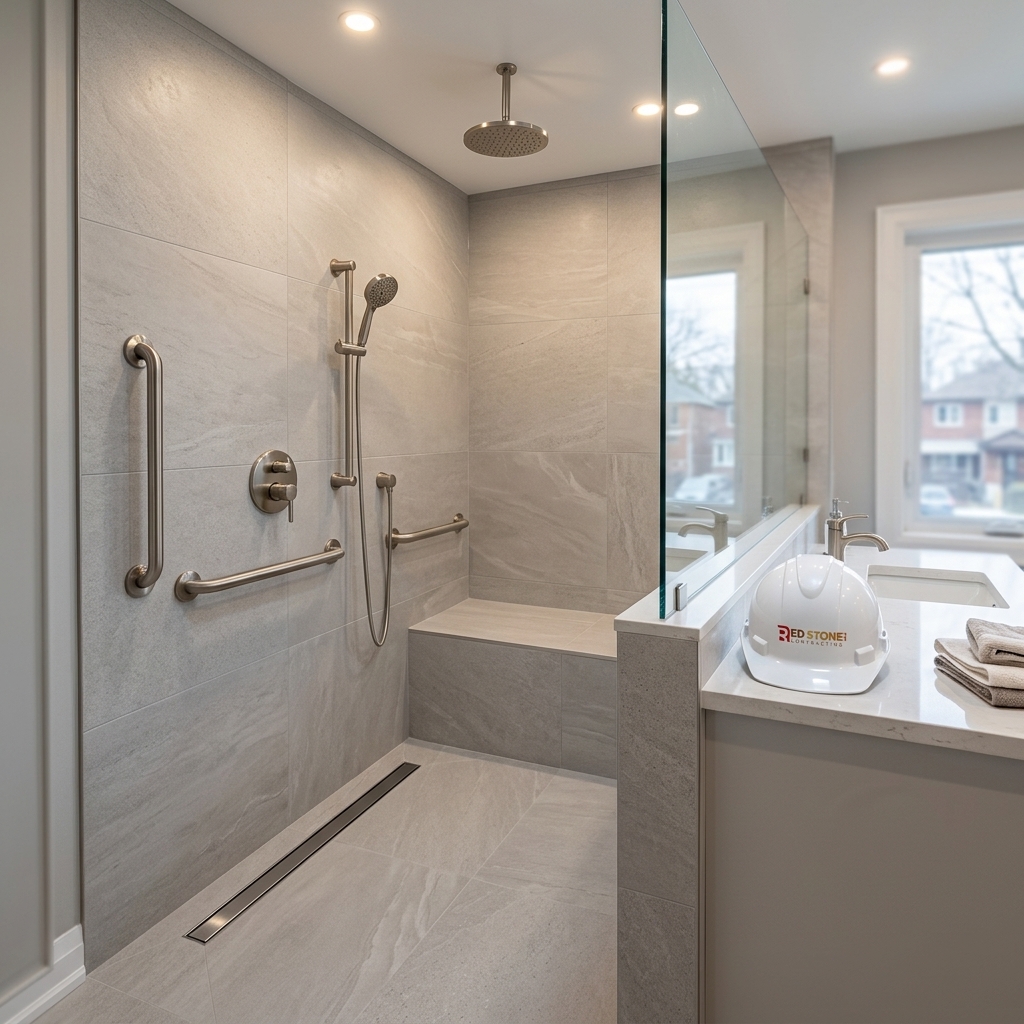
The single most impactful accessible bathroom feature is a barrier-free (curbless) walk-in shower. Unlike traditional showers with a raised curb or lip at the entry, a barrier-free shower has a continuous floor that transitions seamlessly from the bathroom floor into the shower area. This eliminates the trip hazard of stepping over a curb and allows wheelchair or walker access directly into the shower.
| Walk-In Shower Component | Accessibility Purpose | Estimated Cost |
|---|---|---|
| Curbless Shower Base with Linear Drain | Zero-threshold entry, wheelchair accessible, eliminates trip hazard | $2,000 – $4,000 |
| Built-In Shower Bench (tiled) | Seated showering for users with limited standing ability | $800 – $1,500 |
| Handheld Shower Head on Adjustable Slide Bar | Adjustable height for seated or standing use | $200 – $500 |
| Rain Shower Head (ceiling-mounted) | Hands-free overhead showering option | $300 – $800 |
| Anti-Scald Thermostatic Mixer Valve | Prevents burns by limiting maximum water temperature | $300 – $600 |
| Non-Slip Tile Flooring (minimum R10 rating) | Textured surface reduces slip risk when wet | $15 – $30/sq ft installed |
| Glass Panel (no door) | Open entry without a door to navigate — wider access, easier cleaning | $600 – $1,200 |
The total cost for a comprehensive barrier-free walk-in shower installation in a Toronto bathroom ranges from $6,000 to $12,000 depending on the size of the shower, the tile selected, and whether structural modifications are needed to accommodate the recessed shower pan and linear drain. A curbless shower requires the floor to be sloped precisely toward the drain at a minimum gradient of 2 percent — this often requires modifying the subfloor structure, which is why professional installation by an experienced renovation contractor is essential.
Grab Bars: Safety That Looks Beautiful
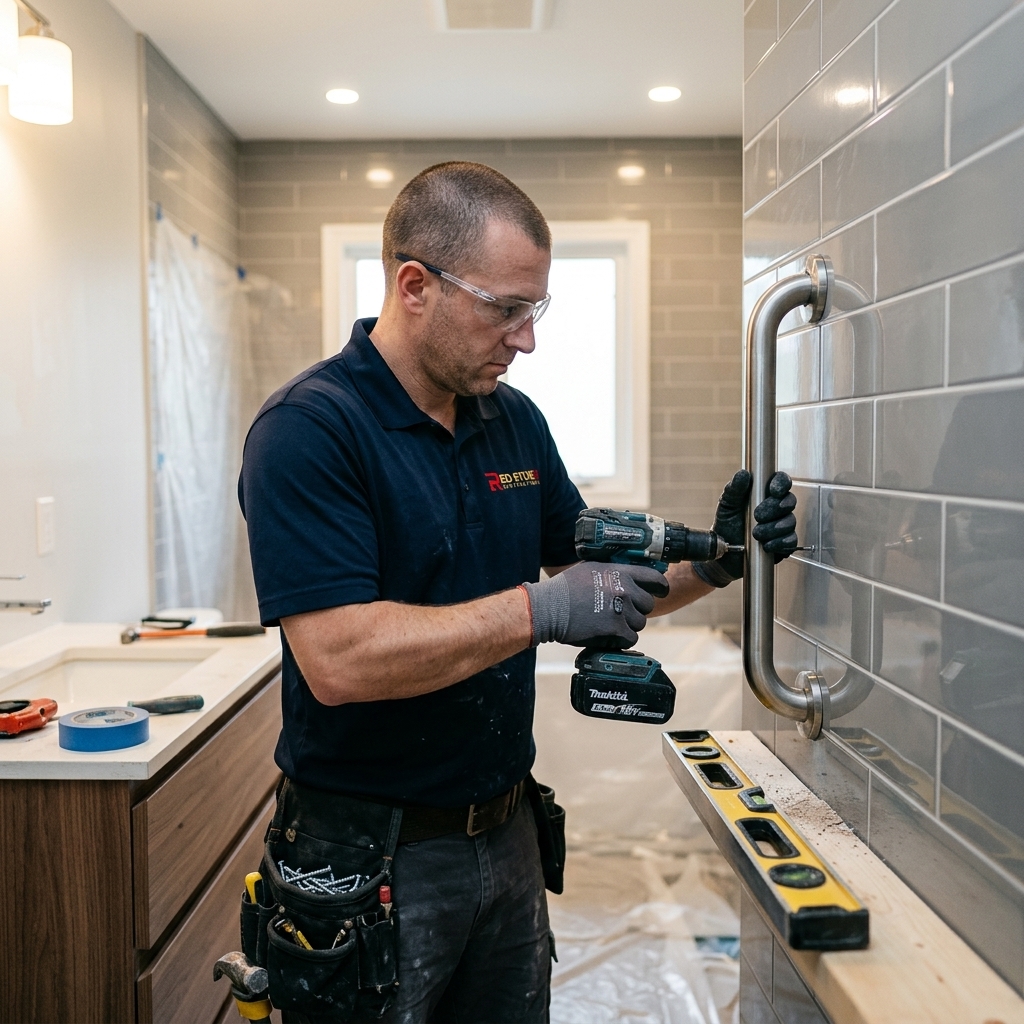
Modern grab bars bear no resemblance to the institutional stainless steel bars of hospital bathrooms. Today’s grab bars are available in designer finishes — matte black, brushed gold, oil-rubbed bronze, polished nickel — that complement any bathroom aesthetic. Many are designed to double as towel bars, toilet paper holders, or shelf supports, making them virtually indistinguishable from standard bathroom hardware.
Proper grab bar installation requires solid wood blocking installed behind the wall surface (inside the wall cavity) at every grab bar location. This blocking must be securely fastened to the wall studs to support a minimum of 250 pounds of force. Grab bars installed into drywall alone — even with toggle bolts — will eventually pull out under load, creating a dangerous false sense of security. During a bathroom renovation, your contractor installs blocking at all planned grab bar locations before the tile backer board and tile are applied, ensuring the grab bars have a permanently solid mounting surface.
Recommended grab bar locations include both sides of the toilet, inside the shower at seated height and standing height, at the shower entry transition point, and beside the bathtub if one is retained. A full set of grab bars for a primary bathroom typically costs $400 to $1,200 for the hardware and $300 to $600 for installation including blocking — a minimal investment for a feature that dramatically reduces fall risk.
Accessible Vanity and Toilet Considerations
Wheelchair-Accessible Vanity Design
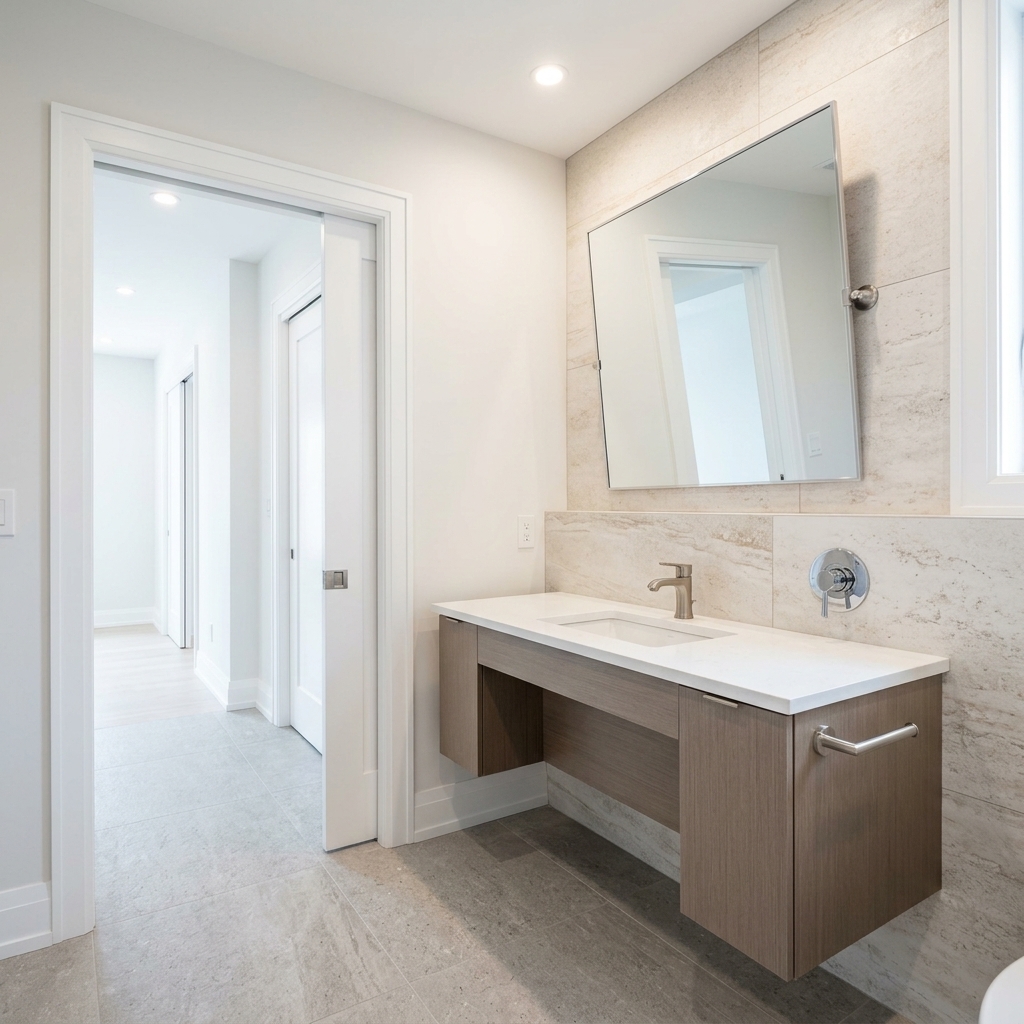
A standard bathroom vanity with a base cabinet extending to the floor prevents wheelchair access to the sink. An accessible vanity uses a wall-mounted (floating) design with open knee clearance beneath — a minimum of 27 inches of clear height and 30 inches of clear width allows comfortable wheelchair approach. The countertop height should be set at 34 inches (lower than the standard 36 inches) for seated users, with the sink offset to one side to maximize usable counter space.
Lever-handle faucets or touchless sensor faucets replace traditional knob handles that require grip strength and fine motor control. A tilted or adjustable mirror replaces a fixed mirror, allowing seated users to see their reflection without straining. These modifications add $500 to $1,500 to the vanity cost compared to a standard installation.
Comfort-Height Toilet
Standard toilets measure approximately 15 inches from floor to seat. A comfort-height toilet (also called ADA-compliant height) measures 17 to 19 inches, significantly reducing the effort required to sit down and stand up. For users with knee or hip mobility limitations, this two-to-four-inch difference is transformative. Wall-mounted toilets allow the height to be set precisely during installation, and their elevated position makes floor cleaning underneath dramatically easier. Comfort-height toilets cost $300 to $800 depending on the model, with wall-mounted models ranging from $800 to $1,500 plus the $300 to $500 installation cost for the concealed in-wall carrier frame.
Wider Doorways and Flooring
Standard interior doorways in most Toronto homes are 28 to 30 inches wide — too narrow for wheelchair or walker access. Widening the bathroom doorway to 34 to 36 inches provides comfortable clearance for mobility devices and is a critical component of accessible bathroom design. Pocket doors or barn-style sliding doors are preferred over swing doors because they do not require clear floor space for the door arc to open, effectively gaining 8 to 12 square feet of usable bathroom space.
Bathroom flooring in an accessible renovation must prioritize slip resistance above all other considerations. Large-format porcelain tiles with a minimum R10 slip resistance rating, matte-finish luxury vinyl tile (LVT), or textured stone tiles provide secure footing when wet. High-gloss tiles, polished marble, and smooth-finished stone should be avoided entirely in accessible bathrooms regardless of their aesthetic appeal, as they become dangerously slippery when wet and are responsible for a disproportionate number of bathroom fall injuries.
In-floor radiant heating beneath bathroom tile — costing approximately $10 to $15 per square foot during installation — keeps the floor warm, dries water quickly after showering, and reduces the slipperiness associated with cold, wet tile surfaces. For accessible bathrooms, radiant floor heat is both a comfort upgrade and a safety feature.
Lighting and Electrical Safety Features
Proper lighting is a critical safety element in accessible bathrooms that is frequently overlooked during planning. Motion-activated LED night lights at floor level illuminate the path to the toilet during nighttime visits without requiring the user to search for a light switch in the dark. Bright, even overhead lighting — a minimum of 50 foot-candles at vanity height — ensures adequate visibility for grooming, medication management, and fall hazard detection. Dimmer switches allow the lighting intensity to be adjusted for comfort, while illuminated rocker-style light switches are easier to locate and operate than small toggle switches, particularly for users with arthritis or limited hand dexterity.
All electrical outlets in accessible bathrooms must be GFCI-protected (Ground Fault Circuit Interrupter) to prevent electrical shock in wet environments. Outlet placement should be at accessible heights — between 18 and 44 inches from the floor — so seated users can reach them without straining. A dedicated outlet near the toilet for a bidet seat attachment or heated seat is increasingly common in accessible bathroom renovations and adds both comfort and hygiene benefits that many homeowners describe as one of their favourite upgrades after completion.
Planning for Future Accessibility Needs
Even if full accessibility features are not needed today, a renovation is the ideal time to install the infrastructure that makes future upgrades simple and affordable. This includes installing solid wood blocking behind all bathroom walls at grab bar heights (even if grab bars are not installed immediately), roughing in plumbing for a future curbless shower conversion, pre-wiring for heated floors, and framing doorways at 34 to 36 inch widths even if a standard door is installed initially. These pre-installation steps add $500 to $1,500 to a standard bathroom renovation but save $3,000 to $8,000 compared to retrofitting these features later when walls and floors must be opened and refinished. For homeowners planning to age in their current home for 10, 20, or 30 more years, this proactive approach is one of the smartest investments in a renovation budget. It is worth noting that Toronto’s housing market increasingly rewards homes with built-in accessibility infrastructure — buyers recognize the long-term value of a bathroom that can adapt to changing mobility needs without requiring costly future renovations, making this pre-installation strategy both a practical and financially sound decision for any homeowner investing in their property’s longevity.
Total Accessible Bathroom Renovation Costs
| Project Scope | What Is Included | Cost Range |
|---|---|---|
| Essential Accessibility Upgrade | Grab bars (4-6 locations), comfort-height toilet, handheld shower head, non-slip flooring | $3,000 – $6,000 |
| Comprehensive Accessible Renovation | Barrier-free curbless shower, grab bars, comfort-height toilet, accessible vanity, wider doorway, non-slip tile, radiant floor heat | $15,000 – $30,000 |
| Premium Universal Design Bathroom | All of the above plus wall-mounted toilet, custom tile work, heated towel rack, touchless faucet, automated lighting, premium fixtures | $30,000 – $50,000+ |
How much does an accessible bathroom renovation cost in Toronto?
What is a barrier-free shower?
Can an accessible bathroom still look stylish?
Are there grants for accessible bathroom renovations in Ontario?
Build Your Accessible Bathroom with Red Stone Contracting
An accessible bathroom is an investment in safety, independence, and long-term quality of life. Our team specializes in universal design renovations that deliver both beauty and function — barrier-free showers that rival luxury spas, grab bars that complement your design palette, and flooring that provides secure footing without sacrificing style. Every project is built to meet or exceed current accessibility standards while reflecting your personal aesthetic vision.
Call us today at (905) 901-1006 or schedule your accessible bathroom consultation online.
Red Stone Contracting delivers accessible and universal design renovations across Toronto, Oakville, Burlington, and Mississauga. We build bathrooms that are safe, beautiful, and designed for life — at every stage.