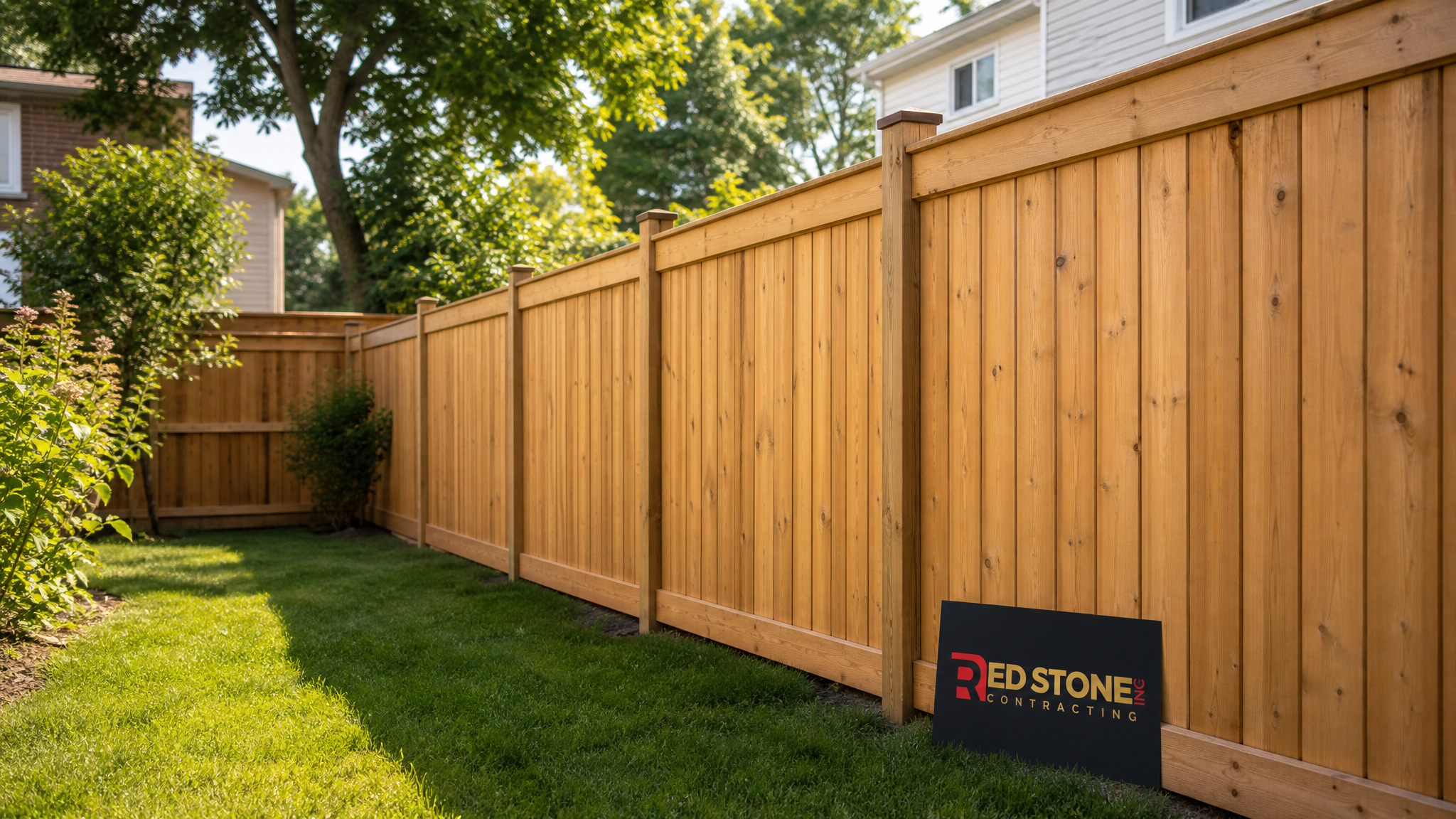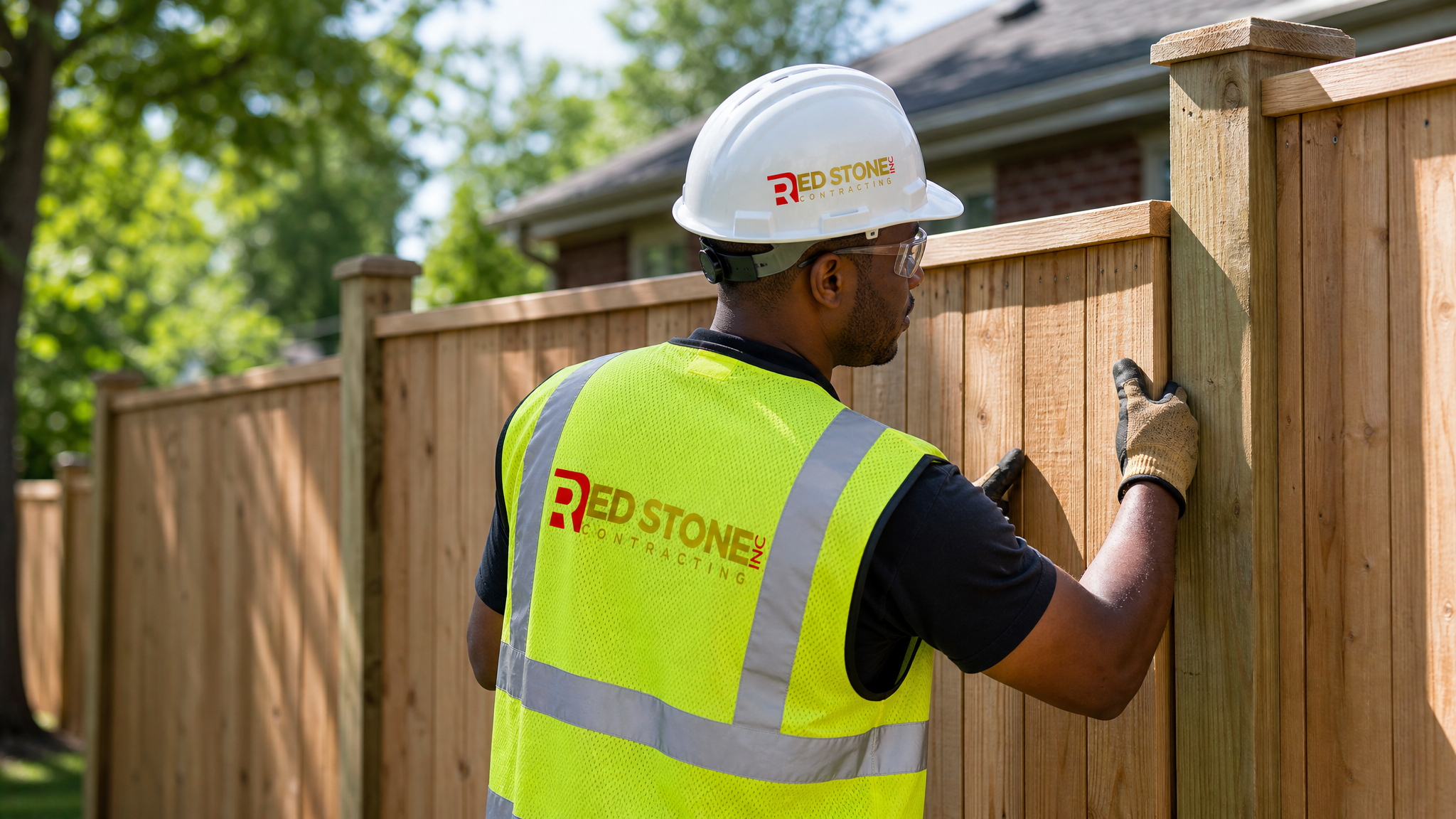
Understanding fence property line rules toronto homeowners must follow is one of the first steps in any backyard upgrade, from a simple privacy fence to a full outdoor renovation. Before you dig a single post hole, the fence property line rules Toronto property owners are required to follow determine how tall your fence can be, how far it must sit from the boundary, and whether a permit is needed at all. At Red Stone Contracting, we design and build additions, decks and outdoor living spaces across the GTA, and questions about fence property line rules Toronto homeowners face come up almost as often as questions about kitchens and bathrooms. This guide walks through the current 2026 bylaw requirements, how to confirm your true property line, shared-fence cost obligations with neighbours, permit triggers, and how to resolve a boundary disagreement calmly and correctly.
What Toronto’s Fence and Property Line Rules Mean for Homeowners in 2026
Every property in Toronto sits inside a specific zoning designation, and that designation is the starting point for any conversation about fence property line rules Toronto homeowners need to follow. The City’s fencing bylaw sets maximum heights for front, side and rear yards, and those maximums change depending on whether your lot is an interior lot, a corner lot, or backs onto a ravine, park or commercial property. Fence property line rules Toronto residents encounter also intersect with the Ontario Building Code when a fence exceeds a certain height or is combined with a retaining wall, at which point a structural permit may be required in addition to the standard fence permit.
Homeowners frequently assume that because a fence is a relatively small structure, the rules governing it must be simple. In practice, fence property line rules Toronto bylaw officers enforce are layered: municipal zoning bylaws, the Fence By-law itself, provincial building code triggers, and any subdivision agreement or site plan conditions registered on title can all apply at once. Getting a clear answer before construction begins saves homeowners from costly teardown orders later, and it protects the goodwill of the neighbourhood relationship that every fence project ultimately depends on.
Because so many renovation projects touch the rear or side yard, our design solutions team is often the first stop for homeowners trying to understand how a new fence line interacts with a planned addition, deck, or pool. Getting the boundary and bylaw questions answered early keeps the rest of the project on schedule.
Toronto Fence Bylaw Height, Setback and Material Rules
The clearest way to summarize fence property line rules Toronto applies across residential zones is by location on the lot. Front yard fences are the most restricted because they affect sightlines for pedestrians and drivers. Side and rear yard fences have more flexibility, but corner lots carry an additional sightline triangle restriction that trips up many homeowners who are only thinking about their own yard and not the intersection beside it.
| Location | Maximum Height | Setback Requirement | Common Material |
|---|---|---|---|
| Front yard | 1.0 metre (1.2 m for open/decorative styles) | Must not project past the front lot line | Wood picket, aluminum, wrought iron |
| Side yard | 2.0 metres | On or behind the side property line | Wood board-on-board, chain link, PVC |
| Rear yard | 2.0 metres | On or behind the rear property line | Wood privacy panel, composite, vinyl |
| Corner lot sightline triangle | 0.8 metres within the triangle | Set back from both intersecting streets | Open-style or low decorative fencing only |
| Pool enclosure fence | 1.2 metres minimum (self-closing gate required) | Must fully enclose the pool area | Aluminum picket, tempered glass panel |
These figures represent the standard fence property line rules Toronto applies to most residential zones, but every lot has quirks. Heritage conservation districts, ravine-adjacent properties and lots with registered easements can all shift the numbers, so it is worth confirming the specific zoning overlay on your property before finalizing a design. A fence that quietly exceeds height in a front yard is one of the most common violations we see, usually because a homeowner measured from the lower side of a sloped lot rather than from the average grade the bylaw actually uses.
Finding Your True Property Line Before Any Fence Project
No discussion of fence property line rules Toronto homeowners should follow is complete without addressing how to actually locate the boundary itself. A remarkable number of disputes start not because anyone broke the bylaw, but because nobody was certain where the property line actually sat. Old wood fences, hedgerows, and even neighbours’ verbal agreements from decades ago are not reliable evidence of a legal boundary.
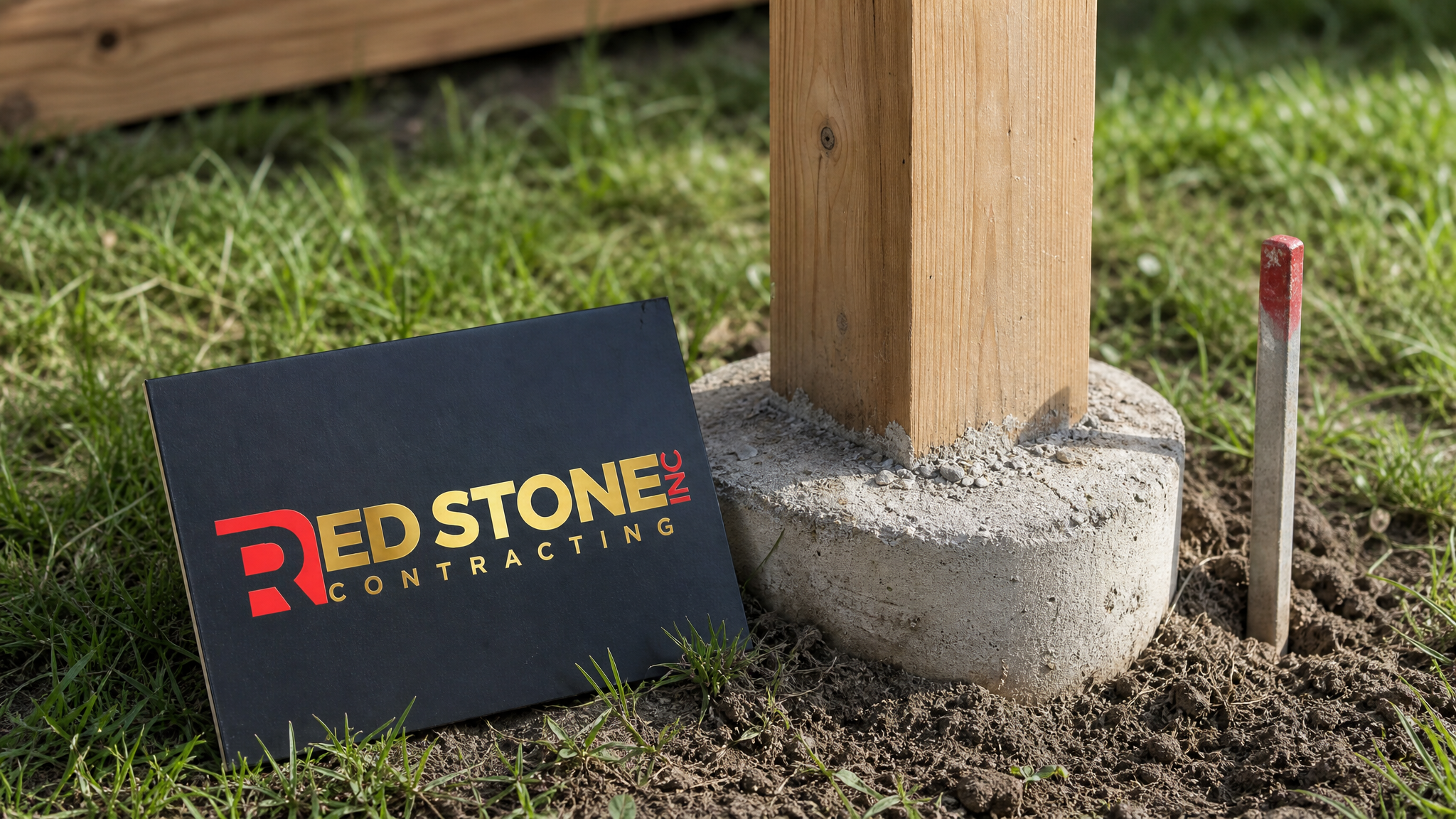
The only conclusive way to confirm a boundary is a survey performed by an Ontario Land Surveyor, who will place iron bars at the corners of the lot and can provide a Surveyor’s Real Property Report. If your property already has a report from a previous purchase, check the date; municipal and provincial requirements around fence property line rules Toronto surveys use can change, and older reports may not reflect recent severances or easement registrations. For larger backyard projects that combine an addition with new fencing, our team routinely coordinates with a surveyor as part of the home additions planning process so that footings, fences and setbacks are all measured against the same confirmed line.
If a full survey is not in the budget, a City of Toronto property line locate through the Committee of Adjustment records or old subdivision plans can offer a starting estimate, but it should never be treated as a legal substitute for a surveyor’s pin. Building on an assumed line is one of the fastest ways to trigger a costly relocation order later, particularly once fence property line rules Toronto inspectors apply during a permit review reveal the error.
Shared Fence Costs and Boundary Agreements With Neighbours
Most backyard fences in Toronto sit directly on the shared property line, which means both homeowners have a legal and practical interest in the structure. Fence property line rules Toronto neighbours are expected to follow generally favour cost-sharing when a fence benefits both properties equally, but the specifics depend on who initiates the project, what condition the existing fence is in, and whether both parties agree on style and material.
| Scenario | Typical Cost Split | Who Decides Style | Notes |
|---|---|---|---|
| New fence exactly on the boundary line | 50/50 between both owners | Joint agreement required | Get the agreement in writing before construction |
| Fence built entirely on your own property | 100% your cost | Your choice | No obligation on the neighbour, but courtesy notice is wise |
| Replacing an existing shared fence | Usually 50/50 if both benefit | Joint agreement, matching prior style is common | Document the fence’s condition with photos first |
| Neighbour declines to contribute | You may proceed on your own side | Your choice, on your property only | Fence must stay behind the property line, not on it |
| Fence between differing land uses (e.g. residential/commercial) | Negotiated, often unequal | Often dictated by the commercial party’s requirements | Municipal screening bylaws may apply on the commercial side |
A written agreement, even a simple one-page letter signed by both homeowners, is the single most useful document a homeowner can produce when fence property line rules Toronto disputes eventually arise. It should describe the fence’s location relative to the surveyed line, the agreed cost split, and who is responsible for future maintenance. Renovation projects that involve a basement renovation or below-grade addition sometimes require temporary fence removal for excavation access, and having that agreement on file makes it far easier to negotiate a short-term move with a neighbour.
Permits, Inspections and Common Fence Bylaw Violations
Not every fence in Toronto requires a permit, but enough do that it is worth checking before work begins. Generally, a fence that stays within the standard height limits for its zone and location does not need a building permit, but a permit is required whenever a fence exceeds the maximum bylaw height, is combined with a retaining wall over a certain height, or encloses a pool. Fence property line rules Toronto inspectors check most often involve exactly these thresholds.
| Violation | Why It Happens | Typical Fix | Cost Impact |
|---|---|---|---|
| Fence exceeds the zone’s height limit | Measuring from the wrong grade point on a sloped lot | Trim to compliant height or apply for a minor variance | Low to moderate, mainly labour |
| Fence built over the true property line | No survey performed before construction | Relocate the fence or negotiate an encroachment agreement | Moderate to high, may include full rebuild |
| Pool fence missing required self-closing gate | DIY installation without checking the pool enclosure bylaw | Retrofit compliant hardware | Low |
| Fence blocks the corner sightline triangle | Corner lot rule overlooked during planning | Replace with open-style or lower fencing in the triangle zone | Moderate |
| Prohibited material used (e.g. barbed wire, electrified fencing) | Homeowner unaware certain materials are banned residentially | Remove and replace with an approved material | Moderate |
If a violation notice does arrive, the City typically allows a compliance window before escalating to a formal order. Working with a contractor who understands fence property line rules Toronto bylaw officers actually enforce, rather than guessing at the requirements, is usually the fastest way to resolve a notice without a full teardown. Our Toronto renovation services team can review an existing fence against the current bylaw and outline the minimum changes needed to bring it into compliance.
Resolving Fence and Property Line Disputes the Right Way
Even with clear fence property line rules Toronto bylaws in place, disagreements between neighbours still happen. The most common triggers are disputes over exactly where the boundary sits, disagreement over cost-sharing for a shared fence, and complaints about a fence blocking light, view, or drainage. Escalation almost always makes these disputes worse, so the first step should be a calm, documented conversation, ideally supported by a copy of the survey.
If a direct conversation does not resolve things, the City’s bylaw enforcement office can investigate height and setback violations, though it generally will not adjudicate a private boundary dispute between two surveys that disagree. In that situation, homeowners typically need either a second survey to confirm the line or, in persistent cases, a formal boundary determination through the courts. Mediation services are often faster and less expensive than litigation and are worth exploring before either party commits to legal action over fence property line rules Toronto neighbours cannot agree on informally.
Homeowners in Mississauga and Burlington sometimes assume municipal fence rules are identical to Toronto’s, but setback and height requirements vary by municipality even within the GTA. Before starting a project outside the city, it is worth confirming local requirements directly, and our Mississauga renovation services and Burlington renovation services teams can help homeowners in those municipalities navigate their own local bylaws alongside any renovation work.
How Red Stone Contracting Approaches Fence and Boundary-Adjacent Projects
Fences rarely exist in isolation. They interact with decks, additions, pools, and landscaping, which is why we treat fence property line rules Toronto homeowners must satisfy as a core input on every applicable project, not an afterthought handled at the end. When we scope a backyard renovation that touches a boundary, we confirm the surveyed line, review the applicable zoning overlay, and flag any permit triggers before drawings are finalized.
This approach has saved clients from expensive rework more than once. A homeowner planning a custom home renovation that extended toward the rear yard once assumed the existing fence marked the true boundary; a quick survey check before excavation revealed the fence was nearly a metre inside the actual line, which would have shrunk the planned addition significantly had it gone unnoticed. Confirming fence property line rules Toronto projects must respect at the design stage, rather than during construction, is consistently the cheaper and calmer path.
Frequently Asked Questions About Fence and Property Line Rules in Toronto
Do I need a permit to build a fence under the fence property line rules Toronto enforces?
How do fence property line rules Toronto homeowners follow affect corner lots?
Who pays for a shared fence between two properties?
What happens if my fence is found to violate Toronto’s bylaw?
How can I confirm the real property line before building a fence?
Can I remove a neighbour’s fence if I believe it is on my property?
Get Expert Help With Your Fence Property Line Rules Toronto Project
Navigating fence property line rules Toronto bylaws set out does not have to slow down your renovation plans. Red Stone Contracting works with homeowners across the region to confirm boundaries, coordinate surveys, and design fences, decks and additions that meet every applicable setback and height requirement from the start.
Call us today at (905) 901-1006 or request a free consultation to get started.
Red Stone Contracting proudly serves Toronto, Mississauga, Markham, Vaughan, Brampton, Oakville and Burlington.