
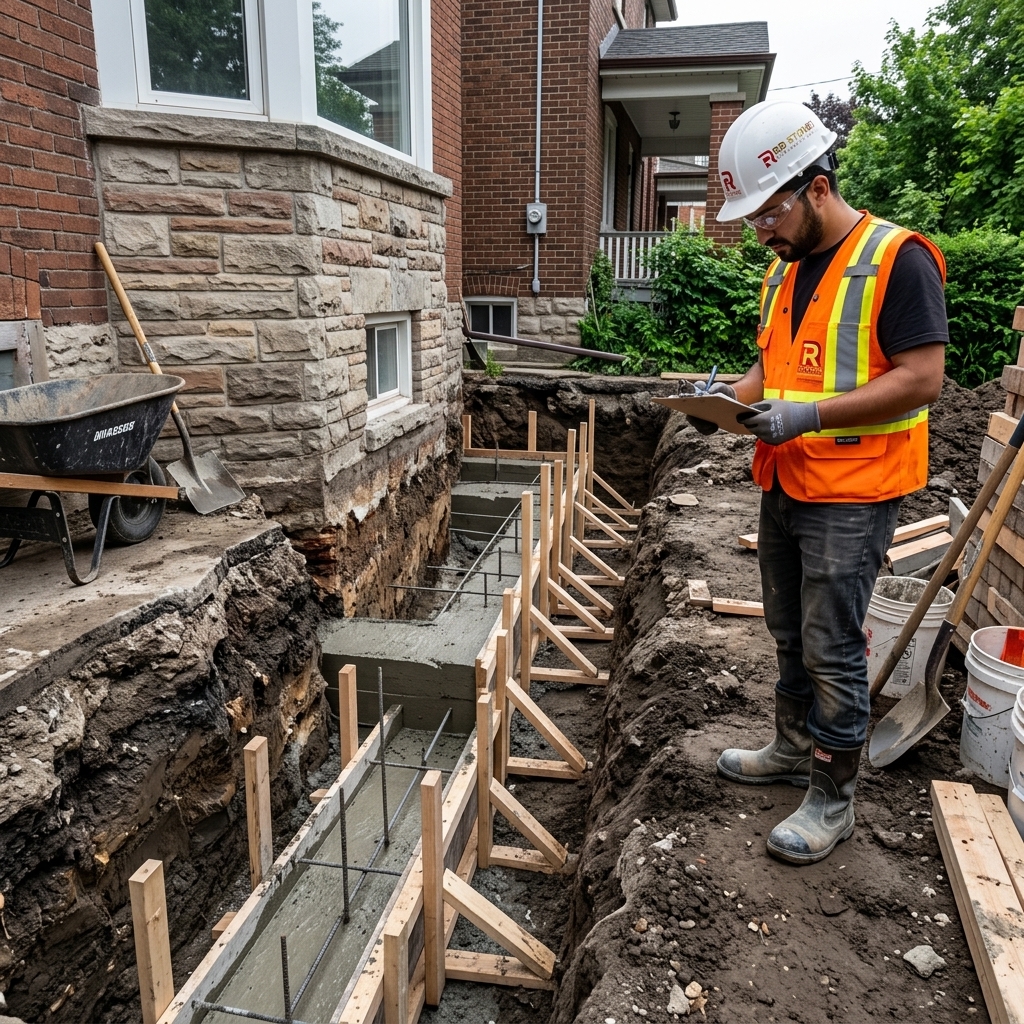
If you own an older home in the Greater Toronto Area, you likely have a basement with low ceilings — an area historically used to store coal or house a furnace rather than for functional living space. Today, maximising square footage is more valuable than ever. Lowering your basement floor is one of the best ways to add significant, high-quality living space without altering the exterior footprint of your property. However, understanding the full scope of basement underpinning toronto cost factors and the complex engineering process requires careful consideration of soil conditions, structural demands, and municipal regulations. This comprehensive guide outlines the costs, the structural methods, and the realistic timeline required to safely dig down and reinforce your foundation in 2026.
Understanding Basement Underpinning Toronto Cost and Why It Is Necessary
Basement underpinning is a highly specialised structural renovation process that lowers the existing floor of a house to increase the overall ceiling height. It involves digging beneath the existing foundation walls, removing the soil, and pouring new structural concrete footings deeper into the ground. By extending the foundation downwards, you effectively strengthen the structural integrity of your home while creating a more comfortable, livable lower level that meets modern building standards.
Beyond simply gaining ceiling height for a luxurious basement renovation, underpinning addresses numerous structural and practical concerns for aging Toronto properties. Many homes built before the 1970s were constructed with rubble stone foundations or shallow concrete footings that sit only two to three feet below grade. These older foundations may suffer from compromised structural capacity, chronic water infiltration, or inadequate load-bearing strength that becomes a serious concern as homeowners add weight through modern renovations above. Replacing the foundation floor allows contractors to install modern waterproofing membranes, interior weeping tile drainage systems, and upgraded plumbing lines, thereby safeguarding the property against water damage for decades to come.
The decision to underpin is particularly compelling in Toronto’s current real estate landscape. With average detached home prices exceeding $1.3 million, adding 600 to 1,000 square feet of livable basement space through underpinning delivers one of the strongest returns on investment available to homeowners. Whether you envision a secondary rental suite generating $1,800 to $2,200 per month, a home theatre, a guest suite for visiting family, or a dedicated home office, underpinning makes it all possible without the complexity and expense of a full home addition.
Underpinning vs. Benching: What Is the Difference?
When considering increasing basement height, homeowners are generally presented with two options: underpinning or benching. Both methods achieve increased depth, but they do so in fundamentally different ways with different implications for usable space and long-term value.
Full underpinning extends the foundation wall straight down to a new, deeper footing. This preserves the entire square footage of the basement because the new concrete sits directly below the old foundation in perfect alignment. It is a more labour-intensive and expensive process, requiring temporary structural shoring and staggered excavation sequences, but it maximizes the usable floor space and presents a clean, seamless wall finish that is indistinguishable from new construction.
Benching (also called bench footing) involves pouring a new concrete footing on the inside of the existing foundation wall rather than digging underneath it. The new footing is poured at the desired lower depth, and a thick concrete ledge — the “bench” — angles upward from the new floor level to the bottom of the existing wall. While benching is significantly less expensive because it requires less excavation, less shoring, and fewer engineering complications, it permanently reduces the usable floor space by 12 to 18 inches along every wall. This concrete ledge borders the entire perimeter of the basement, complicating furniture placement, reducing the functional layout, and making the finished space feel noticeably smaller than its measured square footage.
For homeowners planning a rental suite or a high-value finished basement, full underpinning is almost always the recommended approach. The additional cost over benching typically ranges from $8,000 to $15,000, but the preserved square footage and clean wall finish deliver a dramatically better final result.
Average Basement Underpinning Costs in the GTA for 2026
Estimating the basement underpinning toronto cost accurately requires a detailed on-site inspection, as every property presents unique soil conditions, foundation depths, and accessibility challenges. On average, underpinning costs more than a standard renovation due to the complex structural engineering, specialised heavy equipment, and intensive manual labour required. Unlike a cosmetic renovation where materials drive the budget, underpinning is overwhelmingly labour-driven — crews are hand-digging beneath a loaded structure.
| Project Variable | Estimated Cost Range (CAD) | Details |
|---|---|---|
| Linear Foot Cost (Underpinning) | $400 – $650 per linear foot | The standard metric. Includes excavation beneath existing footings, formwork construction, concrete pouring, dry-pack grouting, and soil removal from site. |
| Linear Foot Cost (Benching) | $250 – $400 per linear foot | Interior bench footing. Less excavation depth required, no shoring needed. Reduces usable floor space by 12-18 inches per wall. |
| Structural Engineering and Blueprints | $2,500 – $4,500 | Mandatory for building permits. Includes geotechnical soil testing, structural load assessment, and stamped architectural drawings. |
| City of Toronto Building Permits | $500 – $1,500 | Building permits are legally required for all structural foundation work. Cost scales based on scope. |
| Waterproofing and Weeping Tile | $3,500 – $6,000 | Interior perimeter weeping tile drainage, sump pump with battery backup, and polyethylene vapour barrier beneath new slab. |
| Plumbing Upgrades | $2,000 – $5,000 | Upgrading underground drains, replacing aging clay or cast iron pipes with PVC, installing a backwater valve for sewer backup prevention. |
| Soil Removal and Disposal | $1,500 – $4,000 | Hauling excavated soil off-site. Cost depends on volume and whether soil is contaminated (older properties may have lead or oil). |
| Total Average Project Estimate | $35,000 – $55,000+ | Full structural underpinning for a typical 800-1,000 sq ft basement footprint, excluding interior finishing (drywall, flooring, etc.). |
While the initial investment is substantial, an underpinned basement can effectively double your home’s livable space at a fraction of the cost per square foot compared to building a home addition above grade. When factored against the steep costs of purchasing a larger property in the current Toronto real estate market, underpinning represents one of the strongest returns on investment available.
The Step-by-Step Underpinning Process
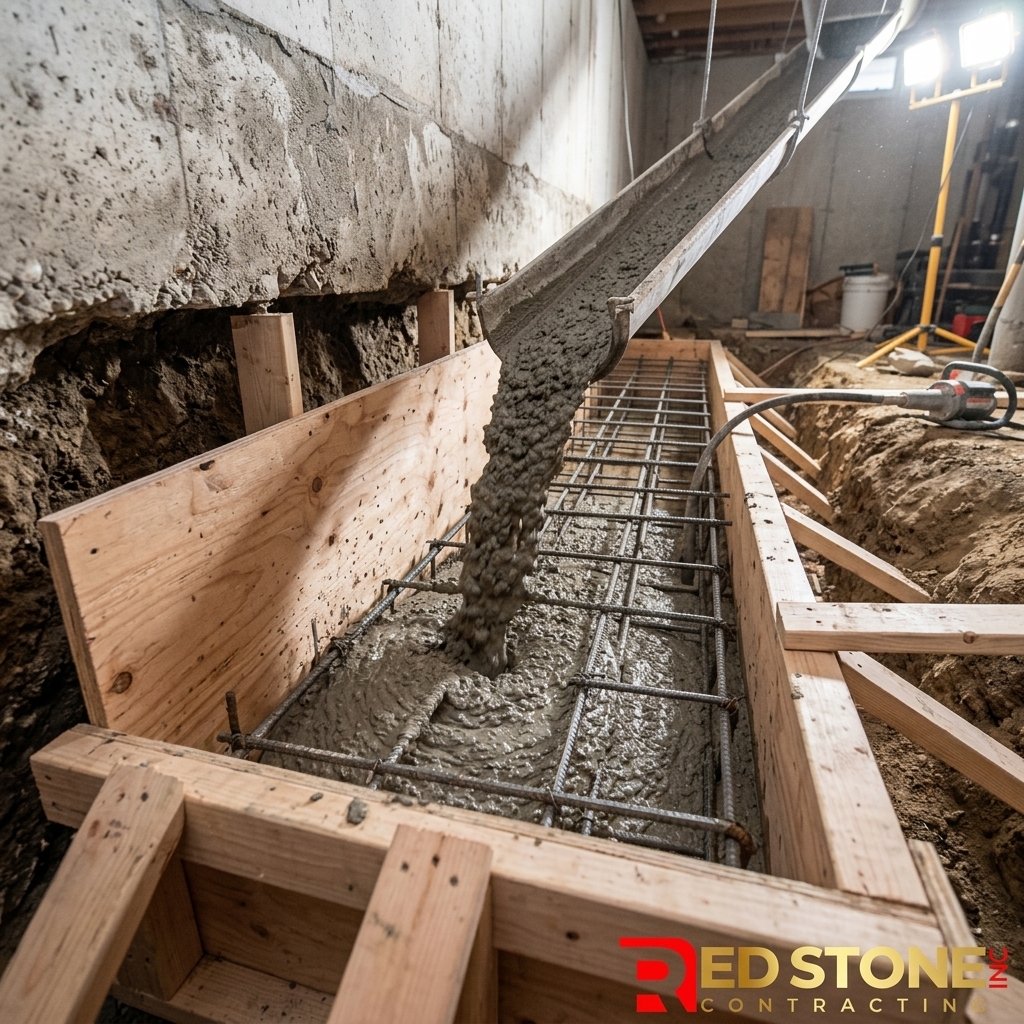
Underpinning is a meticulous, sequenced operation. Because you are undermining the structural support of the entire house, the process must be carefully staggered to ensure the property remains stable throughout every phase of the renovation.
1. Structural Engineering and Permitting
No underpinning project can begin without a licensed structural engineer. The engineer will assess the current soil conditions through geotechnical testing, evaluate the existing foundation stability, and calculate the load requirements for the proposed new depth. They will create detailed blueprints outlining the reinforcement sequence, the concrete specifications, and the shoring plan. These stamped engineering drawings are then submitted to the City of Toronto for building permit review. Working without a permit for structural foundation changes is illegal under the Ontario Building Code and can result in severe fines, stop-work orders, or complications when selling your home in the future.
2. Staggered Excavation (The Pinning Sequence)
Once permits are secured and the existing concrete slab is broken and removed, the excavation process begins in a carefully choreographed sequence. Contractors do not dig out the entire perimeter at once — doing so would catastrophically undermine the foundation and risk a structural collapse. Instead, the foundation perimeter is divided into numbered sections, typically spanning three to four feet each. The crew excavates alternating sections (e.g., sections 1, 4, and 7 first), leaving the intermediate sections fully intact to carry the building’s weight. Only after the initial sections are poured and cured does the crew return to excavate the remaining sections. This staggered approach ensures that no more than 20 to 25 percent of the foundation’s bearing capacity is temporarily removed at any given time.
3. Pouring New Concrete Footings
After a specific section is excavated to the new desired depth, wooden formwork is constructed beneath the existing foundation wall. High-strength concrete (typically 30 MPa or higher) is poured into these forms, extending the foundation downward to the engineered depth. A critical detail: a small gap of approximately two inches is intentionally left between the top of the new concrete footing and the underside of the old foundation wall. Once the new concrete has fully cured (typically 3 to 5 days), this gap is packed with non-shrink dry-pack grout — a specialised cementitious material that cures incredibly hard and actually expands slightly as it sets. This expansion creates a tight, load-bearing connection that smoothly transfers the weight of the house from the old foundation onto the new underpinning without any settlement.
4. Waterproofing, Drainage, and Plumbing
Once the entire perimeter has been underpinned and all sections are poured, the structural phase is complete. At this point, the interior floor is still exposed earth at the new lower elevation. Before pouring the new concrete slab, the contractors install a comprehensive waterproofing system: an interior perimeter drainage system (weeping tiles connected to a sump pit), a sump pump with battery backup for power outages, and a robust polyethylene vapour barrier across the entire floor area. This is also the most cost-effective time to upgrade underground plumbing — replacing old clay or cast iron drain pipes with modern PVC, installing a backwater valve to prevent city sewer backups, and running rough-in plumbing for a future basement bathroom, wet bar, or secondary kitchen suite.
5. Insulation and the New Concrete Slab
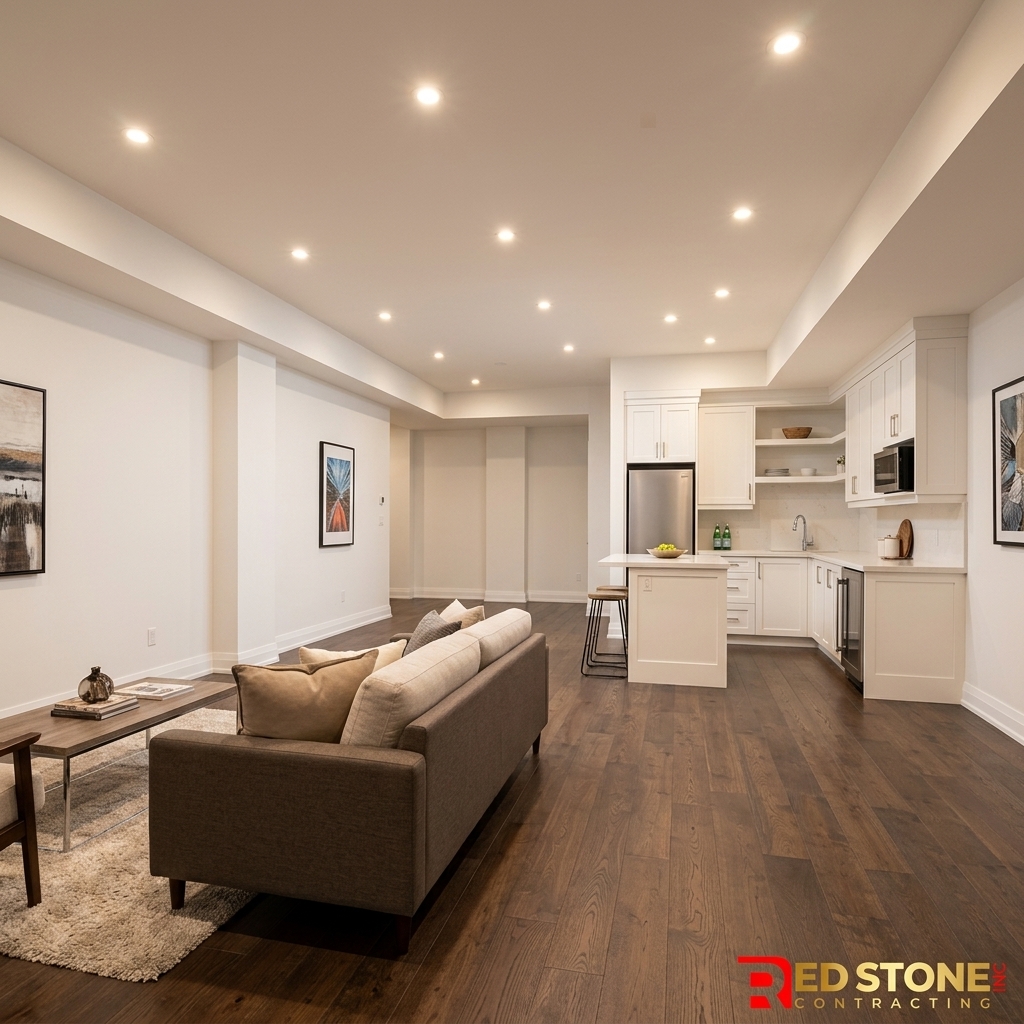
With the drainage and plumbing systems in place, a layer of compacted gravel is spread across the floor, followed by rigid polystyrene insulation boards (typically 2 inches of XPS foam providing R-10 thermal resistance) to prevent cold floors in winter. Finally, the new reinforced concrete slab is poured, levelled, and finished. Once fully cured, the basement is structurally secure, waterproofed, insulated, and ready for framing, electrical rough-ins, drywall, and finishing as part of a complete custom home renovation.
Determining if Your Home Is a Good Candidate
While underpinning is a fantastic solution for many homeowners, certain site-specific factors can complicate the process or increase the total cost significantly.
| Condition to Assess | Impact on the Project |
|---|---|
| Property Access and Lot Width | Tight lot lines or semi-detached homes make the removal of excavated soil and the delivery of concrete extremely difficult. In narrow laneways, soil often must be hauled out entirely by wheelbarrows through the house interior, which dramatically increases labour time and cost. |
| Soil Composition and Water Table | Sandy soils, water-logged clay, or a high water table can be unstable during excavation, requiring specialised steel shoring systems, dewatering pumps, and more complex engineering — all of which increase costs by $3,000 to $8,000 or more. |
| Shared Party Walls (Semi-Detached) | If you live in a semi-detached or row townhome, underpinning your side of a shared foundation wall requires careful engineering, a legal party wall agreement with your neighbour, and strict sequencing to ensure the adjacent property’s structural integrity is never compromised. |
| Existing Utilities and Services | Gas lines, water mains, electrical conduits, and main sewer stacks that enter the house through the foundation may need to be rerouted, lowered, or legally accommodated at the new depth, adding plumbing and utility costs. |
| Foundation Material | Homes with rubble stone foundations (common in pre-1920s Toronto) require additional engineering consideration, as the stones must be carefully stabilised or replaced with poured concrete during the underpinning process. |
Signs You Should Consider Underpinning
- Your ceilings are less than 6.5 feet high: Low ceilings render the space virtually unusable for modern living standards, make the basement feel cramped and claustrophobic, and prevent the installation of standard-height doors and appliances.
- You want to create a legal rental suite: Legal basement apartments in Toronto require specific minimum ceiling heights (typically 6 feet 5 inches clear height over at least 75 percent of the floor area). Underpinning is often the only way to achieve this in older homes.
- Your foundation is crumbling or deteriorating: If a structural engineer discovers severe deterioration, cracking, or bowing in your old foundation walls, underpinning serves as both a permanent structural repair and an opportunity to gain usable ceiling height simultaneously.
- You frequently experience basement flooding or moisture: Since the entire concrete floor must be removed during underpinning, it presents a once-in-a-lifetime opportunity to completely overhaul the home’s waterproofing from the ground up — new weeping tiles, sump pump, vapour barrier, and backwater valve — virtually guaranteeing a dry basement for decades.
- You are planning a major renovation anyway: If you are already investing in a kitchen, bathroom, or whole-home renovation, combining underpinning with the broader project reduces overall disruption and allows trades to work more efficiently.
Timeline: How Long Does the Project Take?
| Project Phase | Estimated Duration |
|---|---|
| Structural Engineering and Permit Approval | 3 to 6 weeks |
| Demolition and Initial Soil Excavation | 1 to 2 weeks |
| Staggered Underpinning Sequence | 3 to 5 weeks |
| Waterproofing and Plumbing Rough-ins | 1 week |
| Insulation and New Concrete Slab Pour | 1 week |
| Total Estimated Structural Timeline | 9 to 15 weeks |
Note: This timeline covers only the structural underpinning phase. Adding framing, electrical, drywall, flooring, and interior finishing will add an additional 4 to 8 weeks depending on the complexity of the design. Plan for a total project duration of approximately 4 to 6 months from permit approval to move-in ready.
Do I need a building permit for basement underpinning in Toronto?
What is a reasonable basement underpinning toronto cost for a standard home?
Is it safe to live in the house during the underpinning process?
How does underpinning affect property value in Toronto?
Can underpinning solve my ceiling height problems for a legal rental suite?
Will my basement be waterproofed during the underpinning process?
Secure Your Home’s Foundation with Red Stone Contracting
Your foundation is the most critical component of your home’s structure — do not trust it to anyone but experienced professionals with a proven track record in structural foundation work. A proper underpinning project provides endless possibilities for design, drastically improved structural stability, and a fully waterproofed lower level. It allows you to build the beautiful basement retreat or secondary rental suite you have always envisioned without being constrained by low ceilings or aging infrastructure.
Whether you require full excavation, a benching alternative, complex waterproofing, or a complete basement transformation from bare concrete to a luxury living space, our dedicated team serves homeowners throughout Toronto and the GTA with precision engineering and complete transparency at every stage.
Call us today at (905) 901-1006 or schedule a consultation online to discuss your foundation goals and receive a detailed, no-obligation estimate.
Red Stone Contracting has been a trusted leader throughout Toronto, Oakville, Burlington, and Mississauga in delivering exceptional structural renovations and bespoke interior designs. We prioritise the safety, value, and lasting durability of your most important investment.